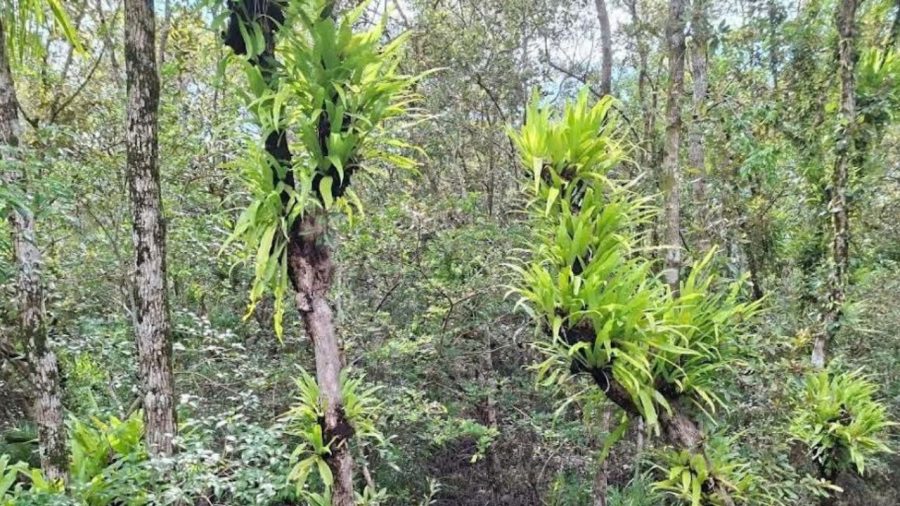



Sundari tree (Heritiera fomes), the principal flora and namesake of the world’s largest mangrove forest, is confronting a catastrophic new crisis in the Sundarbans: a widespread infestation of parasitic plants.
Once restricted to branch tips, these parasites are now invading the main trunks of the trees, draining their essential sap and causing them to rapidly weaken, turn yellow, and die.
Coming alongside the long-standing threat of salinity-induced top-dying disease, this escalating infestation has raised severe alarm across the Forest Department and scientific circles, with experts warning that the Sundari tree could face extinction within one to two decades if left unchecked.
An ecological shield under siege
Spanning approximately 10,000 square kilometres across Bangladesh and India, the UNESCO World Heritage-listed Sundarbans mangrove forest covers 6,517 square kilometres within Bangladesh’s Khulna, Bagerhat, and Satkhira districts—representing 66 per cent of its total expanse.
Home to 334 plant species, 453 wildlife species, and hundreds of criss-crossing waterways, the forest’s latest 2024 survey recorded 184 plant species, with Sundari, Gewa, and Goran collectively making up 70 per cent of the total canopy.
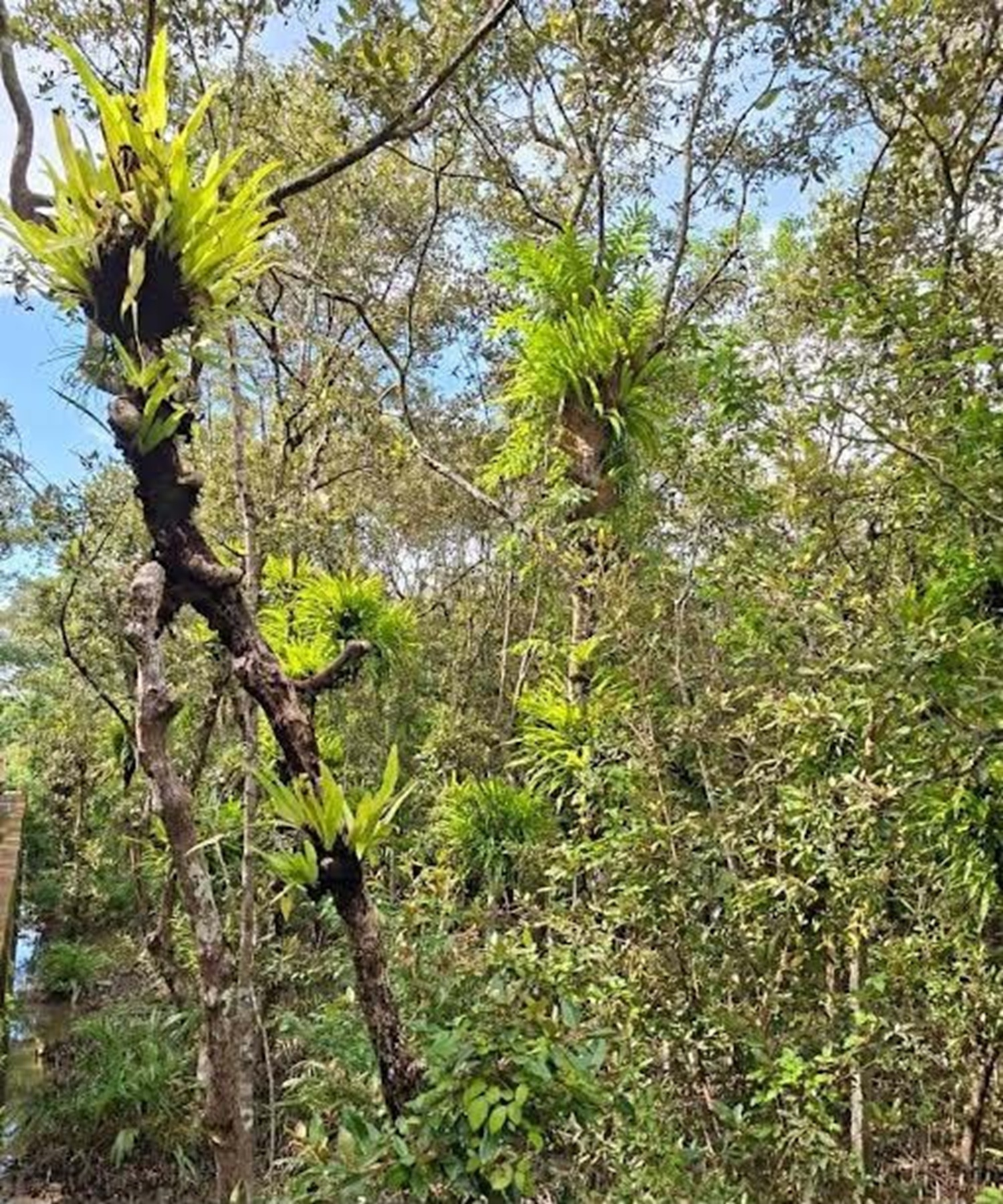
The naturally sturdy Sundari tree plays a vital structural role by anchoring coastal soil against erosion and serving as a natural green wall against raging ocean waves, cyclones, storm surges, and saltwater intrusion from the Bay of Bengal.
Moreover, its complex root systems and fallen leaves provide essential shelter and nursery grounds for numerous species of fish, prawns, and other wildlife, forming the bedrock of the Royal Bengal Tiger’s prey base and the entire mangrove ecosystem.

Choking Bhola river, dead forest canals
Environmental pressures driven by climate change – including sea-level rise, frequent natural disasters, and extreme ocean salinity – are severely degrading the forest.
Abnormal storm surges repeatedly submerge the forest floor with saline silt, creating an environment that fosters parasitic plants, creepers, and fungi.
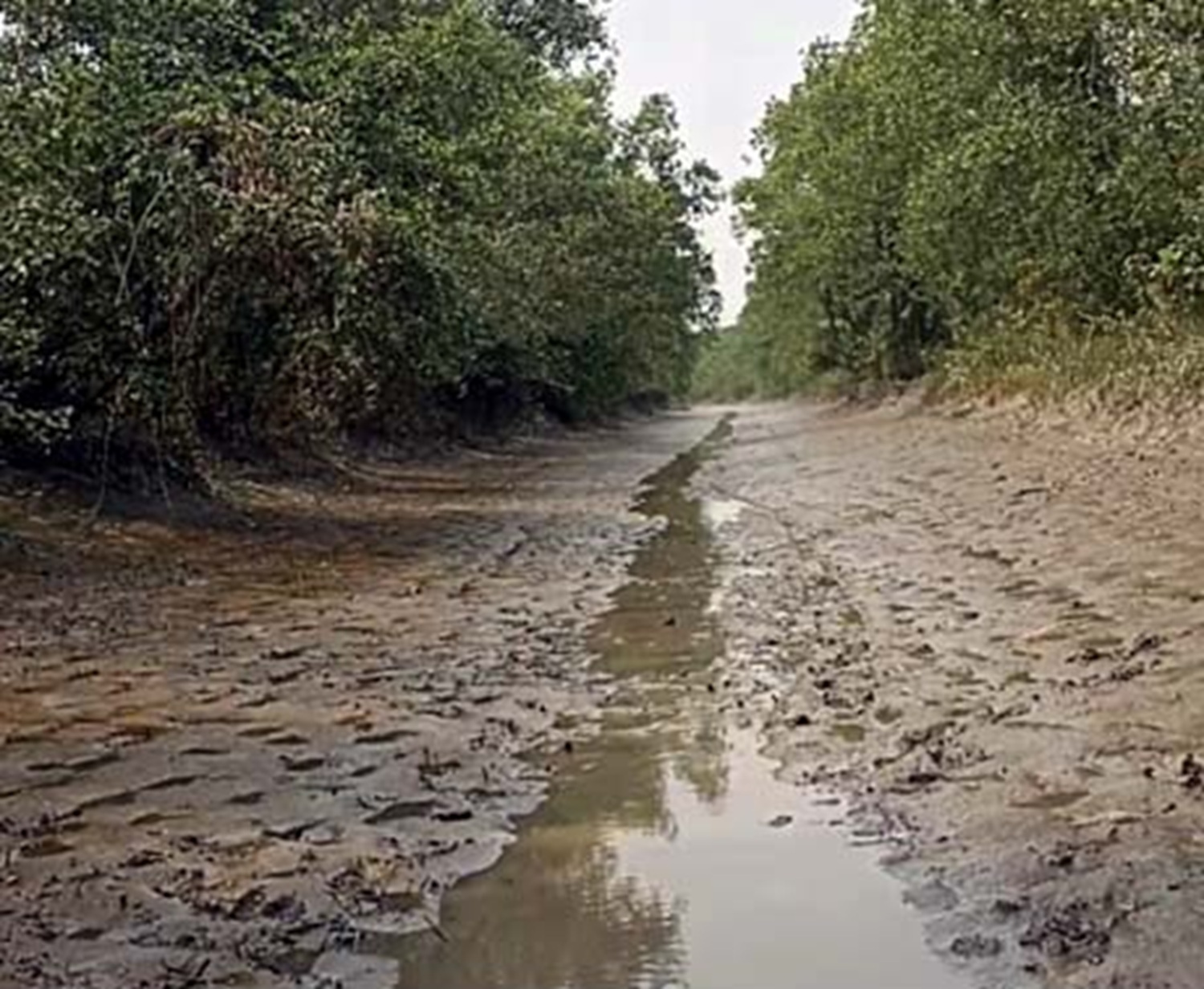
The crisis is particularly acute in the Eastern Sundarbans, where the once swift-flowing Bhola River has silted up into a narrow canal along a 16-kilometre stretch.
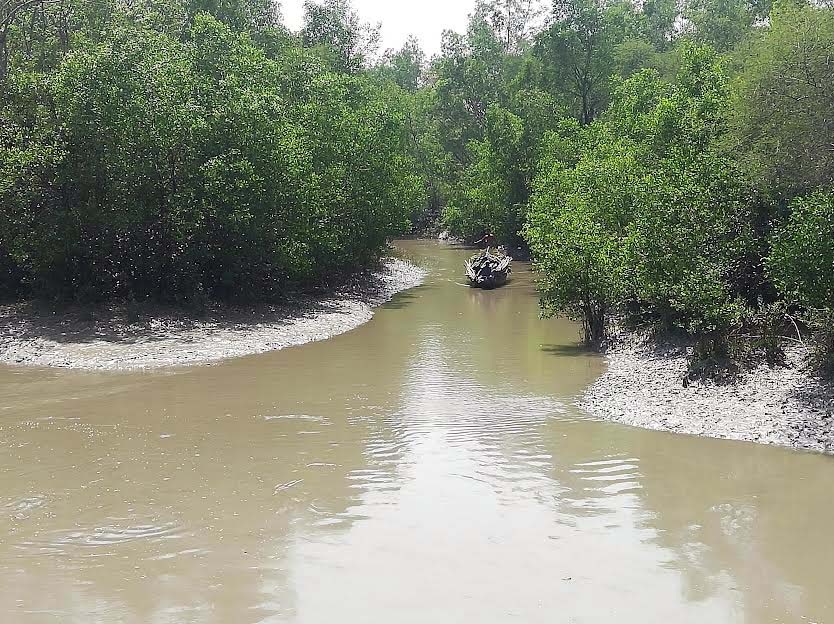
Running between the forest and human habitations from the Daser Bharani Forest Patrol Post in Sharankhola Range to Joymoni, via the Nangli Patrol Post in Chandpai Range, Dhansagar station, Jiudhara station, and Kodalmateji Patrol Post, the choked waterway is now locally known as “Mora Bhola.”



The choking of the river has killed off internal forest canals and reduced freshwater inflows, accelerating top-dying disease and parasitic attacks on Sundari trees throughout the region.
Voices from the forest: Livelihoods in Decline
More than one million people directly depend on the Sundarbans for their survival, earning their living by catching fish and crabs, gathering honey and wax, cutting thatch grass, reeds, and golpatta (nipa palm), or working in tourism.
Local forest workers report a dramatic decline in resources.
Honey collectors Md Shahjahan Akon, aged 60, and Md Awal Khan, 55, from Khuriakhali village in Sharankhola upazila, who have harvested honey for 30 to 35 years, stated that former dense jungle zones have turned sparse as Sundari trees die off.
Because honeybees do not build hives on dead trees, collectors now trek four to five kilometres without sighting a single honeycomb.
Similarly, fishermen Md Ashraf Ali Faraji, 70, and Md Rustom Goldar, 60, from the same village noted that prized canal fish species such as Chitra, Shilon Tengra, and Dogri have virtually vanished due to silted waterways and lost tree canopy.
The forest crisis also threatens thriving local e-commerce ventures.
Online entrepreneurs such as Russel Ahmed from Sharankhola and Hafizur Rahman from Shyamnagar, Satkhira, who package and deliver forest fish, organic honey, golpatta molasses, and keora pickles across the country – generating Tk100,000 to Tk150,000 in monthly sales alongside running tour operations – expressed deep concern after observing vast stands of parasite-stricken, dead Sundari trees during their forest trips.
They warn that the collapse of the Sundari tree will devastate the economy of the south-western region.
Scientific warnings and official response
Forest Department estimates indicate that 25 to 30 per cent of Sundari trees in the Sundarbans are currently infested by parasites.
Highlighting the gravity of the situation, Prof Dr Wasiul Islam of the Forestry and Wood Technology Discipline at Khulna University noted that rising salinity from climate change is altering forest structure and accelerating die-offs.
He warned that because artificial plantation is impossible inside the natural mangrove ecosystem, a failure to conduct comprehensive scientific research into controlling the parasite could lead to the complete collapse of the forest, its biodiversity, and coastal livelihoods.
Concurrently, Dr Md Latiful Islam, Chief Scientific Officer at the Saltwater Station (Khulna) of the Bangladesh Fisheries Research Institute, explained that declining Sundari roots and leaf litter disrupt fish breeding grounds.
He added that overall fish stocks are falling due to a combination of habitat loss, salinity, poison fishing, overfishing, and unplanned harvesting, placing the region’s large fishing community at risk of total economic ruin.
Addressing these critical concerns, Md Rezaul Karim Chowdhury, divisional forest officer of the Sundarban East Forest Division in Bagerhat, confirmed that 25 to 30 per cent of Sundari trees across the Sharankhola and Chandpai ranges are infested with parasites, creating a major conservation crisis on top of existing top-dying disease.
He pledged that the Forest Department will promptly initiate scientific research focused on the parasite. Regarding river restoration, DFO Chowdhury stated that out of the 16-kilometre silted section of the Bhola River, approximately one kilometre was excavated under the Sundarban Protection Project before work was suspended.
Plans are now underway to resume and complete the remaining excavation, which he emphasised will restore vital freshwater flow and bring renewed vitality to a vast area of the Sundarbans.