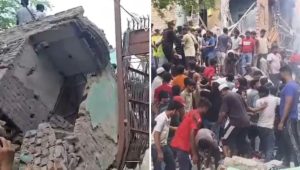



In August and September 2026, the Iran-aligned Houthi militia launched a renewed military offensive across western Yemen, ending a four-year period of relative calm established by an UN-mediated ceasefire in 2022.
The heavy fighting across Taiz, Al Hodeidah, Marib, and Al-Jawf has displaced over 130,000 civilians, with 18,500 displaced within a single 72-hour window.
UN High Commissioner for Human Rights Volker Türk reported that at least 125 civilians have been killed or wounded since the Houthi escalation began.
Devastating impact on education
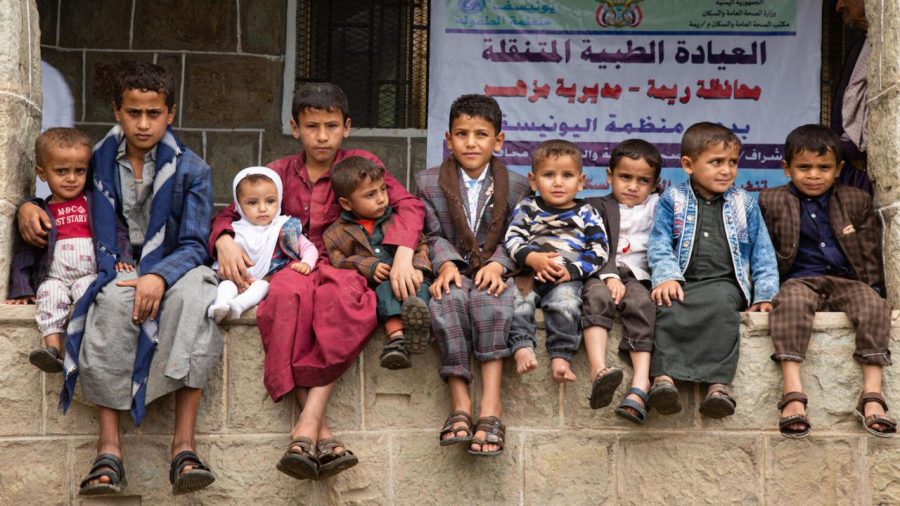
The renewed hostilities have severely disrupted daily life and education for children across the region. More than 12.2 million children in Yemen urgently require humanitarian assistance, adding to the 3.2 million children whose studies were already interrupted before the latest escalation.
In Taiz, schools such as the Musaab Ibn Umayr school – headed by principal Abdulwasea Abdu – were forced to close after a nearby missile strike caused severe panic and psychological trauma among pupils, depriving over 600 children of education.
Displaced minors, including 13-year-old Muneer Farie who fled al-Wazeyah district with his father Ghaleb Farie to a camp in al-Shimayateen, have been forced into child labour, selling goods in local markets to help their families survive.

Clashes have also severed the main road between Mocha and Taiz, driving up prices of basic commodities.
Rise in child soldier recruitment
Human rights organisations and civil society groups have warned that the military escalation has led to a sharp rise in child recruitment, which constitutes a war crime.
The SAM Organisation for Rights and Liberties documented 11,310 child recruitment cases between 2014 and February 2023, including 6,269 children aged eight to 11.


Additionally, a March 2025 UN Secretary-General report verified 564 cases of child recruitment between 2021 and 2023, attributing 345 cases to the Houthis and 210 to Yemeni armed forces and affiliated groups.
Recruits ranged from eight to 17 years old, with 27 under the age of 15 deployed in combat.
Joint statements from civil society groups, including the Yemeni Network for Rights and Freedom, noted underage fighters captured in recent battles across Taiz, Marib, Al-Jawf, and the Red Sea coast.
Economic collapse and ideological drivers
Severe poverty and economic collapse serve as primary catalysts pushing minors onto the battlefield.
SAM President Tawfeeq al-Homaidi noted that when families lose their primary breadwinner’s income, small stipends or food rations provided by armed groups become essential for basic survival.
In Houthi-controlled areas, reports show children are lured with promises of a Kalashnikov rifle, a one-month military training course, and a monthly stipend of 50,000 Yemeni riyals (approximately $94).
Beyond financial need, recruitment is driven by ideological indoctrination in Houthi-run summer camps, tribal pressures, and interrupted schooling.
Combat roles and official stances
While Houthi forces engage in systematic recruitment, minors also take up arms alongside government-aligned local resistance units.
For instance, 17-year-old Ibrahim joined local resistance forces using his father’s rifle when Houthis approached his village.
Official government military policy strictly prohibits enlisting minors.
Colonel Abdul Basit al-Bahr, deputy head of the Moral Guidance Department at the Taiz Axis Command, said government forces strictly prohibit child enlistment and that any minors encountered on the battlefield are referred to legal and humanitarian authorities.
Escalating dangers and humanitarian response
Children face severe hazards from explosive remnants and targeted strikes. During the first six months of 2026, landmines and unexploded ordnance killed more children in Yemen than in the whole of 2025.
On 7 September, Houthi ballistic missiles struck a shelter for displaced people in Raghwan District, Marib, killing two children and injuring 15, while another missile targeted the “December 2” Hospital in Mokha.
Relief agencies, including War Child and its local partner Benaa Charity for Human Development, are distributing emergency aid packages, but humanitarian groups continue to demand increased funding for child protection, education, and mental health services.