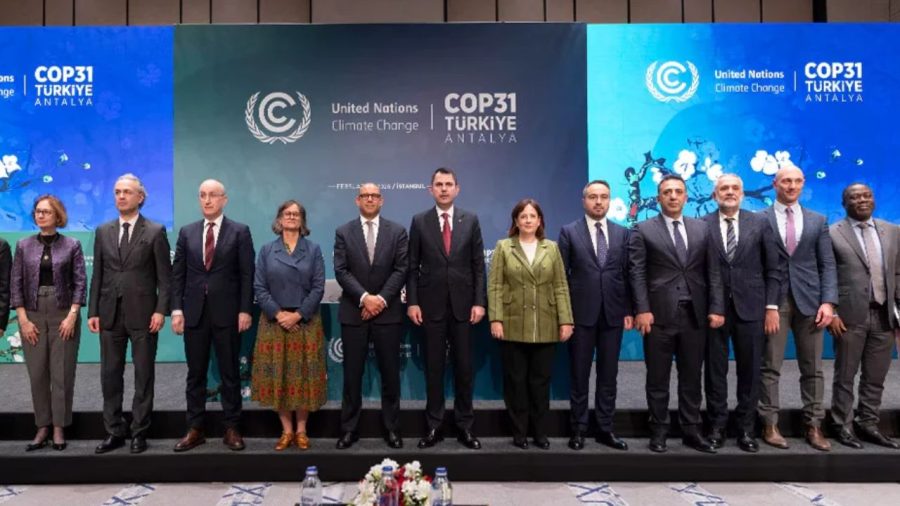



COP31 opens in the Turkish city of Antalya on 9 November as governments confront record global temperatures, mounting climate damage and growing pressure to accelerate the shift away from planet-heating fossil fuels.
Turkey is hosting the marathon negotiations, while Australia is steering the talks under an unprecedented arrangement reached after both countries sought to stage the world’s premier climate gathering.
The formal negotiations are relatively light on major headline issues, putting greater emphasis on voluntary climate commitments. The hosts are promoting “electrification” as one route to cutting emissions and reducing dependence on fossil fuels.
But a year marked by devastating climate disasters and upheaval in global energy markets is expected to shape discussions both inside and outside the negotiating rooms in the Mediterranean resort city.
Fossil fuels
Efforts to forge a global consensus on concrete targets or pathways for phasing out fossil fuels have stalled, and the politically sensitive issue is not formally on the COP31 negotiating agenda.
In the absence of an agreement, Brazil is expected to unveil a voluntary “roadmap” for transitioning away from coal, oil and gas after countries failed to agree on a process at last year’s COP.

Frustration over the deadlock could nevertheless resurface in Antalya. About 60 countries demanding faster action on fossil fuels held a separate conference this year outside the United Nations climate process.
It remains unclear how their concerns will be reflected at COP31, although Turkey and Australia have promised a predictable process without last-minute surprises.
Electrification
Turkey and Australia instead want to focus attention on “electrification” — replacing technologies that directly burn fossil fuels, such as diesel vehicles and gas heating, with electric alternatives.
Their flagship initiative in Antalya calls on countries to voluntarily increase the share of final energy demand met by electricity from around 20 per cent today to 35 per cent by 2035.




The hosts argue that greater electrification could cut greenhouse gas emissions while reducing dependence on costly fossil fuel imports, an issue that has become more pressing after the Middle East war triggered a global energy shock.
Questions remain, however, over how the additional electricity would be generated. Around one-third of the world’s power still comes from coal, and the proposed target does not specify that the extra supply should come from cleaner sources.
Action agenda
Beyond the electrification target, Turkey is leading a series of voluntary initiatives covering artificial intelligence, methane, waste reduction and climate-resilient cities.
These non-binding commitments are expected to form part of a separate “action agenda” running alongside the formal COP negotiations.
Unlike the voluntary initiatives, formal COP decisions require consensus among participating countries, with every line of negotiated text subject to agreement.
This year’s formal talks contain relatively few major headline items and are expected to focus largely on technical issues carried over from previous conferences.
Climate finance
Climate finance, another recurring source of tension at COP summits, is expected to come under renewed scrutiny in Antalya, particularly following devastating floods in Nepal linked to climate change.
Kathmandu’s appeal for assistance has revived longstanding demands for wealthy countries and historic polluters to provide more support to developing nations seeking to expand renewable energy, adapt to climate impacts and recover from disasters.
Turkey has sought to position itself as a bridge between developed and developing countries.
Incoming COP31 President Murat Kurum has said narrowing the climate finance “chasm” will be a key priority at the Antalya summit.
Who will host COP33?
Countries are due to conduct another “global stocktake” at COP33 in 2028, assessing progress on climate action and identifying where the world has fallen short of the goals of the Paris Agreement.
But COP33 still has no host after India withdrew its candidacy.
China is considering a bid, according to sources familiar with the matter, as Beijing seeks to strengthen its reputation as a global leader on climate change, particularly in the absence of the United States.
A decision on the host does not have to be made this year, but the prospect of a politically sensitive COP in Beijing is expected to be widely discussed in Antalya.