


The Sudanese Armed Forces (SAF) have secured notable military advances against the paramilitary Rapid Support Forces (RSF) in recent weeks, seeking to alter the trajectory of the civil war that erupted in April 2023.
Recent troop advances across North Kordofan and Blue Nile states highlight a shift in battlefield dynamics, even as drone strikes intensify, civilian casualties mount, and a catastrophic humanitarian crisis deepens.
Meanwhile, pro-democracy leaders caution against using tactical victories to restore political authoritarianism, whilst international negotiations over arms sanctions remain stalled at the United Nations Security Council.
Battlefield advances in North Kordofan
In North Kordofan, SAF announced the recapture of strategic Al-Mazroub following fierce clashes. Mohamed Deidan, spokesman for the Special Operations Forces in North Kordofan, confirmed army troops entered the town on Friday morning.
Located 130 kilometres north-west of state capital El-Obeid, Al-Mazroub serves as a major livestock market and vital transit route connecting army-controlled North Kordofan with RSF-controlled West Kordofan. Army commanders noted the gain restricts RSF movement west of Bara and disrupts paramilitary supply corridors.

This victory follows army advances in Sodari, Um Sharo, Bara, Jabra al-Sheikh, and Um Sayala, forcing RSF units to retreat towards Um Badr, Hamrat al-Sheikh, and the far west. Control over Kordofan’s road networks is crucial, as the region forms the strategic corridor linking central Sudan to Darfur.
Clashes in Blue Nile state
In south-eastern Blue Nile state near the Ethiopian border, SAF’s 4th Infantry Division repelled a combined assault by RSF and Sudan People’s Liberation Movement-North (SPLM-N) faction led by Joseph Tuka.
Army forces engaged attackers in strategic Minza and Bashkarkad, inflicting heavy losses. These engagements follow army successes in retaking border towns Kurmuk and Geissan.




In state capital Ed Damazin, Governor Ahmed Al-Omda Badi stated air defences intercepted RSF drone strikes targeting his residence.
Territorial control and drone warfare
Sudan’s territorial balance remains divided. SAF controls Khartoum alongside northern, eastern, and central Sudan. Conversely, RSF holds most of western Sudan, including Darfur – cemented by capturing el-Fasher in October 2025 – and parts of Kordofan.
South Kordofan remains contested, with SPLM-N holding southern pockets. ACLED data shows Kordofan accounts for 19.7 per cent of recorded violent attacks.
Escalating drone warfare has heightened civilian risks. An RSF drone strike on student housing at the University of Kordofan in El-Obeid killed five civilians and wounded 47. In Dilling, RSF drone attacks killed four civilians.
Additionally, the Sudan Doctors Network reported RSF members executed over 25 civilians in Umm Badr on ethnic grounds.
Deepening humanitarian catastrophe
The shifting front lines have worsened a severe humanitarian disaster. The conflict has displaced 13 million to 14 million people nationwide, with fighting in Kordofan displacing over 219,000 since February and clashes in Minza forcing 7,000 to flee.
Over 25 million people are impacted. The UN-backed IPC monitor reports 19.5 million face acute hunger, with 14 locations in Darfur and South Kordofan at risk of famine, and 825,000 children facing severe acute malnutrition. In army-held areas, the Sudanese pound lost nearly half its value in summer 2026.
Political warnings and UN sanctions
Pro-democracy leader Yasir Arman, speaking at Chatham House, warned military leadership against using battlefield gains to reinstall the former Islamist regime.
He stressed military gains cannot solve structural drivers of war and urged the UN Security Council to adopt an immediate ceasefire and civilian-led dialogue.
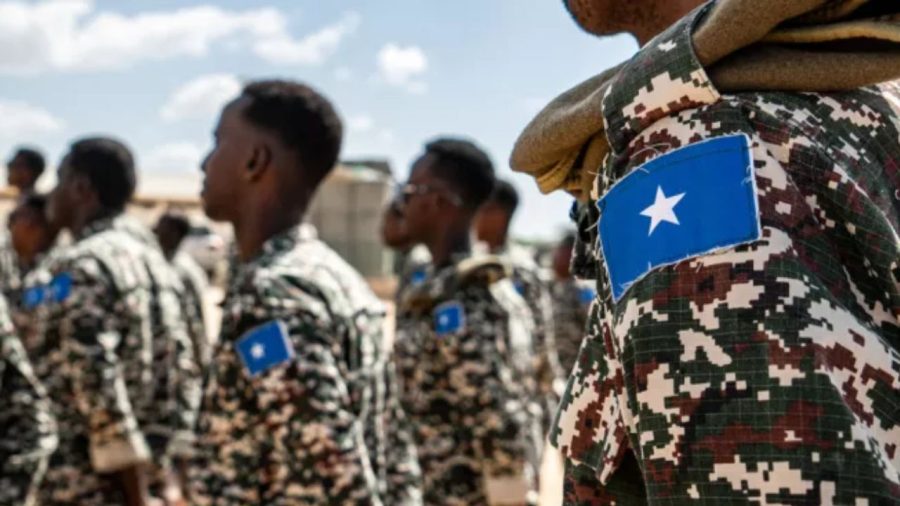
Meanwhile, army chief General Abdel Fattah al-Burhan told military recruits in Khartoum that the armed forces must remain a national institution.
At the UN Security Council, member states are negotiating a US proposal to expand the Darfur arms embargo nationwide before sanctions expire on 9 October. Russia and China expressed reservations, while the Sudanese government opposes a nationwide ban, arguing it impairs army defence capabilities.