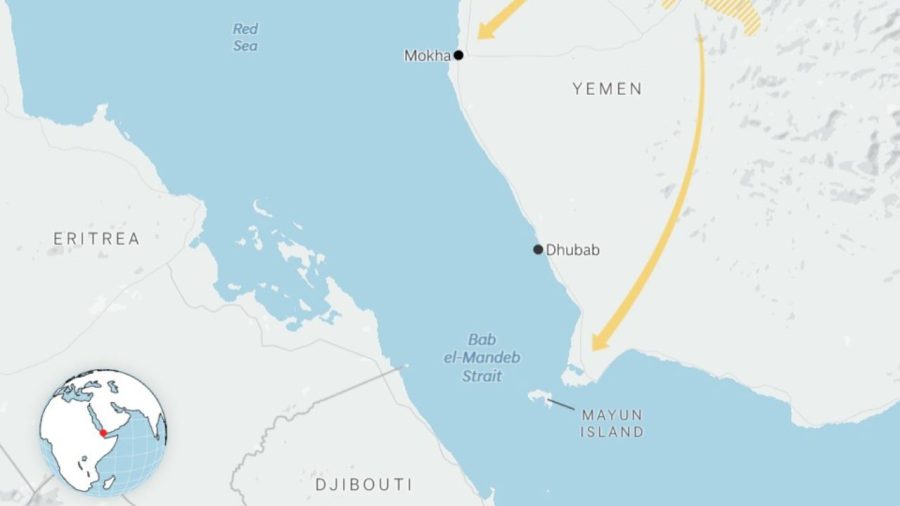

Following a rapid territorial expansion that seized key islands and vast stretches of Yemen’s Red Sea coast, Houthi representatives met US officials over the weekend at the American embassy in Muscat.
The Iran-aligned group tightened its hold on the Bab al-Mandeb Strait, a vital chokepoint carrying 12 per cent of global trade, but offered assurances that its restrictions would target only Saudi-linked shipping, leaving American vessels unmolested.
Despite these assurances, experts question their reliability, noting that any prolonged disruption to the strait, combined with existing restrictions in the Strait of Hormuz, threatens to send global energy and consumer prices soaring. Nevertheless, Washington appears inclined to take the group at its word. Six months into an unresolved conflict with Iran, depleted US military stockpiles and rising domestic war weariness have constrained Washington’s appetite for a fresh campaign in Yemen.
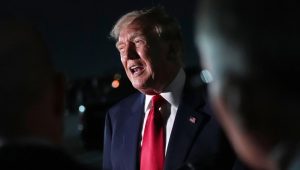
Behind the scenes, pressure on the White House has mounted sharply. Saudi Arabia’s Crown Prince Mohammed bin Salman reportedly called US President Donald Trump twice, urging him to launch direct air strikes against advancing Houthi forces.

Trump refused, opting instead to dispatch US Central Command chief Admiral Brad Cooper to Riyadh for coordination talks. While Trump publicly described the Crown Prince as a “good friend,” Washington offered no explicit military guarantees to defend Saudi oil infrastructure or shipping lanes.
Simultaneously, regional military chiefs from Israel, Saudi Arabia, the United Arab Emirates, Bahrain, Kuwait, Qatar, Jordan, and Egypt convened in a private meeting hosted by the US to evaluate options. Although Israel offered to intervene on Riyadh’s behalf, analysts suggest Saudi Arabia remains wary of relying on Israeli military power amid the ongoing Gaza conflict, fearing severe damage to its standing across the Arab world.



This perceived American hesitation is deepening Saudi anxieties over Washington’s reliability as a security guarantor. Consequently, Riyadh has accelerated efforts to diversify its defense alliances, recently expanding regional pacts with Pakistan and Türkiye.
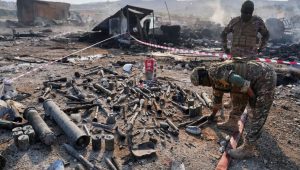
Domestically, entering another Middle Eastern conflict carries grave political risks for President Trump ahead of November’s midterm elections. With a recent Reuters/Ipsos poll showing American support for regional military engagements dropping to just 31 per cent, opening a new front in Yemen risks alienating voters tired of “forever wars.” Furthermore, military readiness reports indicate that critical US munition stockpiles—including long-range missiles and Patriot interceptors, are severely depleted, with the conflict against Iran costing over $33 billion in its first four months alone.
While some analysts suggest disruption in the Red Sea could harm China’s energy imports more than America’s, foreign policy experts dismiss the idea of a calculated US strategy, noting that rising transport costs ultimately feed into US inflation and harm key allies.
Meanwhile, European powers are attempting to plug the security vacuum. In Jeddah, Saudi Arabia hosted the 41-nation Combined Maritime Forces alliance to transition toward full operational deployment in maritime passages.
Concurrently, EU foreign policy chief Kaja Kallas declared Houthi attacks on shipping “unacceptable,” confirming that EU Operation Aspides has raised its alert level. Frustrated by European bureaucratic delays, Italy has announced plans to deploy additional naval assets independently to protect its commercial shipping, with 40 per cent of its global trade passing through the Suez Canal.
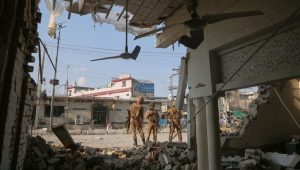
With over 125,000 Yemenis newly displaced and global supply chains hanging in the balance, Washington faces a stark reality: with its resources stretched thin and no clear off-ramp in sight, intervening in Yemen presents military, economic, and political hazards it simply cannot afford.