
Late senior Supreme Court advocate and former Jamaat-e-Islami leader Abdur Razzaq wrote in his autobiography that Jamaat should have directly apologised for its role in the 1971 Liberation War, highlighting the party’s past political stance, mistakes, and inflexible attitude towards internal reform.
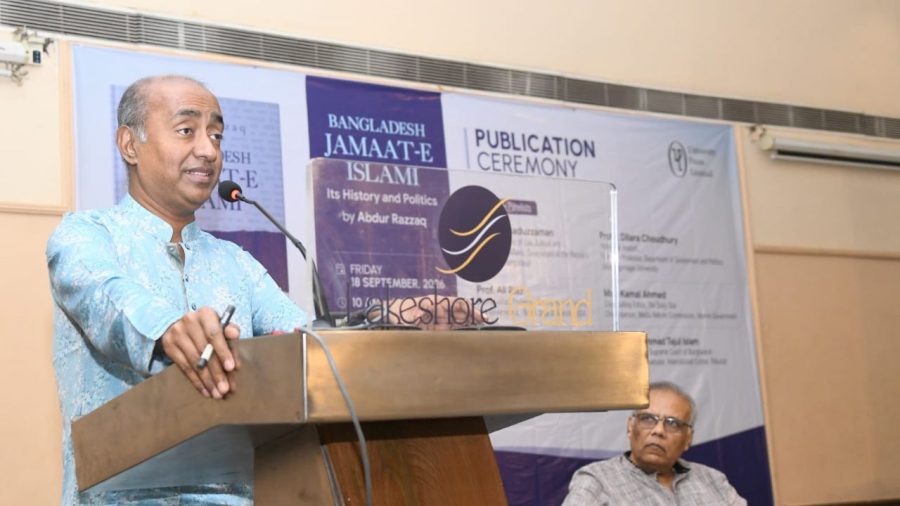
Addressing the gathering, the law minister expressed disappointment over the absence of Jamaat’s top leadership, adding that whilst dissent is inherent in a democracy, refusing to accept criticism is improper.
Reminiscing about his long-standing personal and professional relationship with Razzaq as junior colleagues in court despite ideological differences, Razzaq noted that when the BNP nominated him as human rights secretary, Razzaq encouraged him to campaign internationally against “fascism.”
The minister added that the autobiography encapsulates Razzaq’s long-cherished dream to break the cycle of reactionism and transform Jamaat into a progressive Islamic party.
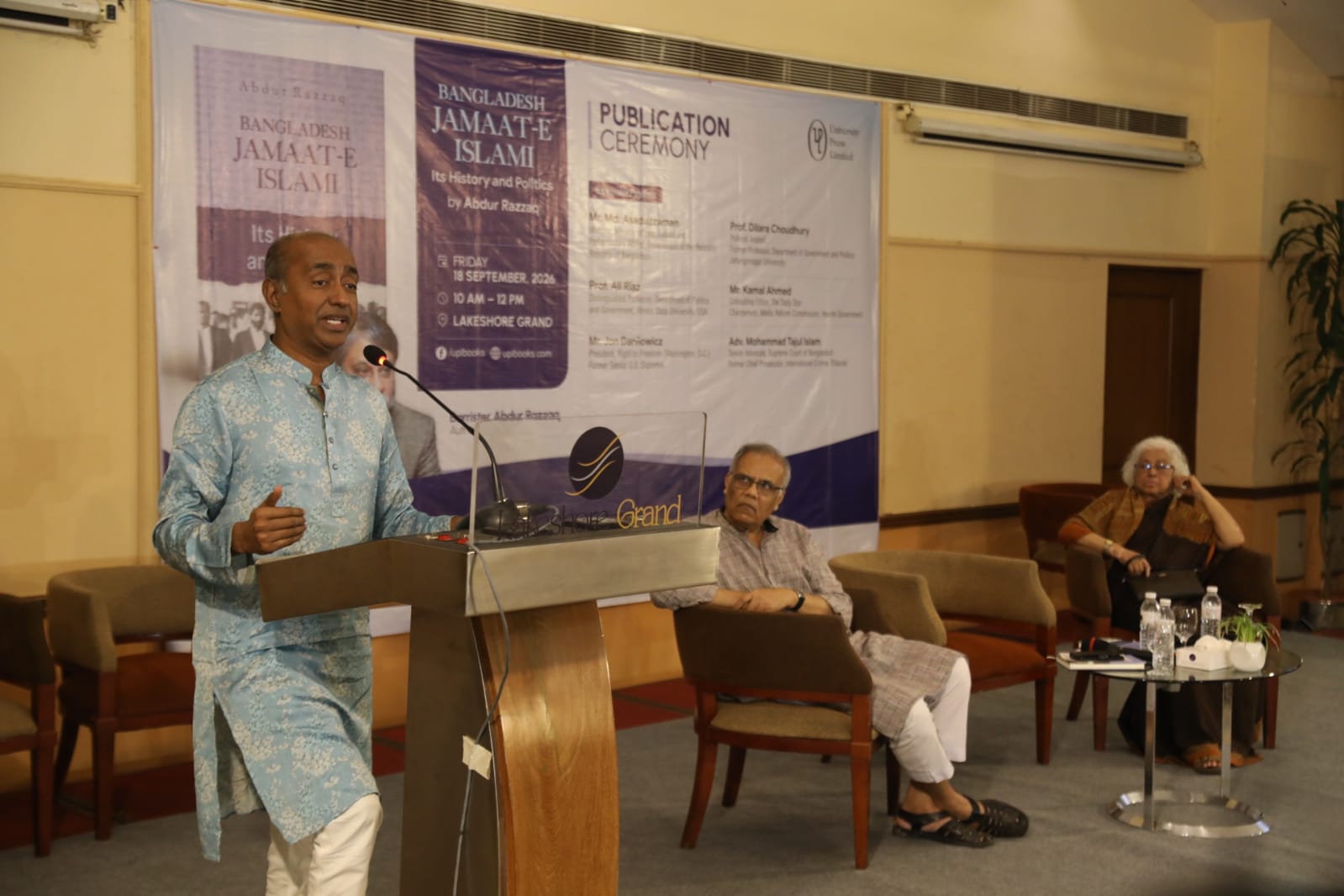
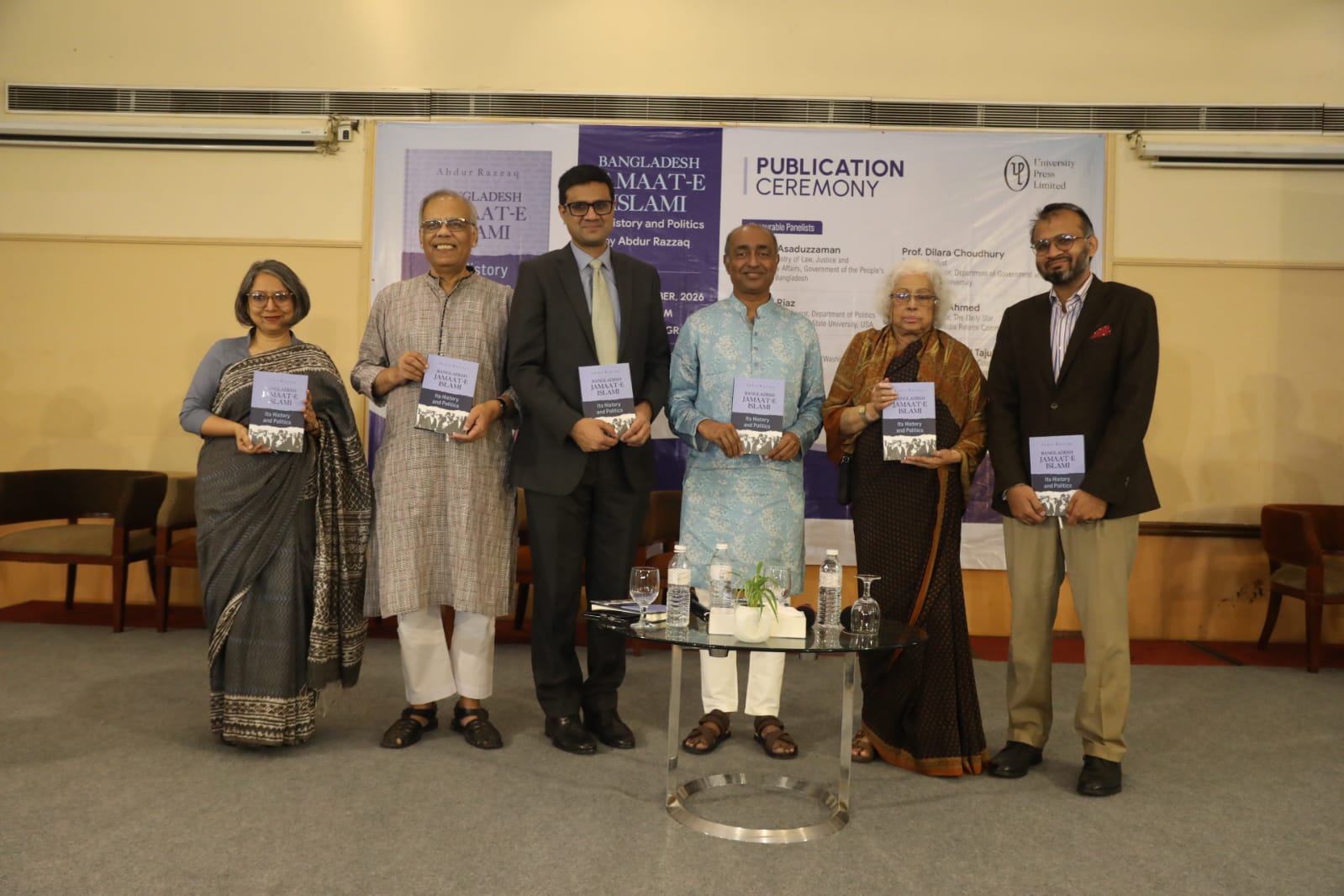
The book detailing Razzaq’s reflections was unveiled at an event attended by his wife and two sons, with the family recalling memories of their father. The gathering drew theorists, US diplomats, researchers, academics, journalists, and senior lawyers, although mainstream Jamaat leaders were notably absent.

Razzaq, who joined Jamaat in 1986, progressively consolidated his standing within the party, overseeing its legal affairs and international communications. In 2010, he served as one of the chief defence lawyers for Jamaat leaders convicted of war crimes.
However, following internal party disagreements, Razzaq left Bangladesh on 17 December 2013 and resigned from Jamaat.




His autobiography reveals how he repeatedly urged the party leadership to apologise for taking up arms in support of Pakistan in 1971, even sending a draft apology statement in 2016 to then acting Amir Maqbul Ahmad.
Following the mass uprising on 5 August 2024, Razzaq returned to Bangladesh, where he passed away on 4 May the following year.
Highlighting the significance of the publication, Ali Riaz, vice-chairman of the National Consensus Commission formed under interim government, described the book as the first full-fledged self-critical document originating from Jamaat’s top internal leadership.
Riaz observed that while public discussion has concentrated on the 1971 apology, the second part of the work raises profound questions regarding Islamist politics and statecraft.
Drawing parallels with Morocco, Turkey, and Tunisia, he stressed that seeking forgiveness for 1971 alone is insufficient, urging Jamaat to undergo an ideological reassessment and clarify its stance on democratic governance and “popular sovereignty.”
Former senior US diplomat Jon Danilowicz commended the publication as an exception among motivated works, adding that the practice of self-criticism should extend beyond Jamaat to wider society and other political parties, including the Awami League.
Senior journalist Kamal Ahmed remarked that no political entity opposing independence has ever formed a government in Bangladesh, asserting that Jamaat must resolve this historical baggage.
Ahmed also pointed out that the autobiography exposes Razzaq’s diplomatic engagements with US diplomat Stephen Rapp, as well as Jamaat’s historical contacts with the Awami League in 1979, 1986, and 1996.
Political analyst Dilara Choudhury, a retired professor of the Department of Government and Politics at Jahangirnagar University, emphasised that Jamaat must engage in dialogue with secular forces to survive.
She particularly highlighted Razzaq’s stance on women’s participation as outlined in the book, noting his arguments that clothing or hijab should not be a mandatory prerequisite for party membership, that women should be represented across all organisational tiers, and that a clear demarcation must be drawn between religious propagation (dawat) and political activities.
Choudhury also made reference to the 2012 constitutional modification Jamaat made under Election Commission pressure regarding the principle declaring “Allah is the owner of sovereignty.”