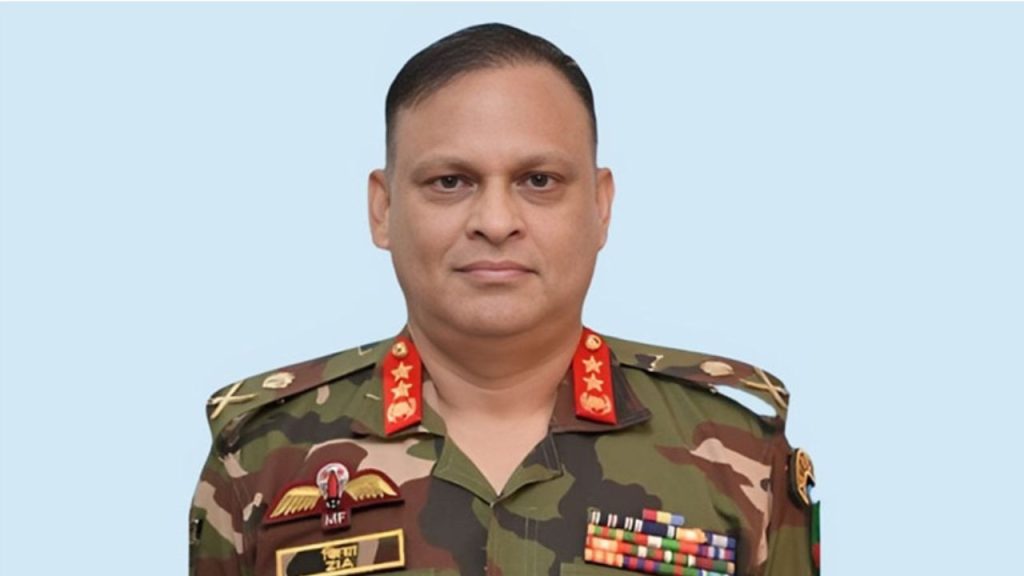



A witness has told the International Crimes Tribunal-1 that people picked up during RAB operations in 2010 were taken by boat to deep waters, shot and dumped into rivers, allegedly with the direct involvement of former RAB official Ziaul Ahsan.
Mohammad Abbas Mallik, 60, made the allegation while testifying before the tribunal on Wednesday in a case against Ziaul over enforced disappearances and killings during the Awami League government.
Abbas also alleged that his younger brother, Alkas Mallik, who worked as a boatman with RAB, went missing in 2011 after receiving a phone call asking him to meet “Zia sir”.
The witness said he wanted Ziaul to be tried for his brother’s disappearance.
The tribunal recorded his testimony. Defence lawyers Syed Mizanur Rahman and Shahidur Rahman later cross-examined Abbas, while prosecutors Mizanul Islam and Tasmirul Islam represented the prosecution.
Abbas, a fisherman and farmer from Dakshin Char Duani village in Barguna’s Patharghata, said RAB members regularly visited the Char Duani and Kathaltali areas in 2010 and asked boat owners to provide boats for their operations.
He said that on days when RAB came to the area, two members in plain clothes would arrive in the afternoon and ask shopkeepers to close their shops and turn off their lights after evening.
According to Abbas, four or five microbuses would arrive near an ice mill around 11pm or midnight. Detainees with their hands and eyes tied would then be taken from the vehicles and put on boats.

He said the detainees were brought from Dhaka. Cement sacks and ropes were also taken from a local shop before the boats were taken towards the Baleshwar River and into deeper waters.
After travelling for about one to one-and-a-half hours, the detainees would allegedly be brought out of the lower section of the boat, known as the “khonda”, or the covered upper section, known as the “bridge”.
“One detainee would be made to sit on the support on either side of the boat, while two RAB members held him down,” Abbas said.
He alleged that “Zia sir” would then shoot the detainee in the head, ear or chest. “Some were shot once and some twice,” he said.
The witness said cement sacks were tied to the victims’ necks or legs before their bodies were thrown into the river.



He further alleged that other detainees were taken to the Sundarbans, where they were killed in staged incidents. RAB members would then call journalists and hand over the bodies to different police stations, he said.
Abbas said the boats had to be washed after the operations because of blood and body matter left inside them.
He also alleged that after returning to Char Duani, Major Sabbir would tell the boatmen that “Zia sir” wanted to see them. Ziaul would then give each boatman Tk2,000 to Tk5,000, sometimes in an envelope, Abbas said.
Brother went missing after RAB call
Describing Alkas’s disappearance, Abbas said his brother received a call from someone identifying themselves as a RAB member sometime in mid-2011.
“He was told, ‘Zia sir has asked you to come to Bottola Manik Khalı’,” Abbas said.
He said Alkas used to discuss RAB activities in the local market, prompting other boat owners to warn him that “RAB was very angry with him”.
Alkas left home after lunch that day, Abbas said. Around 7pm or 8pm, his wife called Abbas and told him that Alkas had gone to Bottola Manik Khalı to meet Zia sir after receiving the RAB call, but his phone was now switched off.
The family searched for him and went to RAB offices in Khulna, Patuakhali, Barishal and Dhaka, but could not find him, Abbas said.
A general diary was later filed at Patharghata Police Station. Abbas alleged that although the family requested that Ziaul and RAB be named in the GD, police did not include their names.
“I could not find my brother anywhere else,” he said.
“I want Zia sir to be tried for the disappearance of my younger brother Alkas Mallik.”
Ziaul complains about security measures
After the testimony, Ziaul Ahsan sought permission to address the tribunal.
He said he had suffered pain in his waist and neck during military training, but was made to wear handcuffs, a helmet and a vest or jacket while being brought from jail to the tribunal.
“I feel like I am everyone’s target. I want justice,” he said, seeking exemption from the measures.
Prosecutor Mizanul Islam said the matter was under the jurisdiction of the prison authorities. However, he said the court could take action if law enforcement agencies acted unlawfully while bringing Ziaul to the tribunal.
He said the security measures were likely being used for Ziaul’s protection.
Ziaul replied that the distance between the prison van and the tribunal’s holding cell was only about five yards and that around 20 police personnel were present when he was taken out of the vehicle.
The tribunal observed that a person could be targeted by a sniper from even one yard away.
Ziaul replied that security at the tribunal was much tighter and again sought exemption from wearing handcuffs, a helmet and a vest.