Maize farmers in Gaibandha’s riverine char areas are struggling to obtain fertiliser during the peak planting season, forcing some to pay up to Tk500 extra per bag and raising concerns over cultivation in a region where the crop generates an estimated Tk500 crore annually.
Despite travelling long distances by river to reach authorised dealers, farmers say they receive only a fraction of the fertiliser they need. The appointment of local sub-dealers has also failed to resolve the problem.
The Department of Agricultural Extension (DAE) has set a target of cultivating maize on 18,000 hectares across the district’s 165 large and small chars this season, more than 1,000 hectares above previous years.
Farmers fear that delays in applying fertiliser could damage their crops and threaten their livelihoods.
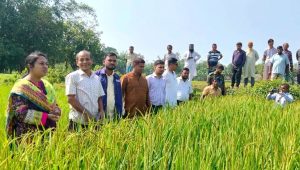
Across Gaibandha’s char areas, farmers are busy preparing land, planting maize and tending young crops, while others have completed land preparation but are waiting for fertiliser.
Many are spending an extra Tk300 to Tk400 on travel and transport to collect fertiliser from distant dealers, while others are paying higher prices to buy it elsewhere.

Al Amin, a farmer from Ujaldanga village in Fazlupur union of Fulchhari, said authorised dealers were supplying insufficient quantities.
“The dealer gives us only a small amount. We have to buy fertiliser elsewhere at Tk400 to Tk500 more per bag to meet our requirements,” he said.
Sabuj Mia, a farmer from Guptamanir Char, said the shortage had created uncertainty over maize cultivation.
“We are planting maize, but the fertiliser shortage is so severe that we do not know what will happen to our crops,” he said, urging the government to allow open-market sales.


Another farmer, Samad Mia, alleged that farmers were being sent from dealers to agriculture officials without receiving fertiliser.
“I have already irrigated my maize field, but there is no fertiliser. If we cannot apply it on time, the plants will turn red and die, causing huge losses,” he said.
Ab Hasnat, another farmer cultivating 35 bighas, said he had received only two bags of fertiliser.
“Two bags are nowhere near enough. We cannot let our crops be ruined after investing so much effort. I am trying to collect fertiliser elsewhere, even at higher prices,” he said.
Maynul Pramanik of Mollar Char and Aizar Ali of Lal Chamar Char in Sundarganj also demanded open-market fertiliser sales, saying farmers should not have to struggle for essential agricultural inputs during the planting season.
Md Mizanur Rahman, a government-approved chemical fertiliser dealer under the Bangladesh Chemical Industries Corporation in Old Fulchhari, blamed limited monthly allocations and farmers needing fertiliser at the same time.
“We distribute whatever fertiliser the government allocates. Once the stock runs out, we cannot supply more, even if farmers need it,” he said.
Maize cultivation has transformed Gaibandha’s chars, where large stretches of land previously remained uncultivated. The crop has helped reduce seasonal poverty while supplying raw materials for human consumption and livestock feed.
The crop is particularly attractive to char farmers because cultivation costs are comparatively low and returns are higher than those of several alternative crops.
Gaibandha DAE Acting Deputy Director Md Asaduzzaman attributed the increased pressure on fertiliser supplies partly to early planting.
“Normally, maize cultivation begins around November. This year, farmers started planting in early October because of early flooding,” he said.
He said farmers were also trying to collect several times the amount of fertiliser they immediately needed.
“There are adequate stocks in government warehouses. These will be distributed to farmers in phases. There is no reason to worry,” he said.
However, farmers say they need fertiliser on time, even if there are enough stocks in government warehouses.