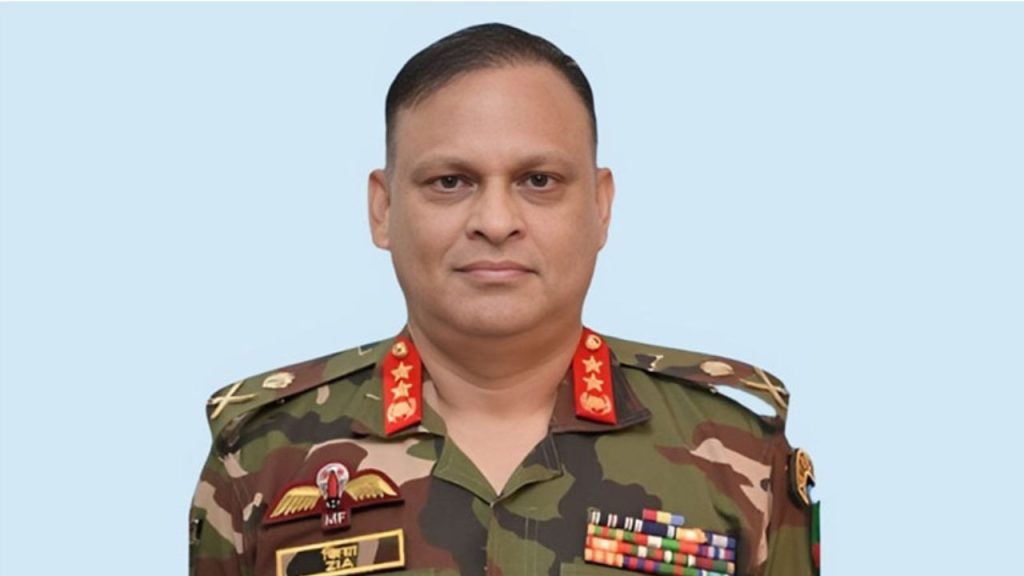

Retired Major Khondkar Mohammad Sajjadul Islam on Sunday told International Crimes Tribunal-1 that he saw former army officer Ziaul Ahsan shoot a blindfolded detainee and throw him from a bridge during a Rapid Action Battalion (RAB) operation in 2011.
Sajjadul, 55, said the incident took place only hours after he joined RAB-3. He claimed that when he later refused to take part in a similar operation, he was reprimanded, threatened and sent back to the Bangladesh Army the following day.
He testified against Ziaul, who is accused of involvement in enforced disappearances and killings during the tenure of the former Awami League government.
Prosecutor Shyikh Mahdi submitted represented the prosecution, while lawyer Sahidur Rahman appeared for the defence. Sajjadul said he was transferred to RAB under a government order and joined its headquarters on 5 July 2011. After completing six days of formalities, he was posted to RAB-3 on 11 July.
At the time, Lieutenant Colonel Ziaul Ahsan was serving as director of RAB’s intelligence wing.

According to Sajjadul’s testimony, RAB-3 Commanding Officer Lieutenant Colonel Rafiqul Islam told him on the day of his posting that he would have to join an operation that night under Ziaul’s command.
At around 11pm, he met several plain-clothes officers outside RAB headquarters before a convoy of four vehicles travelled through Tongi towards a secluded area.

Sajjadul said the convoy stopped on a bridge, where a blindfolded and handcuffed detainee was taken out of one of the vehicles. He alleged that Ziaul took the detainee to the bridge railing, shot him in the back of the head and threw him over the side.
Sajjadul told the tribunal that he was stunned by what he had witnessed.
The convoy later stopped on another bridge, where Ziaul allegedly ordered Sajjadul to lead what he described as an “anti-terrorism operation”. Sajjadul said he asked what the order meant, prompting Ziaul to become angry, reprimand him in English and tell him to remain inside the vehicle.
He testified that after refusing the order, he feared he might be killed in a staged gunfight, lose his job or be transferred to a remote posting. While waiting inside the vehicle, Sajjadul said he heard what sounded like a gunshot.
At another location, he allegedly saw several men dragging away another blindfolded person, who did not return.
Although the convoy stopped at several more places, Sajjadul said he remained inside the vehicle until the operation ended. He was later dropped off at Staff Road in Dhaka Cantonment.
The following day, 12 July, Sajjadul learned that he had been withdrawn from RAB and sent back to the Bangladesh Army. He was ordered to report directly to the Ordnance Depot at Cumilla Cantonment.
Sajjadul said the usual procedure requiring officers returning from RAB to first report to Army Headquarters was not followed in his case. He also claimed that three to four days after the incident, a national daily reported the recovery of three bullet-hit bodies from the Joydebpur area of Gazipur.
Sajjadul told the tribunal that he was later branded an “unreliable” and “disobedient” officer within the army.
He claimed that despite being an honest and competent officer, he was denied further promotion and eventually took voluntary retirement in 2013, around 12 years before his scheduled retirement.