
A landmark oil agreement signed between the United States and Venezuela has triggered widespread anger, confusion, and accusations of a “new colonialism” from critics and political figures.
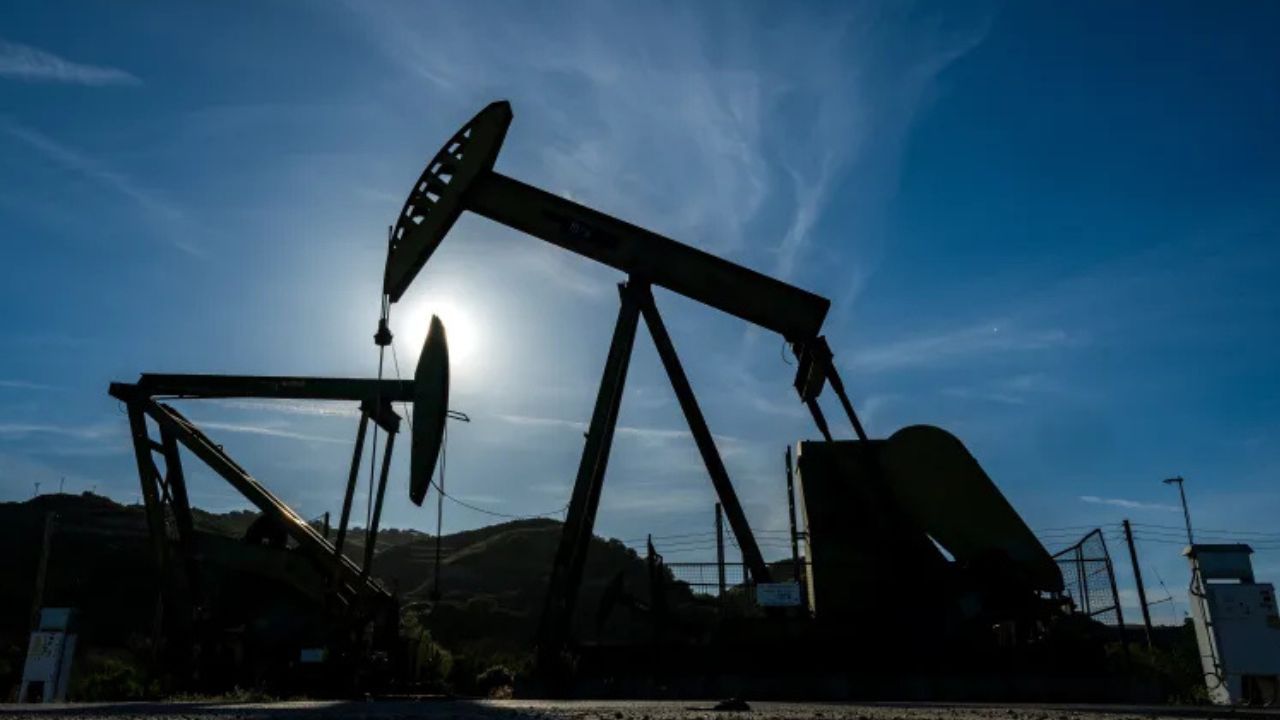
The sweeping deal, signed in Caracas on Wednesday, grants a US-led company 100-year concessions over 17 Venezuelan oilfields, representing approximately 65 billion barrels of crude oil. This colossal volume equates to more than a fifth of the country’s proven oil reserves, reports BBC.
While both governments have lauded the agreement, it has exposed deep divisions within both the opposition and left-wing factions in Venezuela.
‘Historic’ triumph or colonial takeover?
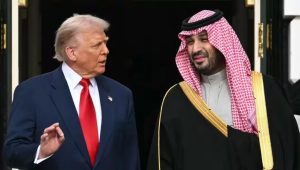
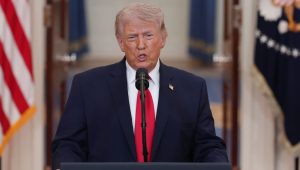
US President Donald Trump heralded the agreement as “the biggest oil deal in world history”. His administration previously made securing Venezuela’s oil resources a primary objective following the forcible removal of President Nicolás Maduro by elite US troops in January.
At the time, President Trump asserted that the United States would “run” the South American nation and manage its oil sales for the foreseeable future.
Interim Venezuelan President Delcy Rodríguez, who signed the opaque deal, described it as “historic”, claiming it would generate $100 billion (£74 billion) in investment and more than $200 billion in tax revenue.
According to a framework fact sheet released by the White House, the US government will collaborate with North American Blue Energy Partners (Nabep), a private firm that is Venezuela’s second-largest private oil producer after Chevron.

Under the arrangement, the US government maintains extraordinary veto power over the appointment of any Nabep board member, and a majority of the board must be US citizens.
Defending the pact, US Secretary of the Interior Doug Burgum told Fox Business that the agreement was “shifting the geopolitical centre of the global energy markets” away from Middle Eastern “choke points” and back to the Western Hemisphere.
The White House also proclaimed that the deal has “re-established the Monroe Doctrine,” a 19th-century principle asserting US authority across South America to purge “malign influence” and secure unquestioned American dominance.
Hardline criticism and unrealistic timelines
However, the terms of the agreement have drawn fierce condemnation from across the political spectrum.
Elliott Abrams, Donald Trump’s former special representative on Venezuela and Iran, slammed the pact as a “terrible deal”.



“Rodríguez has given away 20 per cent of the national patrimony for nothing,” Abrams said, suggesting she was merely complying with Washington’s demands.
While Abrams admitted there was geopolitical logic to the partnership given the unreliability of Gulf oil supplies, he described the terms as a “kind of fever dream of what colonialism looks like”.
Energy experts have also cast doubt on the official timeline. While President Trump claimed the deal would yield profits within two to three years, industry analysts warn that a decade is far more realistic given the dilapidated state of Venezuela’s oil infrastructure.
Luis Pacheco, of the Baker Institute at Rice University in Houston, pointed out that Venezuela must invest approximately $100 billion over eight years just to return to its production levels of 30 years ago.
“Are they going to put the same people in charge of managing that money who already squandered the biggest oil boom of the century?” Pacheco asked.
Opposition and socialist fury
The agreement has infuriated the Venezuelan opposition, who are deeply concerned by Washington’s deepening relationship with Delcy Rodríguez.
Opponents accuse her of heading the same regime as Maduro, whom the Trump administration had previously decried as a corrupt drug cartel leader before surrounding the country with a massive naval armada.
María Corina Machado, a Nobel Peace Prize winner and presidential hopeful who previously presented President Trump with her Nobel medal, has chosen to remain silent publicly, as she requires US support to achieve power.
However, other opposition figures have been highly vocal. Venezuelan economist Ricardo Hausmann published a fierce rebuke on social media directed at US Secretary of State Marco Rubio.
“You chose to use the power of the United States not to liberate Venezuelans, but to ally yourself with our oppressors,” Hausmann wrote.
He accused Rubio of opting for an “asset seizure” and an “unconstitutional agreement with an illegitimate and oppressive government” instead of using US leadership to restore democracy and constitutional order.
For many opponents, the total lack of an imminent election, or any pathway towards one, represents a profound betrayal.
Betrayal is also felt intensely on the political left. Although the ruling socialist party, PSUV, has officially backed Rodríguez, many Venezuelan socialists see the agreement as outright capitulation to Washington after nearly three decades of anti-imperialist resistance.
Rafael Ramírez, the former head of the state-run energy firm PDVSA and oil minister under former President Hugo Chávez, stated that the deal “hands over [the oil] and opens the doors to a new colonialism of the United States”.
The concessions stand in sharp contrast to the legacy of Chávez. In early 2008, Chávez famously expropriated ExxonMobil’s oilfields in the Orinoco River Belt, declaring during his Aló Presidente television programme that the state held the reins of its oil wealth and would “never let them go again”.
Chávez had thundered to PDVSA staff that past pro-Washington governments had turned Venezuela into “a nation of gringos” through the “theft” of the nation.
Yet, it is Chávez’s own disciple, his handpicked successor’s successor, who has now signed this opaque deal with Washington and praised it as a victory for Venezuela.