


Farmers in Chapainawabganj have started transplanting Aman paddy seedlings across the district, but a shortage and higher prices of fertiliser and sales above government-fixed prices have left many struggling during the crucial farming season.
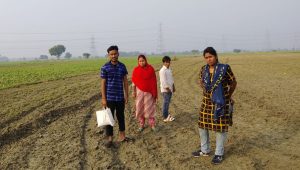
From Nachol, Gomostapur, Shibganj and Sadar upazilas, farmers were seen working in muddy fields from early morning, planting seedlings amid favourable weather. However, their concerns over fertiliser availability have overshadowed the busy cultivation period.
Farmers said they were unable to buy chemical fertilisers from authorised dealers at government rates and were being forced to purchase them from retail markets at higher prices.
According to government rates, a 50kg bag of TSP fertiliser should be sold for Tk1,350, DAP for Tk1,050, MOP for Tk1,000 and urea for Tk1,350. But farmers alleged that they were paying Tk1,400–1,500 for TSP, Tk1,450–1,500 for DAP and Tk1,500–1,800 for urea due to the shortage.
They also alleged that dealers often refused to provide cash memos, claiming stocks had run out shortly after opening their shops.
Rafiqul Islam, a farmer from Fatepur village in Nachol, said he failed to buy a bag of TSP despite having a farmer card.

“I visited the dealer for three days, but was told there was no supply. However, fertiliser was available at nearby shops if I paid an additional Tk400,” he said.
A visit to several local markets found that many BCIC and BADC-approved dealers had no fertiliser in stock, while nearby retail shops were selling the same products at higher prices.
A retailer near a BCIC dealer’s shop in Shibganj’s Kansat market was found selling a 50kg bag of DAP at Tk550 above the government-fixed price. The shop employee claimed that fertiliser was collected through different channels involving middlemen and dealers, causing prices to rise.




Dealers said the allocated supply was insufficient compared with demand. A dealer in Kansat said the fertiliser received for July and August was sold out within two to three days due to high demand from thousands of farmers.
The shortage also triggered unrest in parts of the district. On 8 August, hundreds of farmers gathered at BCIC dealer points in Nachol from early morning, creating concerns over disorder. The upazila administration and agriculture office intervened and ensured sales in an orderly manner.
Agriculture officials said five authorised dealers in Nachol sold around 7,500 bags of urea, MOP and DAP fertiliser at government prices under administrative supervision.
Nachol Upazila Agriculture Officer Saleh Akram said the temporary crisis was caused by lower-than-required central allocation.
“Most farmers’ demand was met through sales that day. We expect the remaining allocation to arrive next week,” he said.
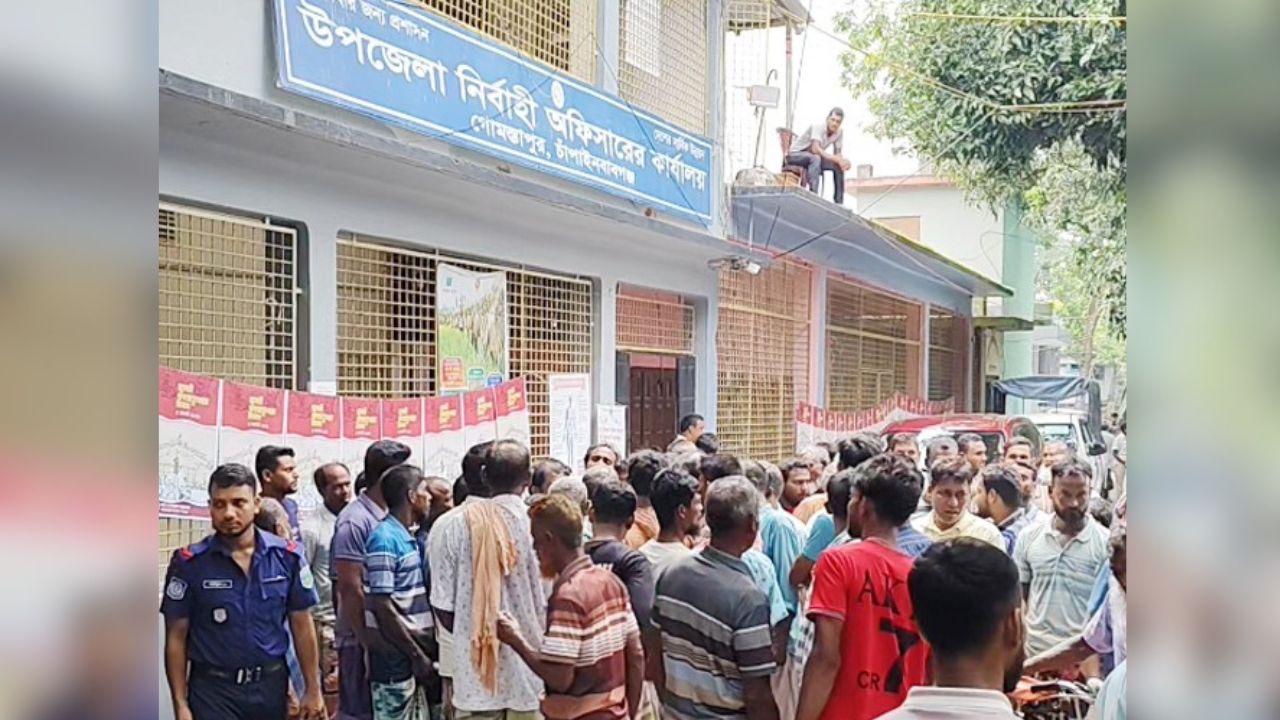
Meanwhile, farmers in Rohanpur Union of Gomostapur staged a protest on 12 August demanding adequate fertiliser supply and sales at government prices. They submitted their demands to Upazila Nirbahi Officer Zillur Rahman.
Gomostapur Upazila Agriculture Officer Md Saklain Hossain said a temporary shortage occurred as the fertiliser dealer concerned had not lifted supplies.
“The dealer will collect fertiliser and distribute it among farmers gradually. The crisis is expected to ease,” he said.
Chapainawabganj Department of Agricultural Extension Deputy Director Atikul Islam said the district has set a target of cultivating Aman paddy on 50,000 hectares this season.
“More than one-third of the targeted land has already been planted, and transplantation is continuing across the district,” he said.
He added that fertiliser allocation for the 2026–27 Aman season had increased compared with last year.
However, farmers and local stakeholders blamed poor dealer management, delayed distribution and alleged artificial shortages for the price gap in the market.
Chapainawabganj Deputy Commissioner and president of the district fertiliser and seed monitoring committee Md Abu Saleh Mohammad Musa said no formal complaint had yet been received regarding artificial shortages or overcharging.
“However, the issue is being monitored seriously. If any dealer or retailer is found creating an artificial crisis or charging even Tk1 more than the government-fixed price after investigation, strict action will be taken, including cancellation of licences,” he said.