


In a quiet corner of Madhupur’s rolling hills, one institution is redefining higher education.
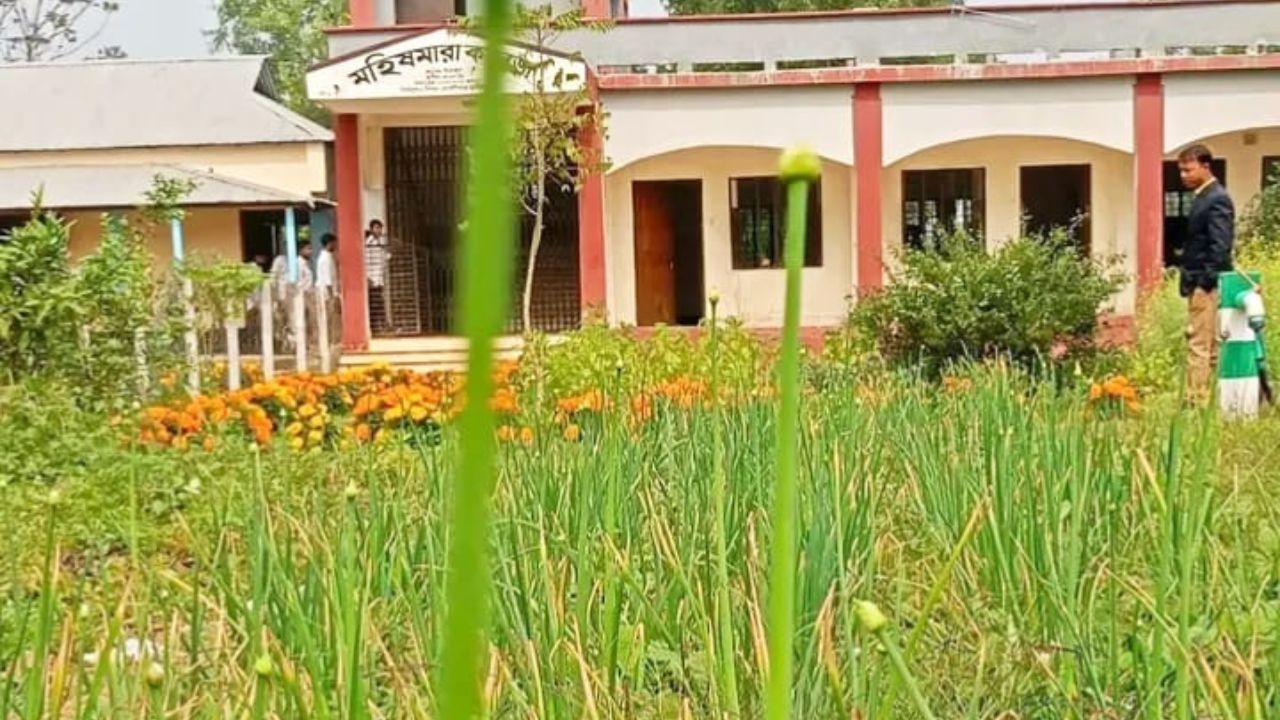
At Mahishmara College in Tangail, learning expands far beyond the four walls of a classroom. Here, students balance textbooks with spades, hoes, and sickles, gaining invaluable life lessons directly from the soil.
Established in 2013, the college blends traditional academics with hands-on agricultural training, a pioneering model designed to nurture self-reliant graduates.
The mastermind behind this movement is visionary farmer Sanoar Hossain, recipient of the 2022 National Agriculture Award.
Having donated both inherited land and his own property to set up the institution, Sanoar now serves on the governing body and personally trains students in modern farming techniques.

Located 50 kilometres northeast of Tangail town, Mahishmara village sits amongst fertile red soil and vibrant fields, long celebrated for pineapples, bananas, papaya, ginger, and turmeric. For years, financial constraints forced local youth to abandon dreams of higher education. Sanoar stepped in to bridge this gap, creating a local hub where rural students could thrive without severing their roots.
The college was built across 135 decimals of land, 95 decimal donated by his father and 40 decimal owned by Sanoar, go enlisted on government’s MPO scheme in 2022, and boasts a dedicated permanent facility constructed by the education department.
Today, 18 teachers guide over 300 students.




Yet, the true hallmark of Mahishmara College remains its field-based learning programme. Launched in 2018 on a 40-decimal plot on campus, the practical course teaches students how to cultivate chemical-free crops, prepare seedlings, and manage farmland using cutting-edge methods.
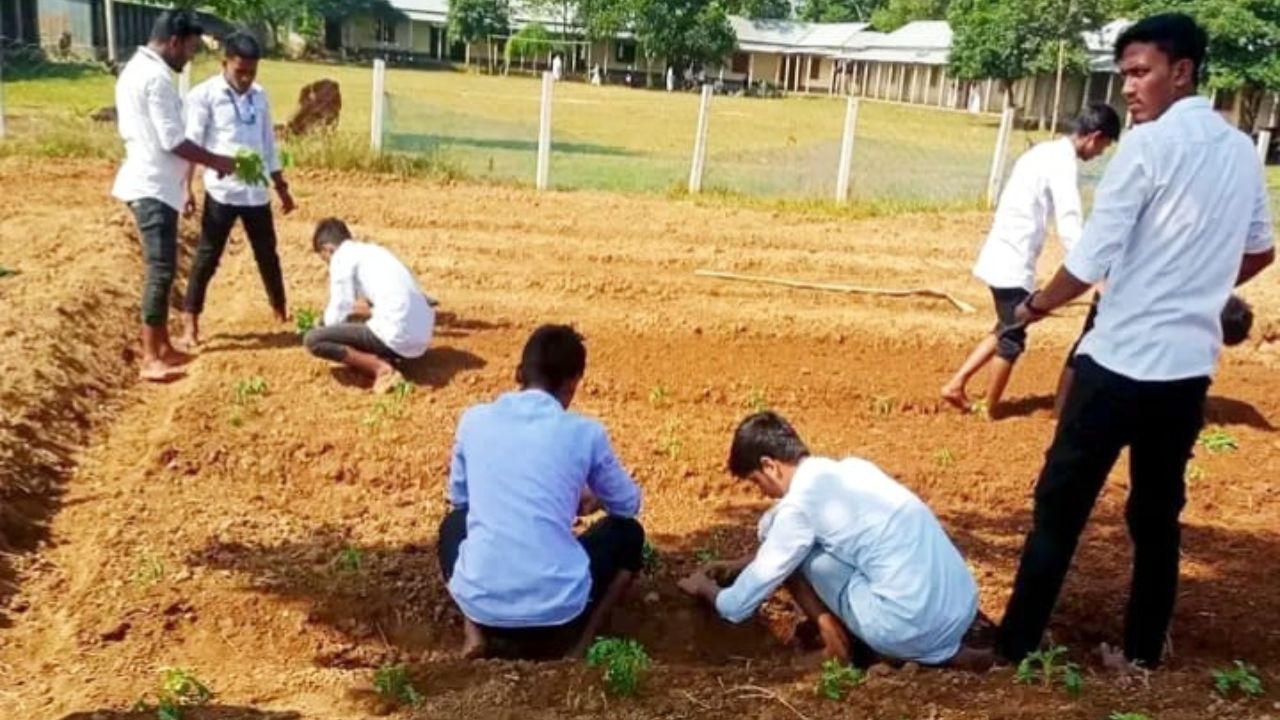
During class breaks and holidays, students eagerly head out to the fields, applying Sanoar’s guidance step-by-step.
“Students are divided into groups and happily dive into agricultural work,” says lecturer Shahidul Islam.
The impact extends well past the campus perimeter; many undergraduates now run successful home garden plots, testing innovative techniques on their family land.
For Sanoar, who left teaching to build a flourishing agricultural career growing everything from dragon fruit and malta (orange) to coffee, farming is a dignified, lucrative path. His goal is simple: ensure no graduate faces unemployment.
Sanoar said that after completing his graduation in 1992, he joined a school in Sylhet as an English teacher. However, after three and a half years, he felt drawn back to his roots and returned to his village, where he served as the headteacher of a local school for two years.
But his passion for agriculture eventually prompted him to leave that job as well.
During a visit on a working day, it was found that two classes were underway around noon, while at least 30 students were busy working at the production-oriented agro plot. Sanoar was teaching them soil preparation techniques ahead of sowing vegetable seeds. Following his instructions, the students were preparing the soil themselves.
Crucially, practical work has not compromised academic excellence.
College Principal Abdur Razzaq revealed that out of 99 students who sat the 2025 HSC examinations, 98 passed, with four achieving top GPA-5 marks.
Madhupur Upazila Nirbahi Officer and president of the college governing body, Md Saiful Islam, believes Mahishmara College offers a blueprint for the nation.
In this remarkable corner of Tangail, education takes root in the classroom, but truly flourishes in the field.