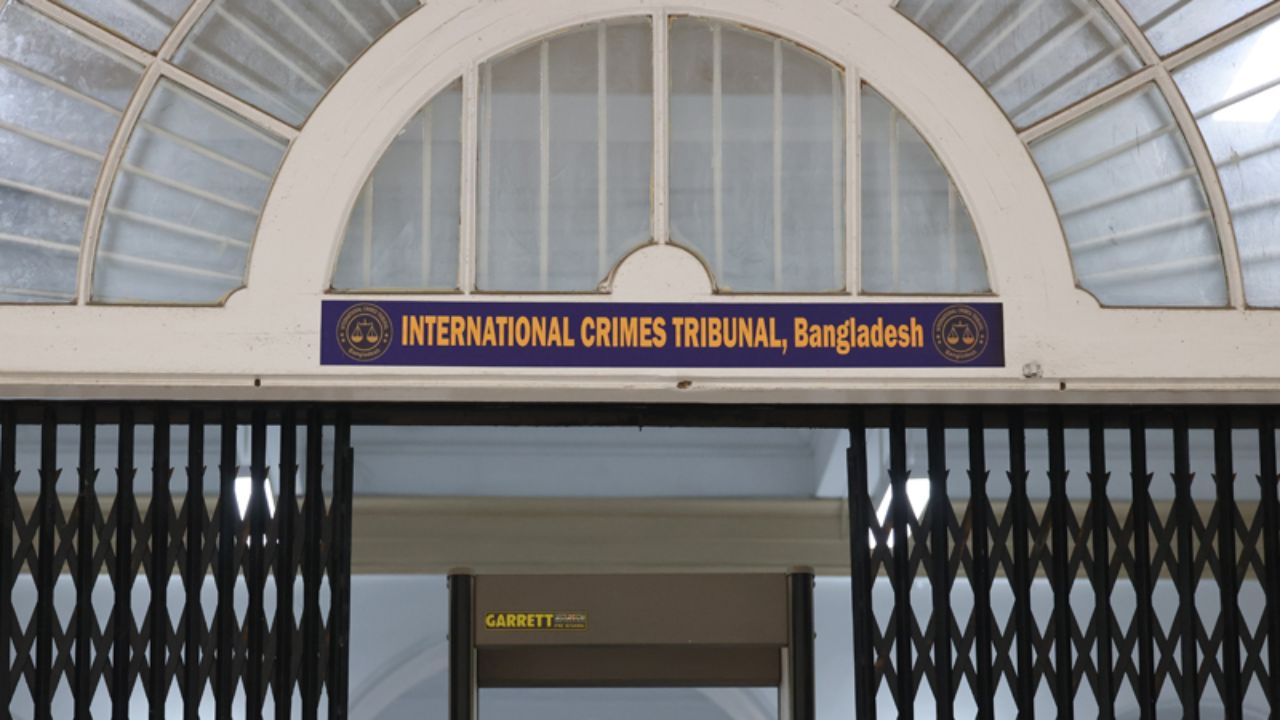



The violent attacks on student and public protesters during the July Uprising were not the spontaneous decisions of individual leaders, but rather a planned organisational decision of the then ruling Awami League, the prosecution argued before the International Crimes Tribunal-2 (ICT-2).
On the second day of arguments on Thursday, Prosecutor Gazi MH Tamim presented intercepted phone records, United Nations (UN) reports, and contemporary press evidence to show that the violence was result of a coordinated political decision by the party’s top leadership.
The prosecution presented a forensic report of an intercepted telephone conversation from 11 July 2024 between Awami League General Secretary Obaidul Quader, and now-banned terrorist organisation Chhatra League President Saddam Hussain.
In the recording, which was seized by the tribunal’s investigation agency, Saddam informed Quader that the protesters had completed their activities for the day and would announce a new programme at 8:30pm.
Quader responded by asking, “Why don’t you beat them?,” “Why don’t you hit them?,” and “Why do you let them grow?.” Saddam then gave his reaction.

Prosecutor Tamim argued that such directives from a ruling party’s general secretary to the head of its subordinate student wing constitute criminal incitement under the International Crimes Tribunal Act.
The prosecution further detailed timeline of the violence, pointing to public statements made by the leadership. On 14 July 2024, the then prime minister labelled the protesters as “grandchildren of Razakars.”
Following this, Obaidul Quader publicly declared that Chhatra League alone was sufficient to suppress the movement and would answer the “Razakar” slogan.


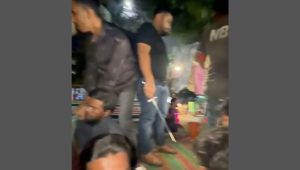
The prosecution submitted contemporary newspaper reports showing that on the very next day, 15 July, armed Chhatra League activists launched a violent assault on more than 300 unarmed students and members of the public at Dhaka University.
The victims were beaten, shot, and hacked. When some of the injured sought treatment at Dhaka Medical College Hospital, they were attacked there as well.
Additionally, the prosecution cited a post-uprising United Nations report which explicitly named Obaidul Quader. The UN report said, as general secretary and a government minister, Quader incited activists of Chhatra League, Jubo League, and Awami League through his various public statements.
The prosecution also submitted evidence of Quader ordering party activists to build “ward-by-ward” resistance against the protesters.
Prosecutor Tamim said this collective body of evidence proves the violence was a systematic organisational policy. Following these directives, armed Awami League activists across various wards and districts launched coordinated attacks on protesters, resulting in numerous casualties.
Addressing journalists on whether calling for “resistance” during political protests constitutes a crime, Prosecutor Tamim explained that public calls for political resistance are entirely different from private phone instructions to “beat” and “hit” protesters.
He added that the direct consequence of these instructions was the armed attack at Dhaka University, proving that the public calls for “resistance” were in reality executed as orders to attack.
The tribunal has adjourned the hearing until 9 August. The presentation of arguments initially commenced on 4 August. Charges were formally framed on 22 January against Obaidul Quader and six other co-accused.
The other six accused in the case are Awami League joint general secretary AFM Bahauddin Nasim, former state minister for Information Mohammad Ali Arafat, Jubo League president Sheikh Fazle Shams Parash, Jubo League general secretary Mainul Hossain Khan Nikhil, Chhatra League president Saddam Hussain, and Chhatra League general secretary Sheikh Wali Asif Inan.
On 18 December last year, the court took formal cognizance of the prosecution’s charges and issued arrest warrants against all seven individuals.
As law enforcement agencies have been unable to arrest the accused, the state has appointed defence lawyers at public expense to represent them. The prosecution said there is no legal bar to conduct the trial in absence of the accused.