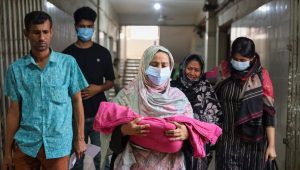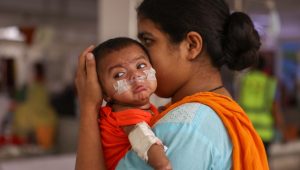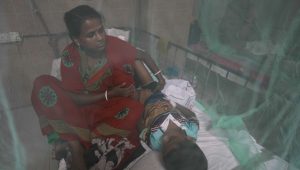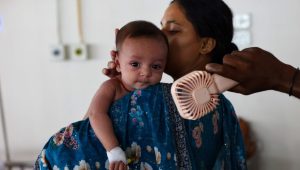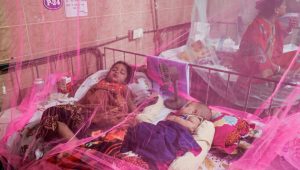



Concerns have emerged after multiple cases of children contracting measles while receiving treatment at the 250-bed General Hospital in Barguna.
The infectious disease has spread not only among children but also among adults in this coastal district. Despite the vaccination campaign, the disease remains uncontrolled due to poor adherence to health protocols.
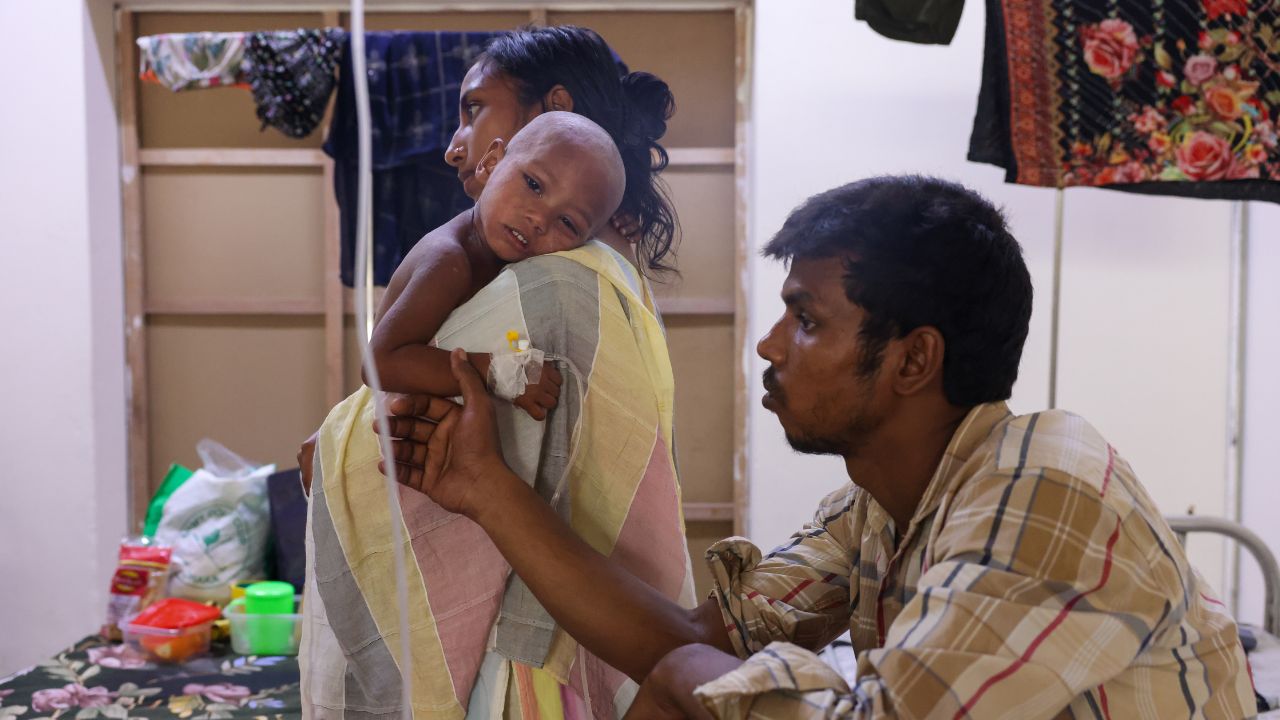
Six-month-old Amin from Ray Tabok village in Barguna Sadar was admitted to the hospital on 4 July with fever and a runny nose. Although his fever subsided, measles symptoms appeared on 8 July, and tests later confirmed the disease.
His grandmother, Adiba Begum, said the family was then transferred from the fourth-floor paediatric ward to the fifth-floor measles ward.
She explained that anyone arriving with fever and measles symptoms is first admitted to the general paediatric ward alongside other sick children. Once measles is confirmed, they are moved to the dedicated measles unit.
Among adults, one patient, 42-year-old Runu Begum, came to the hospital at the end of June with her daughter’s fever. She stayed in the paediatric ward with her daughter for a few days. Although her daughter recovered, Runu herself contracted measles.

Observations in the hospital’s paediatric and measles wards show that patients and relatives are not following health guidelines. Visitors move freely in the measles ward, and healthy children have also been seen entering the area.
In April, Barguna Sadar Upazila recorded the highest rate of measles infections in the country. According to the World Health Organisation, at that time the infection rate was 16.8 per million people nationwide.
Meanwhile, EPI data shows that in Barguna Sadar the rate was 294.5 per million — the highest in the country.


Expanded vaccination programme data from EPI confirms that Barguna Sadar Upazila had the highest infection rate in Bangladesh.
Abdur Rahman, WHO’s Barguna representative doctor, told TIMES of Bangladesh that while investigating the high infection rate, they found extreme mismanagement by hospital authorities and a lack of awareness among the local population.
He said, “If people are careless or hospital authorities are mismanaged, infection will increase.”
Hospital supervisor Md Rezwanur Alam said the facility is facing a shortage of doctors, nurses, and sanitation staff.
The 250-bed hospital always has 550–700 patients admitted. Over 200 people visit the emergency and outpatient departments daily, but there are only 12 doctors.
“We try to ensure the highest possible health care. We repeatedly request admitted patients to follow health protocols, but few listen,” he said.
According to government figures, three children have died from measles in Barguna till 27 July. However, private sources report that eight children have died from the disease over the past three months.
In North Lakurtala, Barguna Sadar, Fatima came to the home of couple Robiul Sathi four years after their wedding.
Six months after birth, she contracted measles on 9 April and died.
Fatima’s father, Robiul, said that when she was admitted with fever, doctors initially diagnosed pneumonia. Only a few days later, when measles symptoms appeared, she was sent to Barishal for advanced treatment, where she died.
Her mother, Sathi Begum, said, “My daughter died due to lack of proper treatment. The doctors couldn’t detect the disease. By the time they confirmed it was measles, it was too late.”
Barguna Civil Surgeon Abul Fattah told TIMES that so far, no specific treatment plan has been developed for measles patients. However, the district health administration has continued the vaccination campaign for children.
He added that the target for this year was to vaccinate 267,000 children in the district, claiming a 99.95 per cent success rate.