






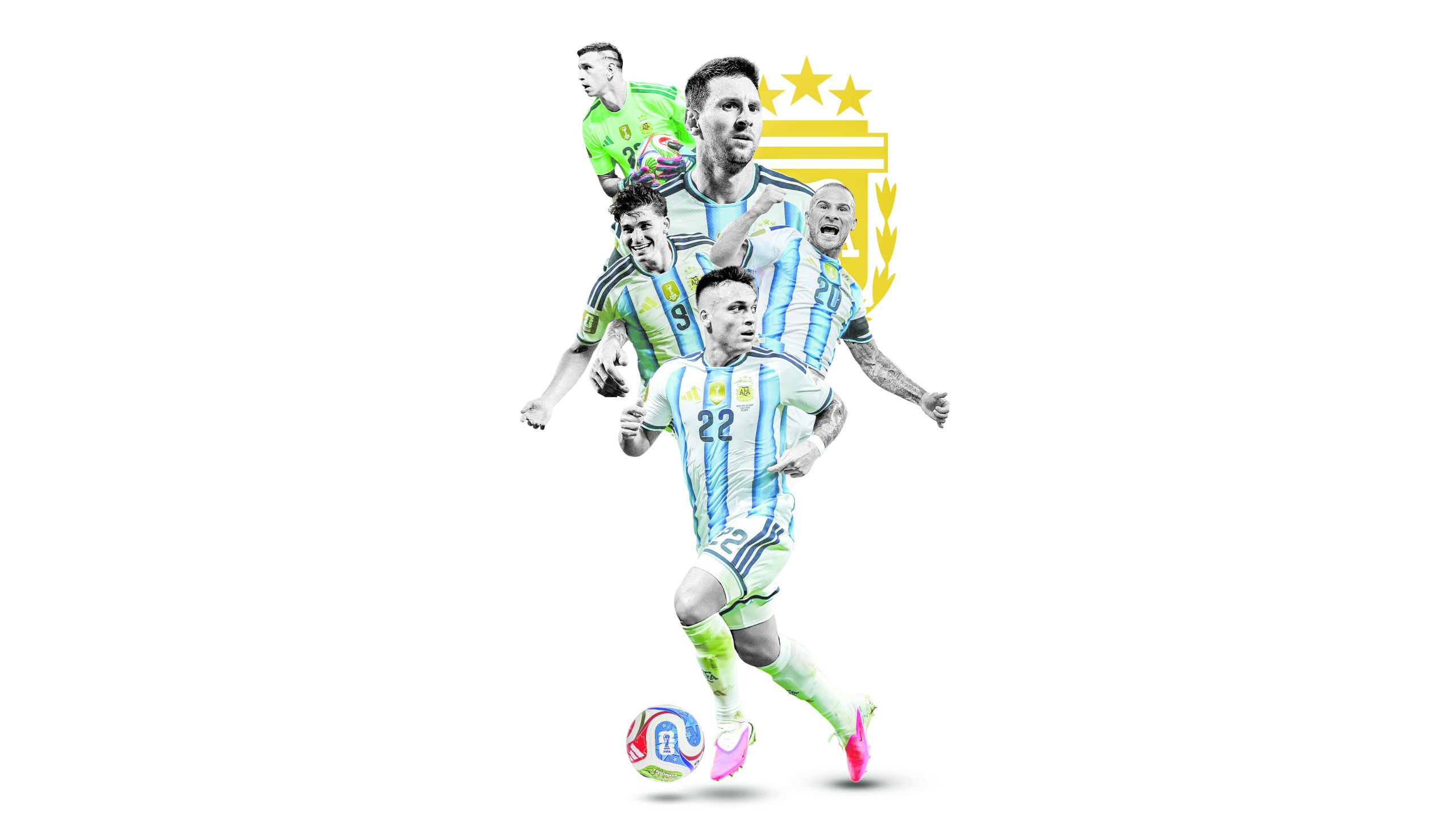
Argentina are through to another World Cup semi-final, yet the manner of getting there has once again raised the same uncomfortable question that has followed Lionel Scaloni’s side throughout the tournament: why do the world champions never make it easy for themselves?
Sunday’s 3-1 extra-time win over Switzerland fitted a pattern that has defined Argentina’s entire campaign in the United States. Alexis Mac Allister headed them in front early through a Lionel Messi corner, only for Dan Ndoye to level for Switzerland in the second half. It took a red card for Breel Embolo, a moment of individual brilliance from Julian Alvarez in the 112th minute and a late third from Lautaro Martinez to finally see off a Swiss side who had, for long spells, looked the better team.
A recurring pattern of blown leads

This is far from an isolated case. Argentina made a habit of surrendering leads at the last World Cup in Qatar too, losing 2-1 to Saudi Arabia in their opener after going ahead, needing penalties to see off the Netherlands in the quarter-finals after squandering a two-goal cushion, and enduring a nervy finish against Australia in the last 16 having led 2-0. The final itself followed the same script, with France pegging back a two-goal Argentina advantage through Kylian Mbappe’s rapid double, and Mbappe levelling again after Messi had restored the lead, forcing extra time.
The same tendency has resurfaced throughout this tournament. Argentina led Cape Verde three times in the round of 32, only to be pegged back twice, and were forced to lean on goalkeeper Emiliano Martinez to avoid conceding a third. Scaloni admitted afterwards that his side had absorbed some painful blows, conceding that few had expected the match to be as difficult as it proved.
Their round-of-16 tie against Egypt provided the starkest example yet. Argentina fell 2-0 behind in Atlanta, with the deficit built on a pair of sharp counter-attacks that exposed a lack of mobility in Scaloni’s midfield.
With 78 minutes gone and a limp exit and a 2-0 scoreline staring them in the face, Messi inspired one of the great World Cup turnarounds. Scaloni was left in tears in his pitchside interview afterwards, visibly overwhelmed by the scale of the escape.
This has been identified as Argentina’s central flaw at the tournament: an inability to close matches out once ahead. The pattern is a consistent one, taking the lead, retreating, and allowing opponents back into games before eventually regaining control the hard way, echoing the same struggles seen against Saudi Arabia, the Netherlands and France back in 2022.
Conserving energy or losing control
Part of the explanation lies in a deliberate strategy. With this expanded 48-team format bringing five knockout rounds rather than four, Scaloni’s players have talked openly about pacing themselves physically, aware that a shorter turnaround between matches leaves little time to recover. Scaloni himself pointed out that rest was hardest to find precisely when it was needed most, given only three days separated fixtures at various stages.
But conserving energy has repeatedly tipped into carelessness. Messi offered a rare piece of tactical self-criticism after the Cape Verde game, explaining that Argentina had struggled to press effectively and that gaps between their lines had allowed opponents to dictate territory and tire his side out unnecessarily. Analysis of the Egypt match reached a similar conclusion, noting that Argentina ranked among the more reactive defensive sides left in the tournament by that stage, making comparatively few final-third regains and relying on tackles rather than proactive pressing to win the ball back, a pattern designed to protect their captain’s energy but one that leaves them exposed to quick transitions.
The side’s reliance on Messi extends into possession too. Without recognised wingers beyond Thiago Almada, the crossing burden generally falls to the captain, and Argentina’s shape, a narrow structure built to overload central areas rather than stretch play wide, depends heavily on full-backs such as Nicolas Tagliafico providing width. Against Egypt, Scaloni’s side attempted their highest number of open-play crosses of the tournament at that point as they searched for a route back into the game, showing how much of the attacking plan runs through service into the box rather than variety in approach play.
Against Switzerland, that same pattern was evident again. Rather than pushing to extend their lead after Mac Allister’s opener, Scaloni’s side dropped into a deeper, more cautious block, and the shot count told its own story: six for Switzerland to just two for Argentina in the spell before Embolo saw red. Granit Xhaka controlled large portions of the game from midfield, Switzerland enjoyed more of the ball, and the clearer chances were theirs for the taking through the first hour.
Their leveller was thoroughly earned. Switzerland dominated possession for long stretches and sliced progressive passes through midfield with little resistance. Argentina only picked up their intensity once play went beyond Messi and Alvarez, which left them vulnerable out wide, where balls into Ndoye or Embolo kept opening up routes towards goal. The equaliser stemmed from a swift combination down the left, with Ndoye given time and space as Argentina’s defenders reacted too slowly. Rodrigo De Paul lost track of the run entirely, his attention drifting away from Ricardo Rodriguez, who ghosted into space and threaded the pass through before De Paul could recover his position.
Argentina’s breakthrough goal, by contrast, had come from a rehearsed set piece rather than open-play dominance, and even with an extra man following Embolo’s dismissal, Scaloni’s side initially struggled to find a way through a reorganised Swiss block. Messi saw a chipped effort well saved and a driven shot flash wide before extra time was required.
It ultimately took fresh legs, rather than tactical superiority, to break Switzerland’s resistance. Thiago Almada’s introduction at the start of extra time added directness down the left, and when Jose Manuel Lopez came on for Leandro Paredes, Argentina had three central forwards on the pitch simultaneously, stretching a tiring Swiss defence beyond its limits. Lopez’s lay-off allowed Alvarez the space to strike a stunning winner, before Martinez pounced on a rebound to complete the scoring.
Suffering as a badge of honour
Where Argentina differ from the frustrated bottom-half sides they might otherwise resemble is in their calmness once things go wrong. There has been little sign of panic in any of these episodes, and Scaloni has consistently framed the difficulty as evidence of experience rather than fragility. He pointed to the emotional maturity gained from the run to the 2022 title, arguing that his players now understand what it feels like to be dominated for spells and still find a way through.
“We knew that we were going to suffer. This is part of our blood, part of our DNA,” Scaloni said after the Switzerland win, a phrase he has returned to repeatedly as his squad’s matches have grown increasingly tense. Alvarez echoed the sentiment, noting that every fixture at this World Cup seemed to carry the same tension, whether for Argentina or their opponents, and insisting the group would fight to the end regardless.
The road ahead against England
Argentina’s win over Switzerland secures a sixth semi-final appearance in their last six major tournaments and sets up a first-ever World Cup last four meeting with England on Wednesday in Atlanta, a fixture steeped in decades of rivalry stretching back to 1986. Scaloni was measured in his response when asked about the magnitude of the occasion, insisting it remained simply a football match against a strong opponent with a good coach.
Whether Argentina’s habit of making life difficult for themselves continues against Thomas Tuchel’s side remains to be seen. England will have taken note of how both Egypt and Switzerland disrupted Argentina’s rhythm by exploiting space in midfield and compressing lines around Messi, and of how vulnerable Scaloni’s side can look before their moments of individual brilliance arrive. But as this tournament has repeatedly shown, betting against Argentina finding a way through, however chaotic the route, has proven a losing strategy so far.

