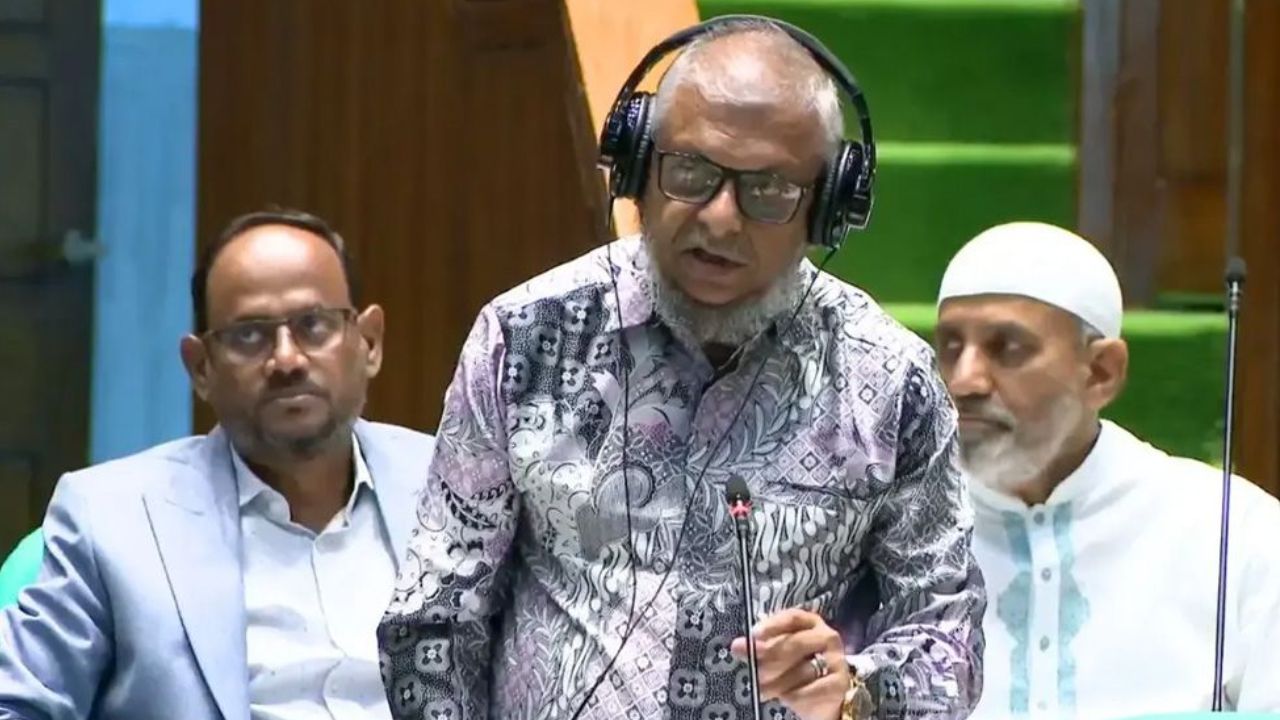



The government has adopted a plan to send one crore skilled workers abroad over the next five years as part of its efforts to expand overseas employment, develop new labour markets and ensure safer migration, Expatriates’ Welfare and Overseas Employment Minister Ariful Haque Choudhury told Parliament on Thursday.
He said the government is focusing on producing skilled workers who can meet the demands of international labour markets while reducing language barriers faced by migrant workers.
Replying to lawmakers’ queries during the question-answer session of the 22nd sitting of the 13th National Parliament’s second and first budget session, the minister said the Ministry of Expatriates’ Welfare and Overseas Employment has already expanded its skills development initiatives.
Currently, 110 training institutions under the ministry, including 104 Technical Training Centres (TTCs) and six Institutes of Marine Technology, are providing training in 55 employment-oriented short- and long-term courses.
The minister said strengthening and expanding foreign labour markets is a key part of the government’s election commitments. A comprehensive plan has been prepared to create skilled manpower, improve migration management and increase employment opportunities abroad.

He said the government is working to ensure safe, orderly and regular migration by reducing migration costs, preventing fraud by middlemen and making the recruitment process more transparent and accountable.
As part of the initiative, the government has introduced the Overseas Employment Platform (OEP), a digital platform aimed at simplifying various stages of migration, including worker registration, training, certification, monitoring, visa verification, demand letter approval and issuance of exit clearance.
The minister said the government has also introduced the Foreign Employment and Migrants (Recruiting Agent Licence and Sub-Agent Registration and Code of Conduct) Rules, 2025 to bring recruiting agents and sub-agents under a regulatory framework.
Govt eyes new destinations amid Middle East uncertainty
The government is exploring new labour markets and expanding existing ones to offset challenges in some traditional destinations, particularly in the Middle East.




The minister said initiatives are underway to send workers to countries including Thailand, Japan, South Korea and several European nations.
A draft agreement on worker recruitment with Thailand has already been sent to the Thai government, while diplomatic efforts are continuing to reopen Malaysia’s labour market and expand employment opportunities in Japan and South Korea.
He said instability in countries such as Iran, Lebanon and Syria has affected overseas employment opportunities in parts of the Middle East, making diversification of labour markets necessary.
The government is also working to reopen or expand labour markets in Malaysia, Oman, Bahrain and the United Arab Emirates through diplomatic channels, he added.
Bangladesh missions abroad have been instructed to assess local labour demand and prepare specific plans to increase manpower exports, the minister said.
He added that Qatar has shown interest in recruiting more skilled Bangladeshi workers following discussions at the seventh meeting of the Bangladesh-Qatar Joint Committee held in Dhaka on 18 May.
Focus on Japan, South Korea and Europe
The government is taking special measures to increase skilled worker migration to Japan and South Korea, AAriful Haque Choudhury said.
He said steps are being taken to sign six memorandums of understanding with local governments in South Korea to facilitate the recruitment of seasonal workers. Recruitment through the state-run Bangladesh Overseas Employment and Services Limited (BOESL) has already started.
For Japan-bound employment, the ministry has formed a dedicated “Japan Cell” to coordinate activities involving 96 sending organisations, more than 200 Japanese language training centres and 60 Technical Training Centres.
The minister said language training programmes under the Bureau of Manpower Employment and Training (BMET) will be expanded based on overseas market demand. Currently, 60 TTCs provide courses in Japanese, Korean, Chinese and English.
He also said the government is working to facilitate skilled worker migration to emerging European destinations, including North Macedonia, Serbia, Mauritius and Portugal, through diplomatic initiatives and efforts to establish visa centres in Dhaka.
The minister said several meetings were held under the prime minister’s leadership on 5, 24 March and 5 April to formulate strategies for expanding overseas employment, reopening closed labour markets and increasing manpower exports.