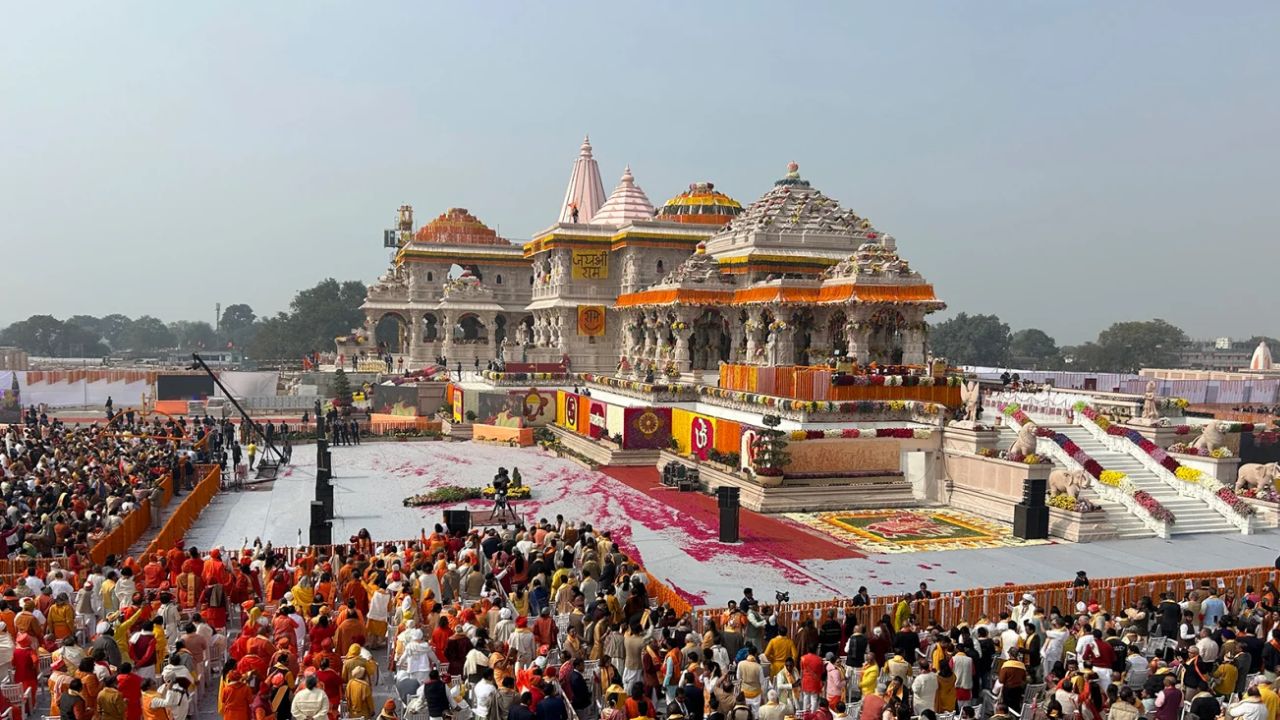

Two-and-a-half years since Indian Prime Minister Narendra Modi inaugurated the grand Ram temple in Ayodhya, the shrine stands as a monumental symbol of faith and a central pillar of India’s contemporary landscape. Yet, the air in the hallowed city is currently thick not only with incense but with an unsavoury row.
Allegations have emerged suggesting that donations from the faithful, worth tens of millions of rupees, have been embezzled, sparking a firestorm that reaches from the temple’s donation boxes to the highest courts of the land.
The three-storey edifice, sprawling across 2.7 acres, has rapidly become one of the nation’s most significant pilgrimage centres. It is estimated that 50 million visitors travel to the site annually, with daily crowds of 70,000 to 80,000 swelling even further during weekends and festivals.
However, this massive influx of devotion has brought with it a staggering volume of offerings, leading to recent questions regarding the management of cash, gold, silver, and valuable jewellery, reports BBC.
A whistleblower’s shadow
The controversy found its spark through the claims of Mahipal Singh, a man who previously supervised the accounts team for the shrine’s management. Now identified as a “whistleblower,” Singh has alleged that he was replaced after raising internal concerns regarding the handling of cash offerings and precious metal gifts.
His silence since the allegations went public has only added to the local intrigue; when approached, Singh cited threats to his life as the reason for his refusal to speak further.

“I have received death threats. I am under immense pressure and stress,” Singh reportedly stated, asking that his previous public comments be accepted as his final word.
While these claims remain independently unverified, they have provided significant ammunition for political challengers. A former city legislator has been more specific, alleging that upwards of 70 million rupees (£560,420) have gone missing from the temple’s coffers.
The scale of devotion
The financial stakes are immense. The Shri Ram Janmabhoomi Teerth Kshetra Trust, the independent body tasked with managing the shrine, recorded an annual income of 3.27 billion rupees (£26 million) for the 2024-25 financial year.



This revenue places the Ram Mandir among the wealthiest religious institutions in India. Devotees typically leave their offerings in approximately 35 donation boxes scattered throughout the complex, which also houses six smaller temples.
In the face of mounting criticism, the Trust has remained firm in its denial of any financial impropriety. Champat Rai, the general secretary of the Trust, released a video statement on Facebook to reassure the public.
He explained that the counting process is a meticulous one, occurring over several days and involving routine audits by trustees, workers, and employees of the State Bank of India.
Rai maintained that even the counting room itself is subject to these audits and insisted that “no-one has noticed any discrepancy yet”.
Political repercussions, local heartbreak
The allegations have struck a sensitive nerve because of the temple’s profound historical and political weight. Built on the site of a 16th-century mosque that was demolished in 1992, the temple’s construction was a long-standing promise of the Bharatiya Janata Party (BJP).
The 2019 Supreme Court ruling that awarded the land to the temple trust followed decades of legal and social friction. Because the temple’s opening is seen as a major milestone for the current administration, opposition parties have been quick to demand accountability from both the state government and the Prime Minister.
Akhilesh Yadav, the Samajwadi Party chief and former state chief minister, has been a vocal critic, calling for a transparent investigation into what he describes as a siphoning of funds.
His colleague, Ayodhya MP Awadhesh Prasad, has gone further, suggesting that Trust members should be suspended while a court-monitored team investigates the matter. Even within the BJP, local leaders like Rajneesh Singh have sought clarity on how donations are managed.
For the residents of Ayodhya, the news is a source of profound shock. To many, the temple represents the “abode of god,” making allegations of corruption feel like a personal betrayal. Local resident Santosh Puri described the claims as a “fatal blow” to their religion, while another, BP Pandey, called the situation a “stain” on the Trust and the government.
A search for transparency
In response to the growing clamour, the Uttar Pradesh government established a three-member Special Investigation Team (SIT). While an interim report has been submitted, no official findings have been released to the public, and the team has requested more time to conclude its work.
Chief Minister Yogi Adityanath has appealed for patience, urging those with evidence to come forward while reminding the public that a project centuries in the making can afford a few more days for a thorough inquiry.
However, the demand for a more rigorous probe persists. Multiple petitions have been filed in the state high court and the Supreme Court, seeking a federal investigation by the Central Bureau of Investigation (CBI).
Proponents of a CBI probe argue that only a court-monitored, federal investigation can restore the faith of the millions of devotees who view their contributions not as commercial transactions, but as “sacred offerings”.
As the SIT continues its work, the eyes of the nation remain fixed on Ayodhya, waiting to see if the sanctity of the altars can be cleared of the shadow of theft.