



Income is rising, but spending capacity is shrinking.
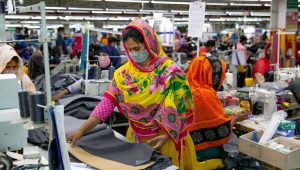
For middle-class families in Bangladesh, higher earnings have failed to keep pace with living costs, leaving less money in hand at the end of the month.
While inflation is widely blamed, a new analysis suggests that a less visible factor is also at work – a tax structure that is steadily pulling taxpayers into higher brackets even when their real incomes have barely improved.
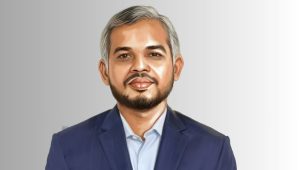
In a data-driven study titled Bangladesh’s Tax Squeeze, investment analyst and Binghamton University researcher Taukir Aziz argues that changes in Bangladesh’s tax regime over the past decade, combined with inflation, currency depreciation and heavy reliance on indirect taxation, have steadily increased the burden on households.
The analysis, based on tax, inflation, wage and exchange-rate data from 2016 to 2026, finds that the country’s tax-free income threshold has risen in nominal terms but declined in real value.
For the 2026–27 tax year, the tax-free threshold stands at Tk3.75 lakh, up from Tk3.5 lakh a year earlier.
Adjusted for inflation, however, it would need to be about Tk4.72 lakh to provide the same purchasing power as in 2016. In real terms, the threshold has fallen by roughly 21 per cent.
That has contributed to what economists call “bracket creep” — a phenomenon in which inflation-driven salary increases push taxpayers into higher tax slabs despite little improvement in living standards.

Had the 2016 tax structure been fully adjusted for inflation, the 15 per cent tax rate would now begin at about Tk12.3 lakh a year rather than Tk6.75 lakh.
The inflation-adjusted thresholds for the 20, 25 and 30 per cent brackets would be Tk21.7 lakh, Tk33.1 lakh and Tk89.7 lakh respectively, compared with the current thresholds of Tk10.75 lakh, Tk15.75 lakh and Tk35.75 lakh.
The proposed budget has also doubled the minimum income tax rate from 5 per cent to 10 per cent, increasing annual tax payments by about Tk 5,000 for each individual taxpayer.
Dhaka University economics professor Selim Raihan said prolonged inflation, limited adjustments to tax slabs and Bangladesh’s VAT-dependent revenue model have steadily eroded the purchasing power of salaried and middle-income households.
Although wages have increased, sharp rises in food, housing, healthcare, education and transport costs mean real incomes have often stagnated or declined, he said.
As tax thresholds fail to keep pace with inflation, annual salary increments are pushing many workers into higher tax brackets without any meaningful improvement in their standard of living.



The analysis illustrates the effect through a simple example. A worker earning Tk50,000 a month in 2016 would need almost Tk1 lakh today to maintain the same purchasing power.
Yet while the worker remains in roughly the same real income position, the tax bracket has shifted from 10 per cent to 20 per cent.
Recent budget changes have further increased effective tax rates. For someone earning Tk1.5 lakh a month, the effective rate had fallen to around 11.7 per cent in FY25 and FY26 but rises to nearly 14 per cent under the new budget.
For taxpayers earning Tk80,000 and Tk50,000 a month, the effective rates increase to 7.7 per cent and 4 per cent respectively.
The study also shows that wage growth has lagged behind inflation over much of the past decade. Using Bangladesh Bureau of Statistics wage-rate data, it finds that real wages have declined even as effective tax rates have risen.
For a taxpayer earning the equivalent of Tk1.5 lakh a month, the effective tax burden increased from about 9.4 per cent in 2016 to 13.7 per cent in 2026.
The budget’s tax roadmap to 2030–31 also assumes inflation rates well below recent experience. The implied inflation assumptions range from 4.66 per cent for the lowest tax slab to just 0.52 per cent for the highest, compared with average inflation of 9.47 per cent over the past three years.
If inflation remains elevated, the real value of tax thresholds will continue to erode, pushing more taxpayers into higher brackets.
Experts argue that income tax is only part of the burden.
Bangladesh relies heavily on VAT and other indirect taxes that apply regardless of income. VAT of up to 15 per cent was imposed or increased in 2025 on products including medicines, powdered milk, biscuits, cakes, fruit juice, soap, detergent, toilet tissue and packaged food items.
Selim Raihan said such taxes fall disproportionately on lower- and middle-income households because they spend a larger share of their income on consumption.
Policy Research Institute Chairman Zaidi Sattar pointed to another source of pressure — Bangladesh’s high tariff and para-tariff regime.
Consumers bear an estimated $20 billion annual cost from import protection that exceeds 55 per cent, compared with around 7 per cent in lower-middle-income countries and 3.7 per cent in upper-middle-income economies.
The protectionist structure has strengthened since 2000 and is increasingly misaligned with Bangladesh’s graduation pathway from least developed country status, he said.
Taukir Aziz also compares Bangladesh with India, where tax-free income thresholds and rebate facilities have expanded steadily. Annual incomes of up to 1.2 million rupees, equivalent to roughly Tk17 lakh, effectively face zero income tax through rebates.
In dollar terms, India’s tax-free threshold has risen from about $4,500 in 2016 to nearly $13,900 today, while Bangladesh’s has remained close to $3,000.
Currency depreciation has added to the strain. Between 2016 and 2026, the taka lost about 56 per cent of its value against the US dollar, compared with roughly 28 per cent for the Indian rupee, raising the cost of imported goods and intensifying inflationary pressure.
The report concludes that Bangladesh’s middle class faces a growing squeeze from multiple directions — inflation, declining real wages, bracket creep, indirect taxes and high trade protection.
Together, these forces are reducing purchasing power and weakening households’ ability to save despite rising nominal incomes.
Selim Raihan said the answer lies in regularly adjusting tax slabs for inflation, revising tax-free thresholds, broadening direct taxation and gradually reducing reliance on VAT.
Stronger compliance among high-income individuals and businesses, alongside measures to curb tax evasion and avoidance, would help make the system more progressive while protecting the purchasing power of ordinary taxpayers.
Without such reforms, he warned, the middle class risks further erosion of real income, declining savings and mounting financial stress in the years ahead.