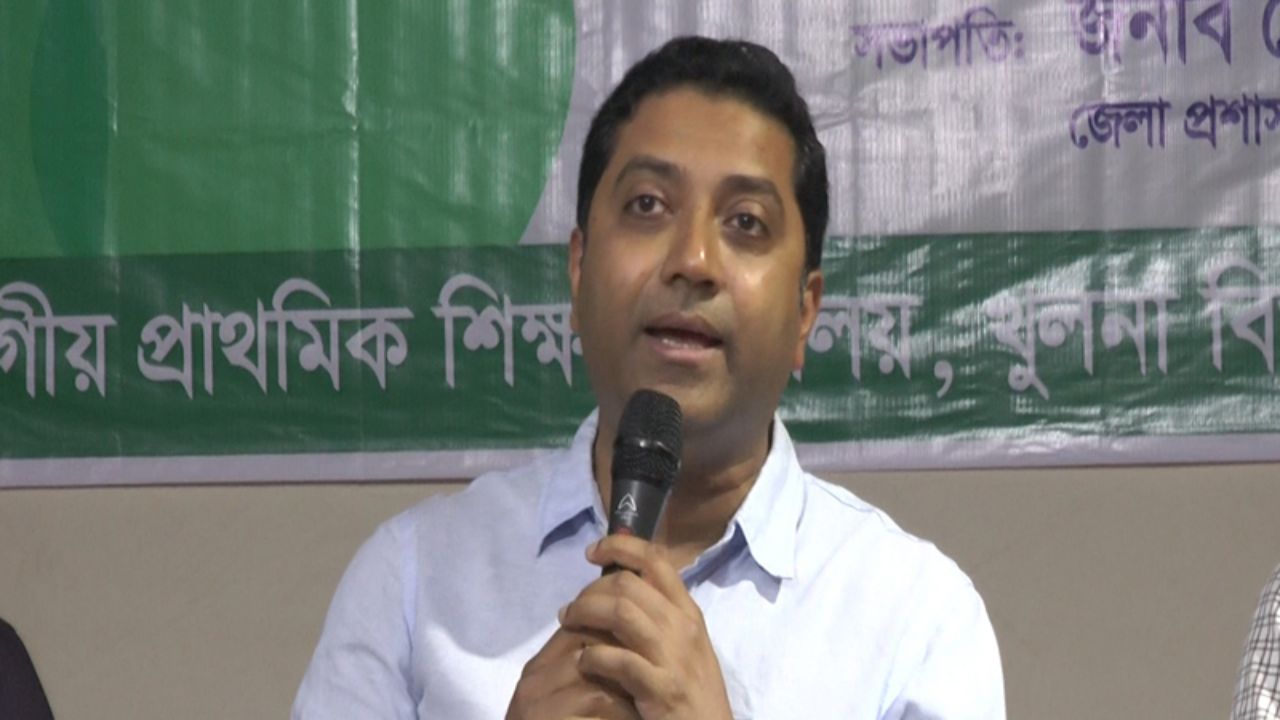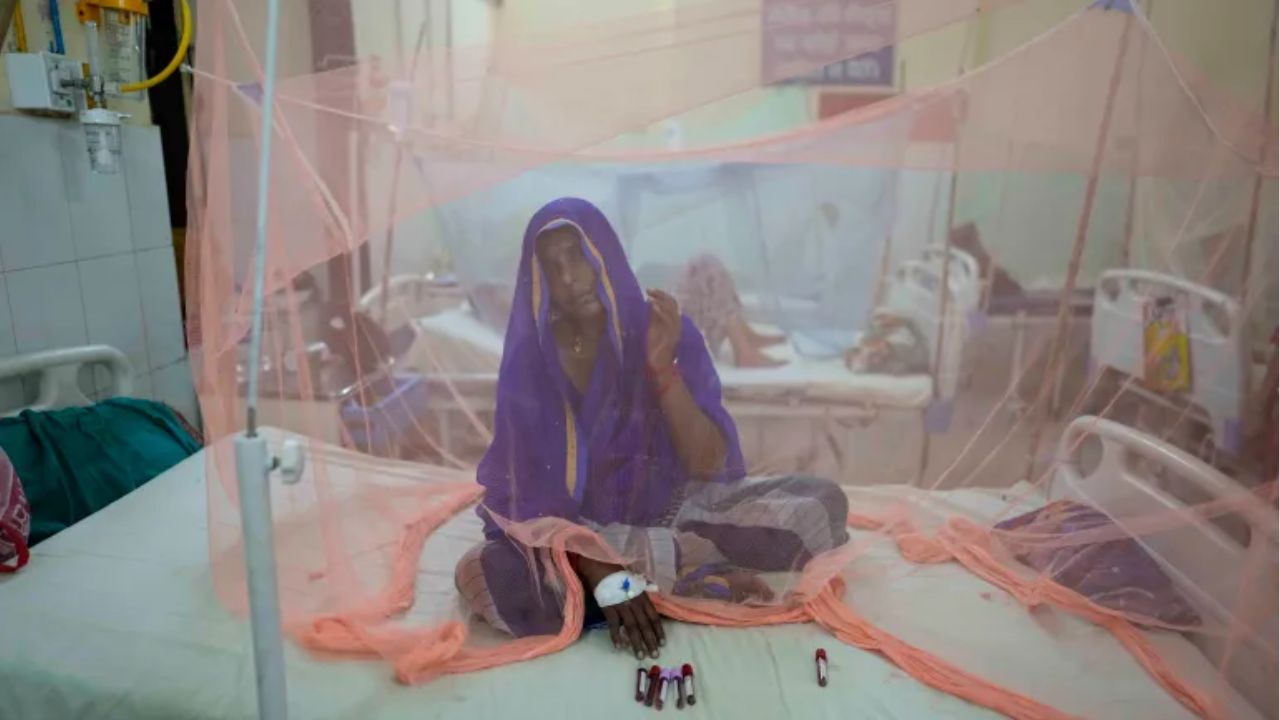

When 32-year-old software engineer Nitin Sharma developed a high fever in May, dengue was the last illness he suspected.
The monsoon was still several weeks away. Like many in India, the Gurugram-based professional had long associated dengue with the rainy season, expecting it to appear with the first heavy showers and fade once the monsoon ended, reports Al Jazeera.
So, when he began suffering from headaches, intense body pain and persistent fatigue, he initially assumed it was a routine viral infection and sought treatment at a private hospital in Gurugram, a major business district near New Delhi.
“I thought it would be some seasonal fever,” Sharma said. “Nobody in my family even considered dengue because it wasn’t monsoon season yet.”
However, a blood test confirmed otherwise. Doctors diagnosed him with dengue fever. Sharma spent nearly two weeks away from work, as weakness and fatigue lingered even after the fever subsided.
“What shocked me most was the timing,” he said. “Earlier, if someone had a fever in April, dengue would have been the last thing we thought about.”
Changing disease pattern across India
Health experts say Sharma’s experience is becoming increasingly common as dengue infections begin appearing well outside their traditional seasonal window.
Hospitals in several Indian states started reporting dengue cases weeks before the monsoon reached Kerala last week, signalling what scientists describe as a clear shift in the behaviour of one of the country’s most widespread mosquito-borne diseases.
Public health specialists warn that rising temperatures, irregular rainfall and rapid urbanisation are enabling dengue-carrying mosquitoes to survive longer and expand their reach, turning what was once a seasonal outbreak into a year-round public health concern.
“Dengue is no longer restricted to the post-monsoon period,” said Dr Harshdeep Joshi, professor and head of Community Medicine at Maharishi Markandeshwar Medical College and Hospital in Haryana.
“We are increasingly seeing cases outside the traditional season. The transmission window appears to be expanding,” he told Al Jazeera.
Traditionally, dengue patterns in India followed a predictable cycle: cases rose during the monsoon, peaked after heavy rainfall, and declined as temperatures dropped.

That cycle is now becoming less distinct. Even before the current monsoon officially set in, hospitals across multiple cities reported a rise in suspected dengue infections.
According to the National Center for Vector Borne Diseases Control (NCVBDC), India recorded 6,927 dengue cases by the end of February 2026.
Although this figure covers only the first two months of the year, it suggests unusually early transmission. For comparison, NCVBDC-linked data cited in a Frontiers in Public Health study showed 6,837 cases during January–May 2021 and 10,172 cases during the same period in 2022.
This means the 2026 figure has already surpassed the full January–May total of 2021 within just two months and is rapidly approaching the early-season burden seen in 2022.
Epidemiologists caution that while the comparison is not fully like-for-like, the trend remains significant because dengue transmission in India has historically remained low between January and May.
In recent years, however, that low-transmission window has steadily narrowed.
Regional spread and rising early burden
So far this year, Tamil Nadu has reported the highest number of infections at 2,873 cases, followed by Maharashtra with 786, Kerala with 670 and Karnataka with 560.
Southern states have consistently recorded higher early transmission due to warmer climates, extended mosquito breeding periods and, in some areas, stronger diagnostic reporting systems.
Overall, the data indicate that dengue transmission is starting earlier in the year and persisting for longer durations than in previous cycles.




Long-term national trend
Official figures show that dengue cases in India have remained elevated in recent years. The country recorded 289,235 infections and 485 deaths in 2023, marking the highest annual toll in recent history.
In 2024, India registered 233,519 cases and 297 deaths, followed by 121,824 cases and 131 deaths in 2025.
Public health experts say these fluctuations reflect dengue’s cyclical nature, where large outbreaks build population-level immunity to dominant serotypes, temporarily reducing cases in subsequent years.
However, they stress that this does not indicate a long-term decline.
Instead, dengue continues to expand geographically and seasonally due to climate variability, urban growth and evolving mosquito ecology.
Doctors also say surveillance systems, once focused mainly on monsoon months, now require year-round monitoring.
“We used to prepare mainly during the monsoon months,” said SM Kadri, a public health consultant and former surveillance officer in Haryana.
“Now hospitals and health workers have to remain alert almost throughout the year.”
“The decline seen in 2025 should not be interpreted as a retreat of the virus.


Dengue transmission in India tends to fluctuate sharply year to year due to a combination of population immunity following major outbreak seasons, changes in circulating serotypes, and local environmental conditions that affect mosquito breeding,” said Aubair Hussain, a Srinagar-based physician.
He added that temporary drops in case numbers often follow high-transmission years due to partial immunity, but such declines do not disrupt long-term spread.
“Rainfall distribution, temperature variations and urban water storage patterns can also disrupt mosquito breeding in certain pockets, which further contributes to these short-term drops,” he said.
Climate, pollution and disease severity
A study published in Environmental Pollution (Elsevier) in 2026 found a strong link between long-term exposure to fine particulate matter (PM2.5) and higher dengue mortality across 20 endemic countries between 2020 and 2024.
PM2.5 refers to microscopic particles that can enter the bloodstream after inhalation. The study found that countries with higher PM2.5 levels recorded dengue death rates three to five times higher than cleaner-air countries.
The World Health Organization recommends a maximum annual PM2.5 exposure of 5 micrograms per cubic metre, far below levels observed in many high-burden regions.
Researchers said pollution remained an independent factor for dengue severity even after adjusting for income, population density, rainfall, temperature and health conditions.
They suggested that air pollution may worsen outcomes by increasing systemic inflammation and weakening immune responses.
“Long-term exposure to fine particulate air pollution can weaken immune and vascular systems, and in dengue-endemic regions, this may significantly increase the severity and fatality of infections when combined with climate and socioeconomic stressors,” said Sakirul Khan, lead author of the study.
Another study published in Scientific Reports in January 2025 found that dengue transmission in India is strongly influenced by temperature, rainfall patterns and humidity.
Based on data from Pune between 2004 and 2015, it showed that temperatures above 27°C, humidity levels of 60–78 per cent and moderate, evenly distributed rainfall create ideal conditions for dengue spread.
It also noted that extreme rainfall can sometimes reduce transmission by flushing out mosquito breeding sites.
The model projected that dengue risk will rise significantly in coming decades under climate change scenarios.
Vaccine development advances
India has stepped up efforts to combat the disease through vaccination programmes. Earlier this year, the government approved Takeda’s dengue vaccine, Qdenga.
Takeda, a Japan-based multinational pharmaceutical company headquartered in Tokyo, has partnered with Biological E, a Hyderabad-based manufacturer, for production in India.
At the same time, the Indian Council of Medical Research (ICMR) and Panacea Biotec, a New Delhi-based biotechnology firm, completed Phase III clinical trial enrolment for “DengiAll”, India’s first indigenous single-dose dengue vaccine candidate.
The trial involved 10,335 volunteers across the country.
A Phase III trial refers to large-scale human testing designed to confirm effectiveness, monitor side effects and establish safety before regulatory approval.
The Serum Institute of India is also conducting Phase III trials for its vaccine candidate, TetraVax-DV.
Researchers aim to develop affordable vaccines offering protection against all four dengue serotypes — DENV-1, DENV-2, DENV-3 and DENV-4 — which co-circulate in India and make reinfections and severe illness more likely.
However, experts caution that vaccination alone will not eliminate the threat.
“Even with an effective vaccine, vector control and surveillance will remain critical,” said Gagandeep Kang, former professor at the Christian Medical College in Vellore.
Kadri also stressed a multi-pronged approach, saying there is “no single solution”.
“Vector control, sanitation, disease surveillance, public awareness and stronger healthcare systems all remain essential,” he said.
Back in Gurugram, Nitin Sharma now views dengue very differently.
He keeps mosquito repellents at home throughout the year and regularly checks for stagnant water in flower pots, rooftop tanks and containers, regardless of the season.
“It feels like the disease can happen any time now,” he said.