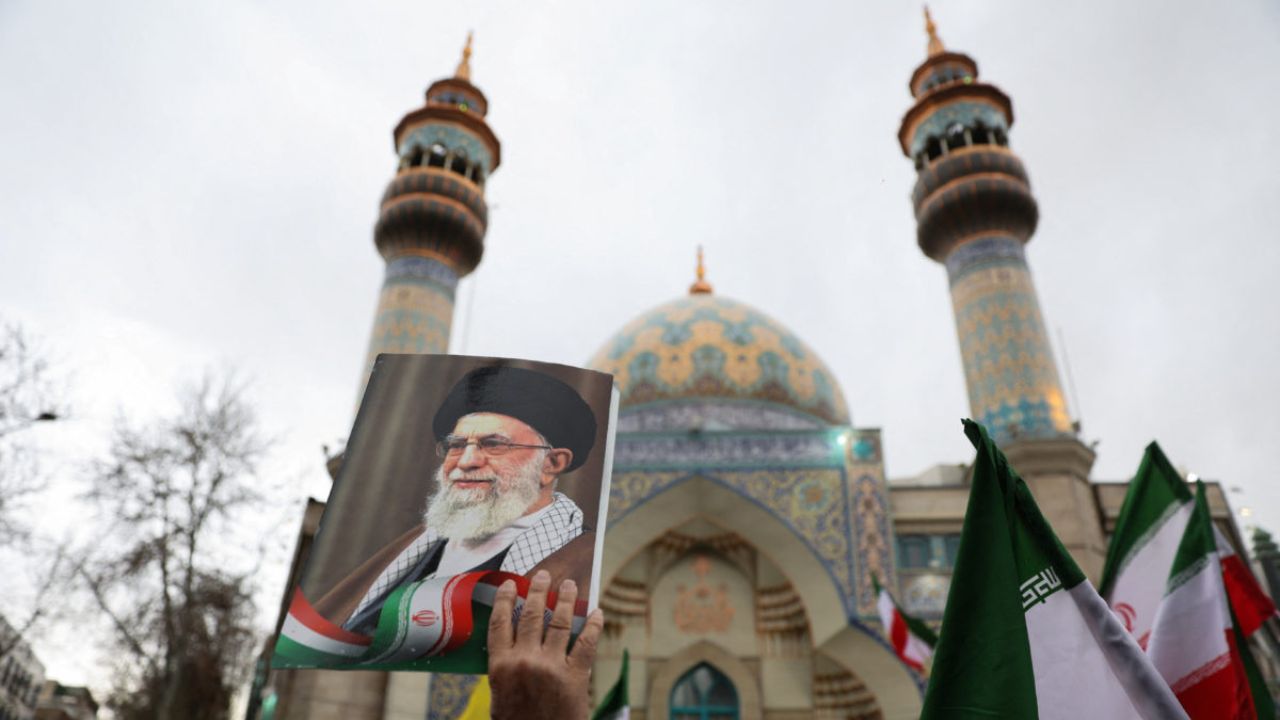



Iran’s Supreme Leader Ayatollah Ali Khamenei was killed in a joint military strike carried out by Israel and the United States on Saturday, Iranian state media confirmed early Sunday. Tehran has vowed to avenge the assassination, while US President Donald Trump warned against retaliatory actions and indicated that further military strikes against Iran could follow if tensions escalate.
Khamenei’s death after 36 years in power has triggered a critical political transition in Iran, compelling the country’s clerical establishment to begin the process of selecting a new Supreme Leader — a procedure undertaken only once before in the Islamic Republic’s history.
How is the Supreme Leader chosen?
Iran’s Supreme Leader is appointed by the Assembly of Experts, an 88-member clerical body elected by public vote every eight years. However, candidates seeking election to the Assembly must first be vetted and approved by the powerful Guardian Council, whose members are partly appointed by the Supreme Leader himself.
When the leadership position becomes vacant due to death or resignation, the Assembly of Experts convenes to elect a successor. A simple majority vote is sufficient to appoint the new leader.
According to Iran’s constitution, the Supreme Leader must be a senior Islamic jurist with deep knowledge of Shi’a jurisprudence, along with proven political judgment, leadership capability, courage, and administrative competence.

The only previous leadership transition occurred in 1989 following the death of Ayatollah Ruhollah Khomeini, founder of the Islamic Republic, when Khamenei himself was chosen as Supreme Leader.
Interim leadership arrangement
Article 111 of Iran’s constitution provides a mechanism to prevent a power vacuum. Until a new Supreme Leader is selected, a temporary three-member council assumes leadership responsibilities.
According to Iranian media, the interim council includes President Masoud Pezeshkian, Chief Justice Gholam-Hossein Mohseni-Ejei, and a cleric selected from the Guardian Council. The body will oversee state affairs until the Assembly of Experts formally appoints a successor.



Senior political figure Ali Larijani, a close confidant of the late leader, said the transition process has already begun.
Role of the Supreme Leader
The Supreme Leader holds the highest authority in Iran’s political and religious system. The position combines spiritual leadership with ultimate political power, including command over the armed forces and final authority on key national policies.
The leader appoints senior judicial officials, military commanders, and heads of major state institutions and oversees the powerful Islamic Revolutionary Guard Corps (IRGC), which plays a central role in Iran’s regional strategy and security framework.
Possible contenders
Several prominent clerics and political figures are being discussed as potential successors.
Mojtaba Khamenei, the late leader’s second son, is widely viewed as a strong contender due to his influence within political and security circles, particularly the IRGC. However, concerns about dynastic succession may complicate his candidacy.
Alireza Arafi, a senior cleric and deputy chairman of the Assembly of Experts, holds significant religious authority and has served on the Guardian Council, though he lacks broad political appeal.
Mohammad Mehdi Mirbagheri, an ultra-hardline cleric and Assembly member, is known for his strong anti-Western views and leadership of the Islamic Sciences Academy in Qom.
Gholam-Hossein Mohseni-Ejei, Iran’s judiciary chief and a longtime regime insider, is regarded as a conservative figure closely aligned with the establishment.
Hassan Khomeini, grandson of Ayatollah Ruhollah Khomeini, is also frequently mentioned in succession discussions, drawing legitimacy from his family legacy and religious standing.
The coming weeks are expected to be decisive as Iran navigates one of the most consequential leadership transitions since the founding of the Islamic Republic.