On a busy Thursday morning at Dhaka Medical College Hospital, the scene appeared routine. Doctors hurried between wards, nurses guided anxious families, and ambulances waited outside, their engines idling in anticipation of the next call.
To many, it looked like the familiar rhythm of a public hospital serving thousands. But beneath the surface, patients and their families describe something far more troubling.
An investigation by TIMES of Bangladesh has uncovered what patients, hospital insiders and witnesses describe as a deeply entrenched ambulance network operating inside and around some of the country’s largest hospitals. Through brokers, inflated fares and physical obstruction, families say they are often left with no choice but to accept the ambulances assigned to them.
For some, the experience feels less like a service — and more like captivity.
The first day of Ramadan brought slightly thinner crowds to Dhaka Medical College Hospital, but the brokers remained.
They blended easily into the environment, approaching newly arrived families with offers of help. To outsiders, they appeared to be volunteers. They offered directions, explained procedures and helped families navigate unfamiliar hospital corridors.
But several patients and insiders say these first interactions are part of a calculated process.
“When an ambulance arrives, brokers immediately approach the family,” said one hospital source, speaking on condition of anonymity. “They offer sympathy, assistance — anything to gain trust.”
The shift comes later — when patients are discharged or transferred.
“That’s when the masks come off,” the source said. “Families are told they must use specific ambulances at prices dictated by the syndicate. Outside ambulances are blocked. If families try to bring their own vehicle, they create chaos and prevent it from entering.”
Md Siam Hossain, 26, experienced this firsthand.

His mother had been critically injured in an accident and needed urgent transfer from Dhaka Medical College Hospital to Uttara Badda for intensive care.
He was approached by a driver who claimed to operate a government-registered ICU ambulance. The price quoted, he said, was far higher than expected.
When Siam tried to arrange an alternative, he encountered resistance.
“All of them aren’t government property,” another driver, Poran, told him bluntly, quoting Tk 2,200 for the journey, plus Tk 500 extra if oxygen was needed.
Siam realised the prices were nearly identical.
“I felt like a hostage,” he told TIMES. “They wouldn’t let me bring an ambulance from outside. I had no choice but to pay.”
Multiple hospital sources described a structured system involving brokers, ambulance operators and some lower-level hospital staff.




Ward attendants, cleaners and on-duty Ansar personnel allegedly play a role in identifying patients who are about to be discharged or transferred. Families are then directed toward specific ambulance operators waiting outside.
Some insiders described the system as coordinated and hierarchical.
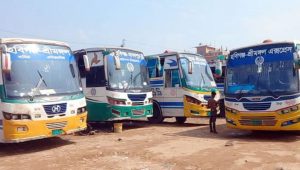
Sources alleged that figures linked to ambulance associations, including leaders of the Bangladesh Ambulance Owners Welfare Association, maintain influence over ambulance operations at Dhaka Medical College Hospital, supported by a network of brokers operating inside hospital premises.
The association’s general secretary, Md Badal, strongly rejected the allegations.
“There is no ambulance syndicate,” he told TIMES. “Those making accusations are brokers themselves.”
He also accused critics of engaging in unethical activities, including selling patient access.
Patients of other hospitals describe similar experiences.
Outside Khulna Medical College Hospital, Simran Ahamed said ambulance operators controlled exit points and demanded inflated fees.
“They refused to let us leave until we agreed to their price,” she said.
At the capital’s National Institute of Traumatology and Orthopedic Rehabilitation — widely known as Pangu Hospital — as well as cardiac, eye and children’s hospitals nearby, patients and drivers described similar control by organised groups.
At Shaheed Suhrawardy Medical College Hospital in Dhaka, former ambulance driver Gazi Hanif Hossain said ambulance access was tightly regulated.
“There was a committee controlling everything,” he said. “Ambulances were assigned serial numbers, and patients were distributed according to that order.”
He said the system was managed by ambulance associations rather than hospital authorities.
“It was a closed circle,” he said.
In some cases, families say the consequences have been devastating.
In Shariatpur, a newborn died in August 2025 after delays linked to ambulance disputes, according to local reports and witnesses.
Months later, in January 2026, another tragedy unfolded.
Jamshed Ali Dhali, suffering from neurological complications, needed urgent transfer from Shariatpur Sadar Hospital to the National Institute of Neurosciences in Dhaka.
His family initially hired an ambulance for Tk6,500. When the driver demanded more, they found another for Tk5,000.
But on the way to Dhaka, their vehicle was stopped twice by a group of men who blocked the road, witnesses said.
Each delay lasted between 30 and 40 minutes.
Though bystanders eventually helped the ambulance continue, Dhali died before reaching the hospital.
His family believes the delay cost him his life.
The mounting allegations have prompted a government response.
A newly drafted Ambulance Service Policy–2025 proposes sweeping changes, including banning private individual ownership of ambulances and limiting registration to institutions and organisations.
Officials say the reforms aim to bring transparency and accountability to the sector.
The policy also proposes fixed fares, mandatory medical equipment, trained assistants and clear regulatory oversight — measures designed to prevent arbitrary pricing and improve patient safety.
But for families like Siam’s, reform cannot come soon enough.
For them, the hospital gates — meant to mark the end of suffering — have instead become the beginning of another struggle.
TIMES made repeated attempts to contact the top officials of the Directorate General of Health Services for comment, but did not receive a response.