Japan has a way of drawing travellers beyond its most photographed landmarks. While Tokyo’s neon streets and Kyoto’s temples remain iconic, more visitors are now looking past the familiar and into places shaped by nature, history, and old beliefs. Remote valleys, countryside rail stops, and traditions rooted in folklore are increasingly capturing attention.
One such destination is Owakudani, a dramatic volcanic area in Hakone. Here, steam rises endlessly from the ground, the smell of sulphur lingers in the air, and a local delicacy comes with a bold promise: eat a black egg and gain seven extra years of life. It sounds like the kind of myth built for the internet age, yet people have been travelling here out of curiosity for generations, long before travel trends and social media ever existed.
A Valley that lives up to its name
Owakudani literally means “Great Boiling Valley”, and the description is fitting. The area was created roughly 3,000 years ago following an eruption of Mount Hakone, and it remains geothermally active today. Steam vents hiss from the earth, volcanic gases escape constantly, and the landscape feels alive beneath your feet.
Because of this harsh environment, the valley has earned dark nicknames such as Hell Valley or Death Valley. Yet it is this same volcanic intensity that produces Owakudani’s most famous attraction: the kuro-tamago, or black eggs.
How ordinary eggs become pitch black
Despite their striking appearance, these eggs begin as normal chicken eggs. They are slowly boiled in hot springs filled with sulphur and minerals.
During the process, the minerals in the water react with iron in the eggshells, turning them a deep black and giving the shell a slightly coarse surface.

Inside, nothing changes. Once cracked open, the egg looks and tastes like a standard hard-boiled egg. There may be a faint sulphur note, but it is subtle compared to the strong smell that fills the valley itself.
After boiling, the eggs are lightly steamed and sold fresh at specific stalls near Owakudani Station, most notably at the Kurotamago House. They are typically sold in packs of four and are intended to be eaten on-site.
The story behind the seven-year promise
The belief that one black egg adds seven years to a person’s life has roots stretching back more than a thousand years. The legend is linked to Kobo Daishi, also known as Kukai, a respected Buddhist monk and scholar of the Heian period.


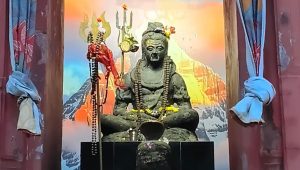
According to local tradition, Kobo Daishi once visited the volatile valley when it was seen as a dangerous and unwelcoming place.
Witnessing the hardship faced by people living near toxic fumes and unstable land, he is said to have carved an Enmei Jizo statue, a figure associated with protection and long life. He encouraged locals to eat eggs cooked in the hot springs, believing they would support health and strength.
Over time, this belief evolved into the idea that each black egg grants seven additional years of life. In Japanese culture, the number seven is often connected to good fortune and spiritual wholeness.
Although there is no scientific basis for the claim, the story survived through oral tradition and eventually became one of Hakone’s best-known legends.
Traditionally, visitors are advised not to eat more than two eggs. Depending on who tells the story, the reasoning differs, but the underlying message remains the same: longevity should be approached with moderation.
Why the legend still holds power
Much of the experience lies beyond belief itself. Eating a black egg while standing in a valley where steam pours from the earth can feel ceremonial, even for those who do not take the myth literally.
Nearby shrines, lines of Jizo statues, and centuries of storytelling add to the atmosphere, turning a simple snack into a cultural ritual.
For many Japanese visitors, eating a kuro-tamago is a nod to tradition. For travellers from abroad, it becomes a tangible connection to local folklore, blending food, place, and history into a single moment.
Important safety notes for visitors
Owakudani may be a major attraction, but it is still an active volcanic zone. Authorities closely monitor conditions, and access can be limited if gas levels rise or if there are concerns about landslides or seismic activity.
Walking trails may close unexpectedly, and the ropeway is sometimes suspended during safety alerts.
Visitors should always follow official guidance, remain on marked paths, and check local advisories before heading to the area.
People with respiratory conditions should be especially cautious, as sulphur gases can be strong depending on the day.