
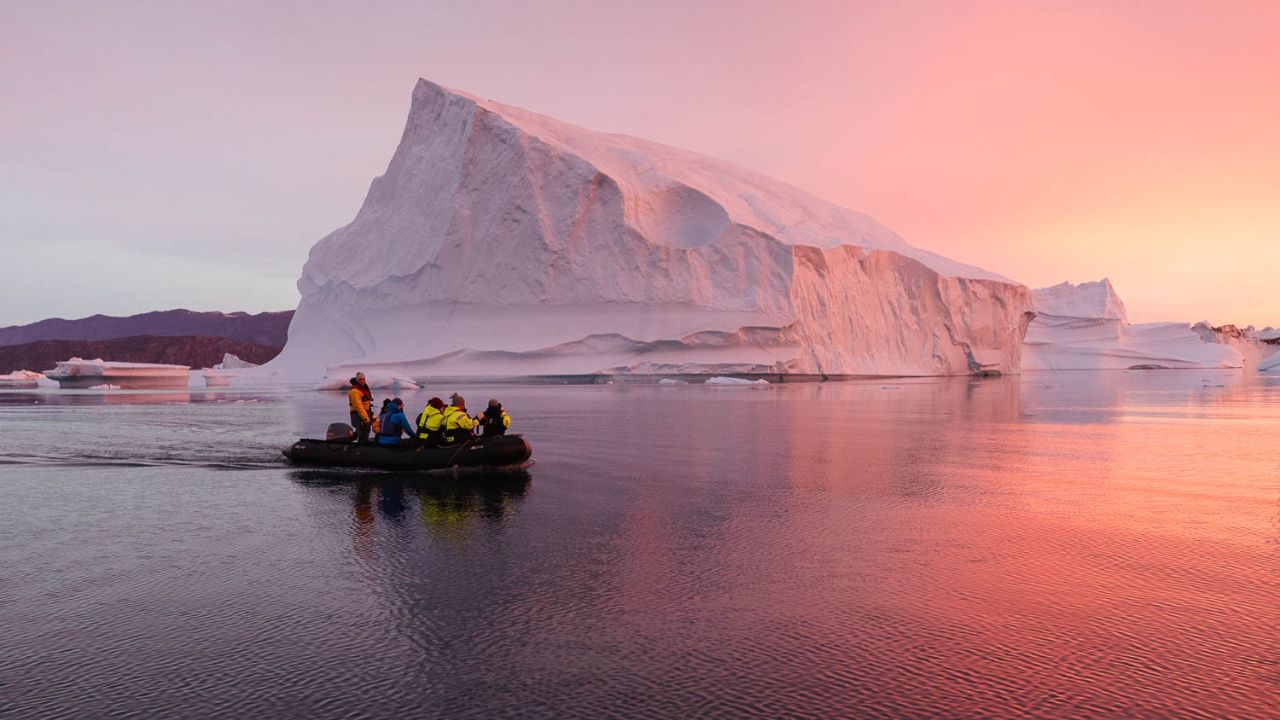
Greenland rises from the North Atlantic like a sleeping giant – vast, icy, and mysterious. It is the world’s largest island that is not a continent, yet it remains one of the least known places on the map. From the air, the first thing you see is white – a great ice shield stretching across mountains and valleys, shimmering under a cold sun.
Roughly eighty percent of Greenland is locked beneath this ice, some of it thousands of meters thick, holding ancient air bubbles and geological secrets from a time long before human civilization. Scientists say that if this frozen body ever melted completely, global sea levels would rise sharply, which is why Greenland sits at the center of climate research and environmental dialogue today.
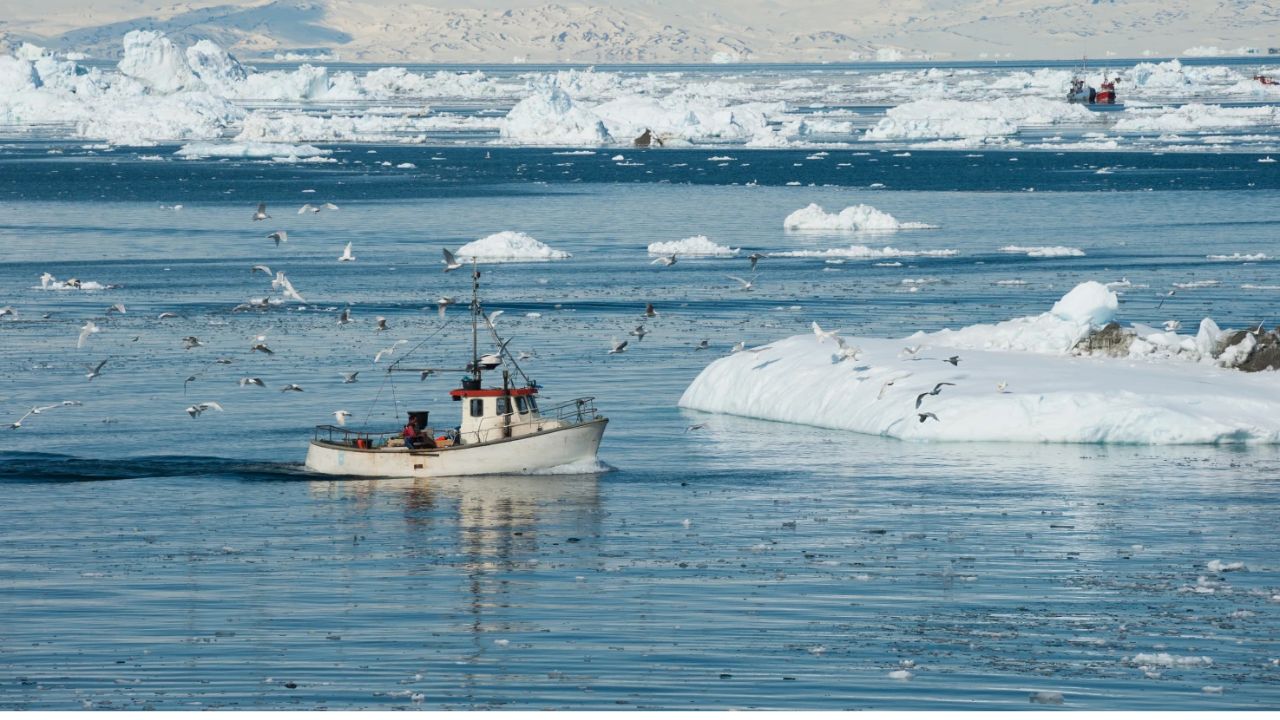
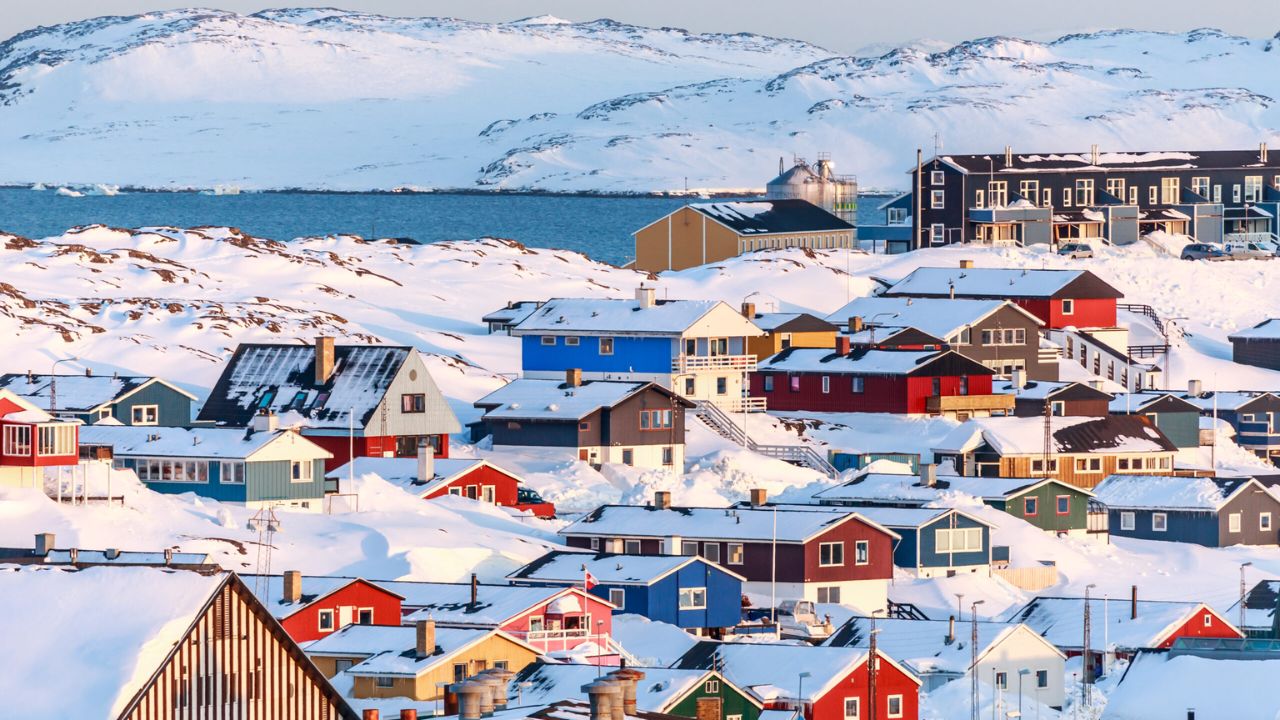
Life here clings to the edge – literally. With the interior too hostile for settlement, all towns form a loose necklace around the coastline. Yet even along the coast, people are spread thinly; Greenland has the lowest population density of any country in the world. There are no roads connecting its towns, which means travel becomes its own small adventure.
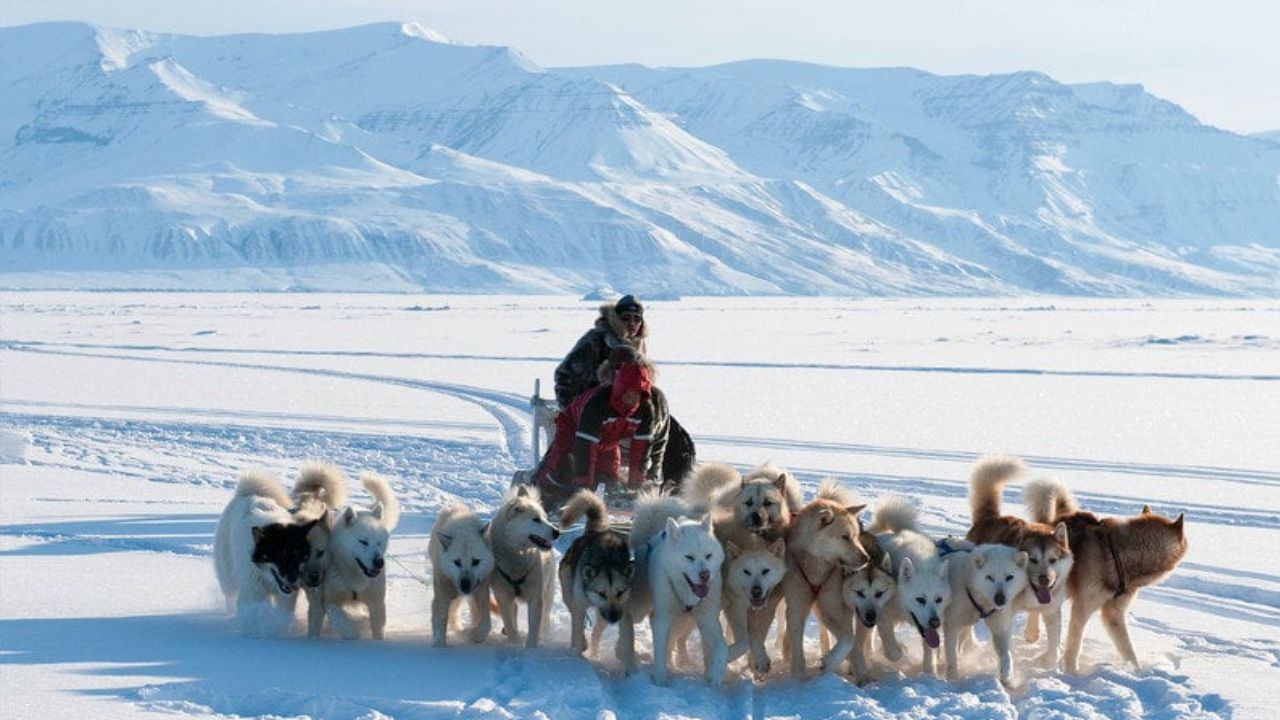
To move between communities, you fly in turboprop planes, hop on ferries, board fishing boats, or glide over the frozen winter with sled dogs and snowmobiles. There’s a sense that the landscape decides where you go and when, not the other way around.

Despite the harsh environment, Greenland is not monochrome or numb. It has seasons that transform the land in dramatic ways. In summer, the sun refuses to set above the Arctic Circle, bathing mountains, fjords, and wildflower meadows in endless daylight.
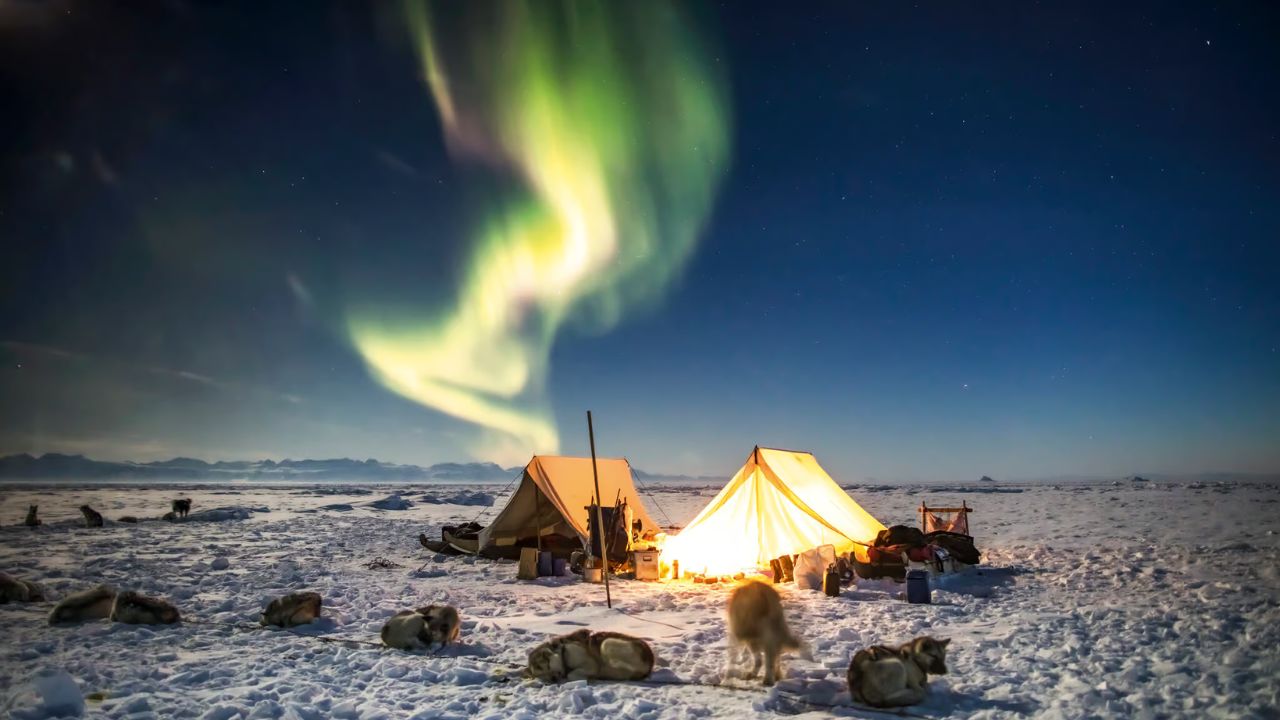
The air can grow surprisingly warm, warming enough for sheep to graze in the south and for hikers to cross the famous Arctic Circle Trail under a clear, bright sky. In winter, the opposite takes over. Polar darkness descends, and for weeks the sun never rises in the far north. But then the sky comes alive. The northern lights ripple over fjords and icebergs in ribbons of green and violet, turning winter into a quiet, magical spectacle that draws photographers and dreamers from around the world.
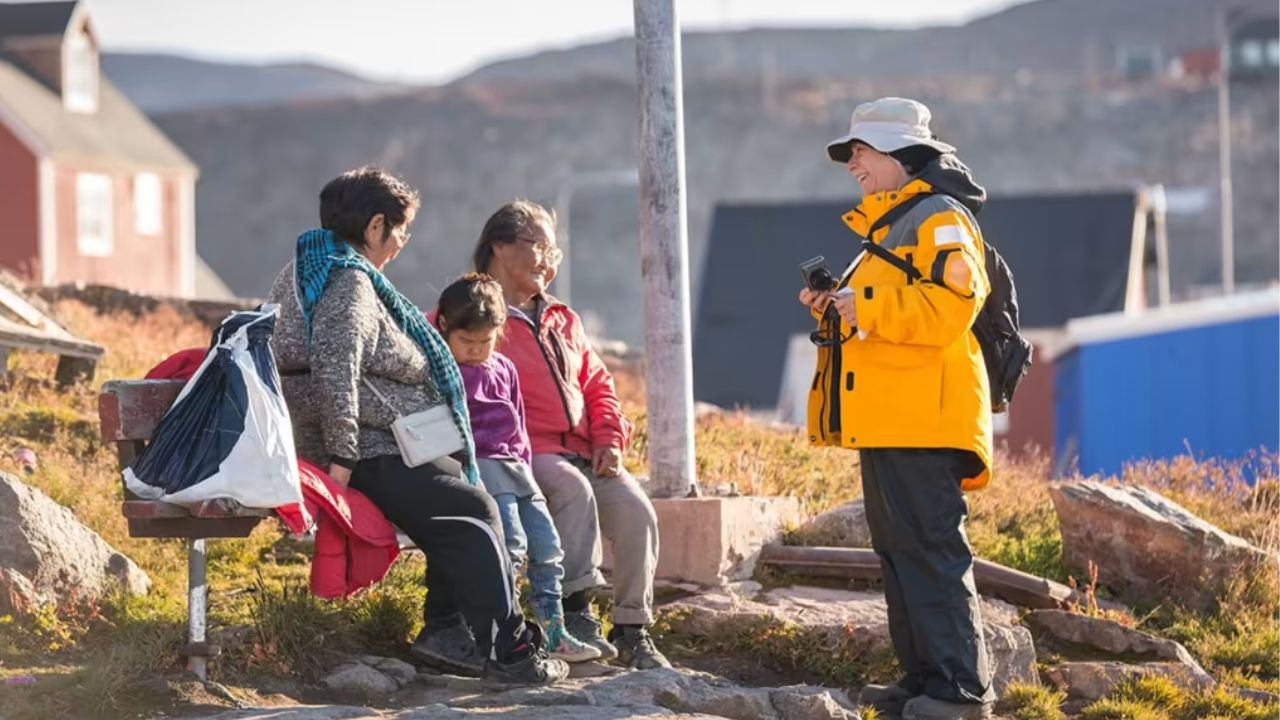
The capital city, Nuuk, holds roughly a third of Greenland’s population and stands as the world’s most northerly capital. It is modern in understated ways – art galleries displaying bold Inuit paintings, museums preserving ancient hunting tools, cozy cafes serving fish soup, and schools where children speak Greenlandic, Danish, and English with effortless ease.


Yet just a short flight or boat ride from Nuuk are settlements so small you can walk from one end to the other in minutes, and where the Pilersuisoq shop doubles as a grocery, hardware store, and news center for the people who live there.
Culture in Greenland is stitched together from Indigenous endurance and European contact. The Inuit name for the island – Inuit Nunaat, meaning “land of the people” – captures the deep relationship between community and land.
Inuit ancestors crossed from what is now Canada centuries ago, bringing with them technologies that suited the Arctic – kayaks that sliced through icy seas, umiaks for transporting families, sled dogs to chase seals across frozen bays. Some of these traditions are still very much alive today. In North and East Greenland, the Greenlandic Sled Dog remains essential to winter hunting, and to protect the breed’s purity, it is the only dog allowed north of the Arctic Circle.
European history also took root here when Norse settlers led by Erik the Red arrived around the 10th century. They built farms, churches, and trading posts in the green valleys of the south. It was Erik, legend says, who named the island “Greenland” as a way to entice others to join him, though summertime in the south does indeed bring lush pastures and grazing animals. Norse ruins still stand, including Hvalsey Church – its stone walls weathered but sturdy – now part of a UNESCO World Heritage landscape that links past and present.
Today, Greenland is a place where tradition and modernity coexist, not in conflict but in conversation. The national costume, with its handmade beads and sealskin boots, appears at festivals and weddings. Tupilaks, once carved as shamanic objects of spiritual power, have become treasured artistic souvenirs that tell stories through bone, wood, and stone.
Music festivals fill coastal towns with sound, blending throat singing, rock, folk, and hip-hop in a way that surprises many who imagine the Arctic as silent.
In the end, Greenland is a place of contrasts – a land frozen in ice but alive with culture, isolated yet globally significant, ancient yet quietly modern. It is a story still unfolding, written by glaciers, hunters, artists, scientists, and communities that have learned to thrive in one of the most demanding environments on Earth.
For those willing to travel far enough, Greenland offers something rare: silence, space, and a deep sense of wonder that lingers long after the journey ends.