
Repeated increases in the prices of life-saving medicines without clear justification have sharply raised treatment costs in Joypurhat. Middle-income families are struggling and low-income patients are in acute distress.
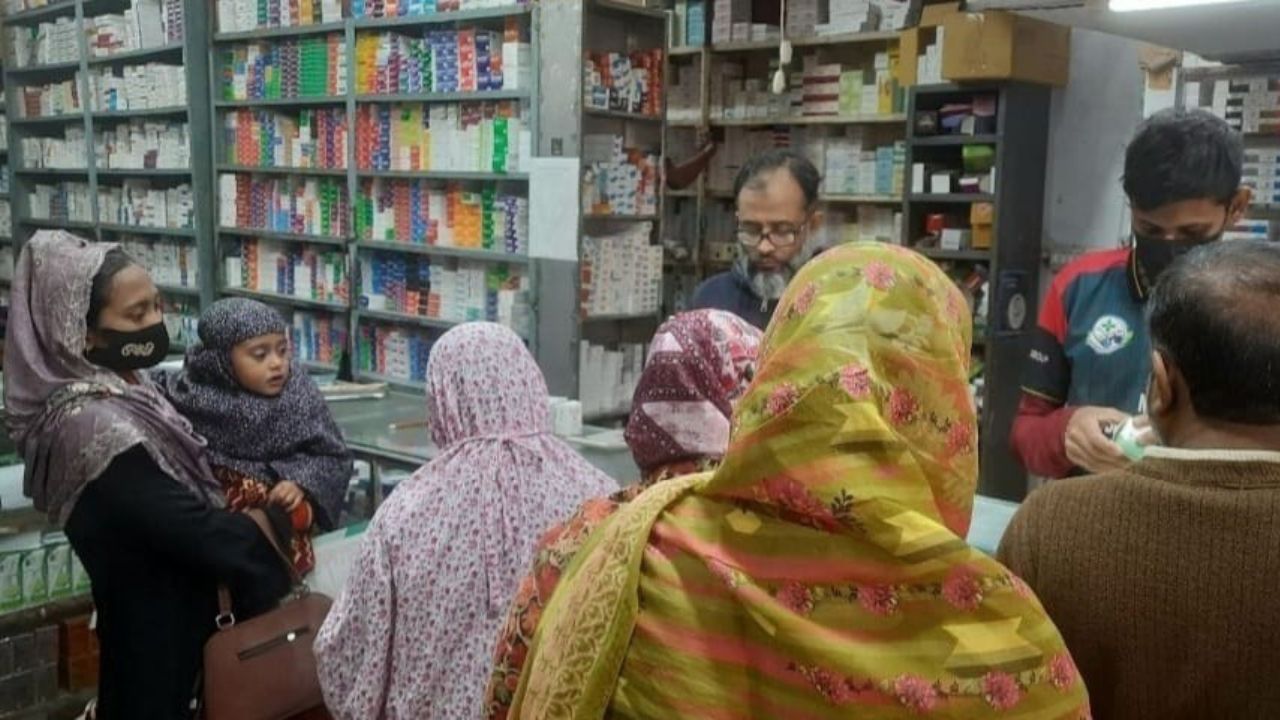
Patients say they are failing to buy urgently needed medicines because of higher prices, while frequent arguments have broken out at pharmacies between buyers and sellers over the rising costs.
The problem is most severe for essential painkillers, antibiotics, and medicines for diabetes and cancer, with patients and their families describing mounting hardship.
Interviews with patients at hospitals across the district and with pharmacy owners indicate that medicine prices have surged in phases over the past year, creating widespread confusion and resentment.
Pharmacy owners and medical representatives said most pharmaceutical manufacturers raised prices several times during the period, affecting a wide range of commonly used drugs.
They said companies including ACI, Beximco, Square, Incepta, Radiant, Popular and SKF have increased prices of multiple products.

A Square painkiller, Torax 10 milligram, which sold for Tk10 per tablet six months ago, now costs Tk20, while the antibiotic Zimax 500 milligram has risen from Tk35 to Tk45 per tablet.
The price of Seclo 20 milligram tablets has increased from Tk5 to Tk6, while ACI’s Tetrasol solution, 30 milligram, jumped from Tk68 to Tk125.
Paracetamol syrup, widely used by children and adults alike, has risen from Tk20 to Tk35 for a 60 milligram bottle.
Traders said prices of antibiotics, fexofenadine, azithromycin and montelukast group medicines have also gone up without explanation.


Cold and cough syrups and inhalers have seen average price increases ranging from 30 per cent to nearly 100 per cent, they added.
At the Joypurhat 250-bed General Hospital, diabetic patient Sazzadur Rahman from Nayapara village in Kalai upazila said he needs insulin injections twice daily.
He said his monthly medicine bill has risen from around Tk3,000 to nearly Tk5,000, adding that government hospitals rarely have medicines in stock.
“If prices keep rising like this, I may have to stop taking medicine and die,” he said.
Cancer patient Abdul Matin from Komor village in Joypurhat Sadar has been receiving treatment for years at a hospital in Uttara, Dhaka, his son Jewel Pramanik said.
He said the price of one injection rose from Tk6,000 to Tk9,500, while his father needs three injections a month.
“Because of the cost, we can now buy only two, and if prices rise further, treatment may have to stop,” he said.
Habibur Rahman, owner of Rawja Pharmacy in Joypurhat town’s Amtali area, said repeated price hikes have made it difficult to run the business.
He said disputes with customers have become routine, as patients and their relatives question the sudden increases.
Square’s Joypurhat regional sales manager Khairul Islam said his role is limited to supplying medicines according to pharmacy orders.
“We have no scope to comment on pricing decisions,” he said.
Joypurhat 250-bed General Hospital Superintendent Rashed Mobarak said the hospital tries to provide services within its capacity.
He said medicines are supplied depending on allocations from higher authorities, and it is not possible to provide all drugs for all diseases.
“Patients’ helplessness over medicines causes us pain, but we often have no solution,” he said.
District drug inspector Tofayel Ahmed said the drug administration has formulated pricing guidelines and that prices have already begun to ease in the market.
He said the policy would prevent companies from raising prices arbitrarily and expressed hope that medicines would soon come within the purchasing power of the public.