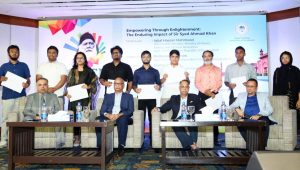
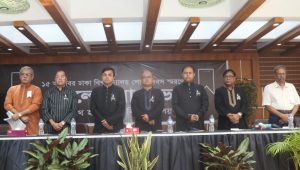
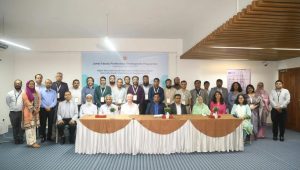
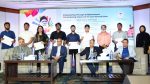
The national closing ceremony of the Shikhbo Shobai project was held on Thursday at the Bangladesh-China Friendship Conference Centre in Dhaka, highlighting its progress in advancing inclusive education for children with disabilities and setting out future sustainability plans.
According to a press release, the event titled Home to School – Celebrating Inclusion brought together representatives from the Department of Social Services (DSS), the Directorate of Primary Education (DPE), the Jatiyo Protibondhi Unnayan Foundation, the British High Commission in Dhaka, UN agencies, development partners and organisations of persons with disabilities.
DSS Director General Md Saidur Rahman Khan said inclusive education is a responsibility, noting that the project demonstrated how coordination among ministries, schools and communities can expand learning opportunities for children with severe disabilities. He said its lessons should guide the next Primary Education Development Programme and future strategies.

DPE Director General Abu Noor Md Shamsuzzaman, who chaired the event, said every child deserves equal access to education. He said inclusive initiatives that began under earlier Primary Education Development Programmes have progressed through a dedicated inclusive education cell, although substantial work remains.
He said DPE continues to work with Sightsavers, UNICEF and the Foreign, Commonwealth and Development Office to meet national and global commitments.


British High Commission Development Counsellor and Deputy Development Director Martin Dawson said many children with disabilities remain outside school and noted that the project aims to change that reality by expanding opportunities.
Sightsavers Bangladesh Country Director Amrita Rejina Rozario said the project showed that barriers can be removed when communities, schools and policymakers act together. She said ensuring sustainability will require embedding its learning into future Primary Education Development Programmes.
Sightsavers Global Technical Lead of Inclusive Education Hamish Higginson said the initiative strengthened the capacity of teachers, organisations of persons with disabilities and communities, helping build trust that encourages families to send children to school.
Since April 2022, the project has been implemented by a consortium led by Sightsavers in partnership with ADD International and Sense International, in collaboration with DPE.
According to the release, its model — integrating home-based learning, school readiness and participation of organisations of persons with disabilities — has brought notable changes to government primary schools in three upazilas of Narsingdi and Sirajganj, widening access to education in line with national and global goals.