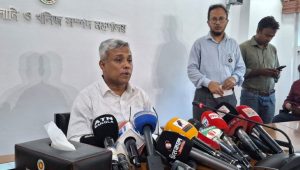
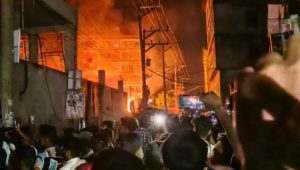
Students and mobile phone traders staged demonstrations on three major thoroughfares in the capital on Sunday, halting traffic movement for hours.
The situation on the first working day of the week caused immense suffering for office-goers, students, professionals and people from all walks of life.
From noon, students of the city’s seven affiliated government colleges at undergraduate and postgraduate levels demonstrated on the road in front of the Education Building. Earlier in the morning, students of five government colleges held a protest at Shahbagh intersection. Before that, at around 10:30am, mobile phone traders and shop employees from various shopping malls blocked the road in front of the BTRC headquarters in Agargaon.
Public suffering
The road blockades led to severe traffic congestions, greatly affecting those travelling through the affected routes. Because of the blockades, people had to take alternative roads, resulting in increased travel time and cost.
“It usually takes me 35 to 40 minutes to reach my office from home. But today I’ve been stuck in traffic for almost an hour,” a commuter told TIMES of Bangladesh.

Debashish Kar Deep, a student heading to Dhaka Medical College Hospital for treatment of his fractured leg, was at a loss when he heard on the way that the road was blocked.
Demonstrators’ demands
A group of students from the seven colleges gathered on the road in front of the Education Building from noon, demanding the immediate issuance of the university ordinance, incorporating them into a higher educational institution.



To prevent their march to the Secretariat, police blocked the roads by setting up barricades, resulting in a complete halt of traffic.
Earlier in the morning, higher secondary students staged a protest demanding that their colleges’ autonomy be preserved. Afterwards, students of Dhaka College, Government Bangla College, Kabi Nazrul Government College, Shaheed Suhrawardy Government College and Begum Badrunnesa Government Women’s College marched together towards Shahbagh, where they joined others and blocked the intersection — closing traffic on the key route.
Before that, at around 10:30am, mobile phone traders and shop employees blocked the road in front of the Bangladesh Telecommunication Regulatory Commission (BTRC) headquarters in Agargaon. Their demands included reducing the 57% import duty on mobile phones to 10%–12%, reforming the NEIR system, eliminating market syndicates, and easing the process for legal imports.
As a result, traffic stopped not only on the road adjacent to the BTRC building but also on nearby surrounding roads.
Abu Sayeed Pias, secretary of the Bangladesh Mobile Business Community, told journalists that they have repeatedly appealed to the government for talks, but they have never been invited. “The problems could have been solved through dialogue. Now the situation has worsened to the point that retailers across the country have had to announce the closure of their shops,” he said.
Law enforcers took position at various points of the city throughout the day to tackle the situation arising due to the demonstrations.
Several commuters, transport workers, and people from various professions said that protesters must move away from the practice of blocking roads at the slightest provocation. According to them, it is ordinary citizens who are paying the price — in lost time, effort, and increased expenditure.