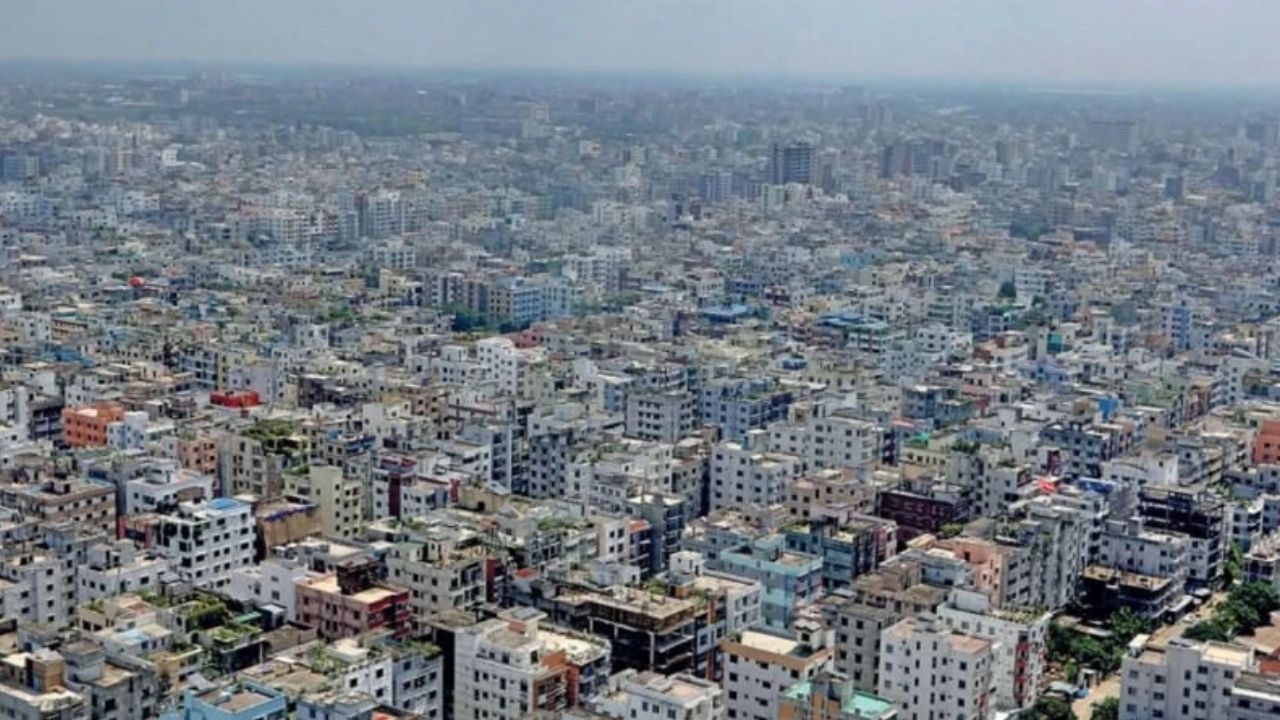

Dhaka is now the world’s second-largest city, following Indonesia’s Jakarta, which holds the title of the world’s most populous city.
The latest World Urbanization Prospects 2025 report, released by the UN Department of Economic and Social Affairs, projects that Dhaka will become the world’s largest city by 2050.
It also revealed that Asia now hosts nine of the globe’s ten largest megacities. The findings highlight a rapid urban transformation, particularly in South and Southeast Asia.

Jakarta, a densely populated low-lying coastal city on Java island, is now home to 41.9 million people, pushing it to the forefront. This marks a change from the UN’s previous assessment, where Tokyo held the top spot. Tokyo, with a relatively stable population of 33.4 million, has now slipped to third place.
Dhaka has demonstrated remarkable growth, surging from ninth to second place with a population of 36.6 million. This rapid expansion is driven by significant migration from rural areas, as people seek economic opportunities or are displaced by environmental challenges such as flooding and sea-level rise exacerbated by climate change.




The study also notes a global increase in megacities – urban centres with populations exceeding 10 million. The number has swelled to 33, a dramatic rise from just eight such cities in 1975. Of these, 19 are located in Asia.
The top ten list includes several other Asian cities: New Delhi, India with 30.2 million people; Shanghai, China with 29.6 million; Guangzhou, China with 27.6 million; Manila, Philippines with 24.7 million; and Kolkata, India, and Seoul, South Korea, each with 22.5 million. Egypt’s Cairo, with 32 million residents, is the only non-Asian city in the top ten.
Despite the planned relocation of government functions, the UN estimates Jakarta’s population will grow by an additional 10 million people by 2050. These residents will also have to contend with issues of affordability and inequality, which have recently sparked public demonstrations in the city.
The UN’s latest assessment incorporates a new methodology to ensure consistency in defining urban boundaries across different nations. A city is now defined as a “contiguous agglomeration” of one-kilometre-square grid cells with a density of at least 1,500 inhabitants per square kilometre and a total population of at least 50,000. The report generally reflects individual cities rather than merged urban areas, with only a few exceptions.
In other findings, the report indicated that Sao Paulo, Brazil, with 18.9 million is the largest city in the Americas, while Lagos, Nigeria, leads in sub-Saharan Africa. Meanwhile, Iran’s capital, Tehran, which is currently facing severe water shortages, is reported to have a population of nine million people.