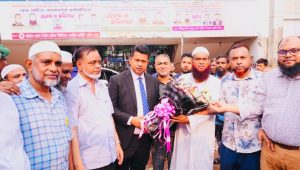
Bangladesh remains dangerously unprepared for the impact of global energy shocks, with the transport sector likely to bear the brunt, warned the Bangladesh Institute of Planners (BIP) at a press conference in the capital on Saturday.
Titled “Energy Security and Sustainable Transport and Communication,” the event highlighted alarming trends in fuel consumption and urban mobility.
According to BIP, a staggering 63 percent of the country’s imported fuel is already being consumed by the transport sector, almost entirely from fossil sources. If current trends continue unchecked, Bangladesh could see its motorcycle fleet surge to 20 million by 2041, alongside 3.6 million private cars.
This projection comes at a time when nearly 60 percent of Dhaka’s roads are less than 10 feet wide.
Fuel system captive to one sector
Drawing on data from the Bangladesh Petroleum Corporation, BIP General Secretary Md Mustafizur Rahman noted that 98 percent of the country’s imported fuel consists of petroleum products — diesel, petrol, octane and kerosene.
Of the total annual storage capacity of 1.57 million tonnes, transport alone consumes 63 percent, compared to 15 percent in agriculture, 12 percent in power generation and just 6 percent in industry.
Within the transport sector, diesel dominates with a 63 percent share, followed by furnace oil at 14 percent, while petrol and octane each account for only 6 percent.
“Globally, power generation is the largest source of carbon emissions, with transport second. But in Bangladesh, transport is the largest fuel consumer. This means any global energy crisis will hit our transport sector first,” Rahman explained.

Explosive growth in motorcycles
The past decade has witnessed a dramatic rise in vehicle numbers. Registered vehicles increased from around 3 million in 2015-16 to 5.76 million in 2023-24. Much of this growth has been driven by motorcycles, which have more than doubled in Dhaka and grown two-and-a-half times nationwide.
A decade ago, motorcycles accounted for about 60 percent of all vehicles; today, their share is even higher.
“If this trend continues, we will have 20 million motorcycles by 2040-41. We are already struggling to manage 4.1 million — whether in terms of congestion, accidents or fuel consumption. What happens when that number multiplies fivefold?” Rahman questioned.
Survey data from Dhaka paints an equally troubling picture. Between 2013 and 2023, private car usage rose by 33 percent, CNG-powered vehicles by 125 percent, and motorcycles by an astonishing 506 percent. Meanwhile, public transport usage fell sharply from 21 percent to just 8 percent.
Metro rail’s limited impact



Despite the introduction of metro rail, the overall scenario has seen only marginal improvement. The system currently handles around 400,000 trips daily — just 1-2 percent of total motorised trips.
As a result, public transport’s share has increased only slightly, from 8 percent to around 10-11 percent.
Historically, Bangladesh’s transport mix was far more balanced. In 1975, rail accounted for 30 percent of passenger movement; today, it has dropped below 3 percent. Water transport has similarly declined from 16 percent to 8 percent. In contrast, road transport has surged from 54 percent to over 90 percent.
“Our benchmark used to be the 2013 public transport share. Even that is now beyond reach,” Rahman noted.
One route tells the whole story
According to BIP research on Mirpur Road — one of Dhaka’s busiest corridors — private cars occupy 73 percent of road space but carry only 24 percent of passengers. Buses, on the other hand, use just 1 percent of the space yet transport 62 percent of commuters.
“The materials required to build a single car could produce 150 bicycles. That was true in 1942, and it remains true today,” Rahman remarked, highlighting the inefficiency of car-centric planning.
BIP also criticised past policy decisions, particularly the National Land Transport Policy of 2004, which aimed for half of all motorised trips in Dhaka to be car-based by 2022.
“Fortunately, that target was never achieved. Even after two decades of inaction, car-based trips account for 37 percent. Had it reached 50 percent, the situation today would be far worse,” Rahman said.
Electric cars not the solution
While electric vehicles are often promoted as a sustainable alternative, BIP cautioned against over-reliance on electric cars. The organisation argued that carbon emissions generated during manufacturing are substantial, and the inefficiency of road space usage remains unchanged.
“If everyone shifts to electric cars, we will need wider roads — and wider roads will only attract more cars. The only viable path is electric buses, electric BRT and electric metro systems,” Rahman emphasised.
BIP recommendations
The organisation presented over 20 recommendations, prioritising immediate action. Among them:
-
Introducing 500 to 1,000 buses in Dhaka within 2-3 months through government-to-government agreements
-
Utilising nearly Tk1,000 crore in unused funds from the Gazipur BRT project to procure 137 buses and launch services within six months
-
Implementing a bicycle-sharing scheme with 100,000 bicycles across 90 wards in Dhaka
-
Expanding BRT systems to six additional cities, including Chattogram
-
Increasing taxes on private cars and motorcycles, with revenues directed to a national urban transport fund
The most debated recommendation came at the end of the press conference: replacing government employees’ 2700cc vehicles with minibuses. BIP proposed scrapping the Tk30 lakh allocation for official car purchases — amounting to nearly Tk 700 crore so far — and redirecting those funds toward public transport.
“In developed countries, the wealthy use public transport. A society does not become advanced by giving cars to the rich while the poor struggle,” Rahman said, quoting former Bogotá mayor Enrique Peñalosa.
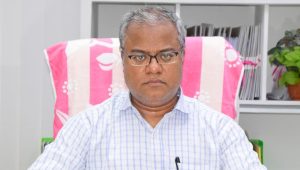
BIP President Ariful Islam concluded by stressing the need for integrated planning.
“Energy security cannot be ensured without aligning transport and land-use planning. Without a decentralised urban structure and a public transport-oriented system, Bangladesh’s long-term energy challenges cannot be resolved,” he said.