A total of 487 people were killed and 1,194 others injured in 559 road accidents across the country in January. Among the deceased, 68 were women and 57 were children.
Road Safety Foundation (RSF) released the statistics on Thursday, noting that motorcycle accidents alone claimed 196 lives, which accounts for 40.24 percent of the total fatalities. Additionally, 132 pedestrians were killed, representing 27.10 percent of the dead, while 67 drivers and helpers (13.75 percent) lost their lives.
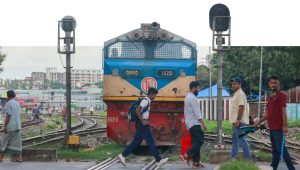
During the same period, 32 people died and 17 were injured in 41 railway accidents, while four waterway accidents left six dead and seven injured. RSF compiled the report based on data from nine national dailies, seven online news portals, various electronic media, and its own records.

The breakdown of fatalities by vehicle type shows that motorcycle riders and passengers made up 40.24 percent of the deaths, followed by three-wheeler passengers at 15.81 percent .
Other fatalities included 5.74 percent from trucks and pickups, 4.31 percent from buses, 2.66 percent from locally made easybikes, 2.25 percent from bicycles, and 1.84 percent from private cars and microbuses.




In terms of road types, 37.03 percent of accidents occurred on regional roads, 27.90 percent on national highways, 18.42 percent on city roads, and 15.20 percent on rural roads. The report identified loss of control (37.38 percent), hitting pedestrians (24.50 percent), and head-on collisions (24.15 percent) as the primary types of accidents.
An analysis of the timing of occurrences revealed that the highest percentage of accidents happened in the morning (26.65 percent), followed by the night (23.61 percent).
Dhaka Division recorded the highest number of casualties, with 119 deaths in 143 accidents, while Sylhet Division saw the lowest with 18 deaths from 24 accidents. In the capital, Dhaka city, 18 people were killed and 41 injured in 26 accidents.
RSF noted that the daily average death toll dropped from 19.61 in January 2025 to 15.70 in 2026, a decrease of 19.93 percent. However, the foundation stated, “This rate of reduction in fatalities does not indicate any sustainable improvement, as there is no visible improvement in road transport management.”
The report attributed the accidents to factors such as faulty vehicles, poor road conditions, speeding, reckless driving, lack of fixed working hours for drivers, and extortion in the transport sector. It also highlighted that many drivers are physically and mentally unwell due to the lack of formal appointment letters and specific working hours.
To curb accidents, RSF recommended increasing the number of skilled drivers, fixing wages and working hours, enhancing BRTA capacity, constructing service roads for slow-moving vehicles on highways, and strictly implementing the Road Transport Act-2018.