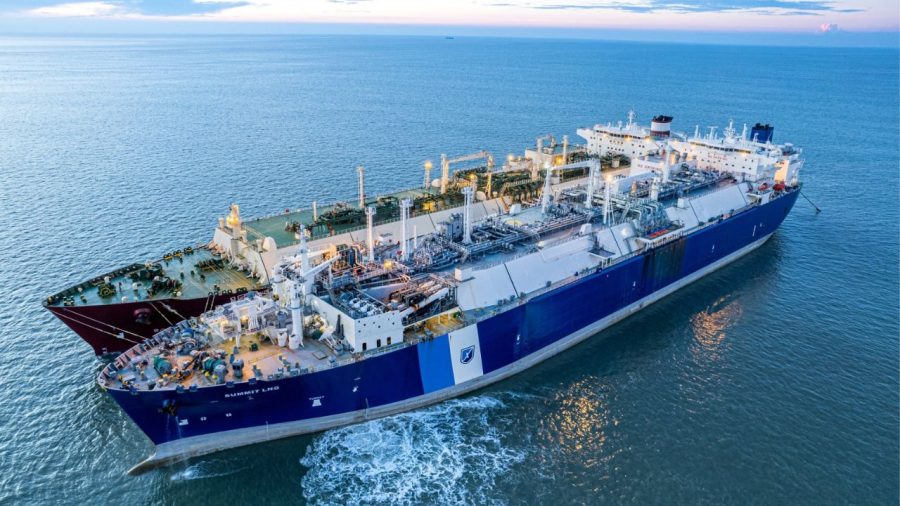



Bangladesh has approved a Chinese state-owned company’s proposal to build its third floating LNG terminal without reducing the price despite an earlier withdrawal of the proposal amid discussions over cutting costs.
China National Energy Engineering and Construction Co (CNEE) will develop the terminal offshore at Kutubjum in Moheshkhali under a government-to-government arrangement.
The government will pay Tk12,324 crore over 15 years or Tk13,161 crore over 20 years, while the company’s proposed daily fee is 35 to 37 per cent higher than the rates charged by the two existing terminal operators.
The Cabinet Committee on Government Purchase approved the proposal on Thursday, according to the Finance Ministry.
Documents from the Energy and Mineral Resources Division identify CNEE as the recommended bidder.
The proposal had been withdrawn from the committee about a month ago amid discussions over reducing the cost.

It has now secured approval without an apparent price cut.
Under the proposed 15-year deal, CNEE would charge $342,000 a day.
Excelerate Energy, which operates one of Bangladesh’s existing terminals, charges $254,000 a day, while Summit LNG charges $249,115.




The proposed CNEE fee is about 35 per cent higher than Excelerate’s and 37 per cent higher than Summit’s.
The price gap raises questions about the cost of expanding the country’s LNG infrastructure.
CNEE’s proposal sets out a capacity of 600 million cubic feet a day, expandable to 750 million cubic feet, with a higher storage capacity than the existing two.
CNEE submitted its proposal on 19 June for the offshore terminal. Its latest proposal, submitted in late October, envisages the facility becoming operational by 2028.
Bangladesh needs about 3,800 million cubic feet of gas a day but normally supplies around 2,700 million cubic feet from domestic production and imported LNG.
The two existing floating storage and regasification units (FSRUs) at Moheshkhali, operated by Excelerate Energy and Summit LNG, have capacities of 600 million and 500 million cubic feet of gas a day respectively. An outage at either facility severely disrupts supplies.
The government plans to build three to four more FSRUs to strengthen import capacity and ease the energy shortage.
The plan has attracted interest from investors in China, the United States and South Korea.

CNEE’s proposal is the first to secure government approval.
The approval also comes amid calls for a transparent and competitive selection process.
On 7 September, US Ambassador Brent Christensen urged Bangladesh to ensure a “transparent, competitive” process at a meeting with Commerce Minister Khandaker Abdul Muktadir.
According to the minister, US companies would get priority if they could demonstrate their ability to build a terminal quickly.
The government also approved several LNG procurement proposals on Thursday amid concerns over supplies linked to the war in the Middle East.
The meeting also cleared purchases of dates, fertiliser imports and several infrastructure projects.