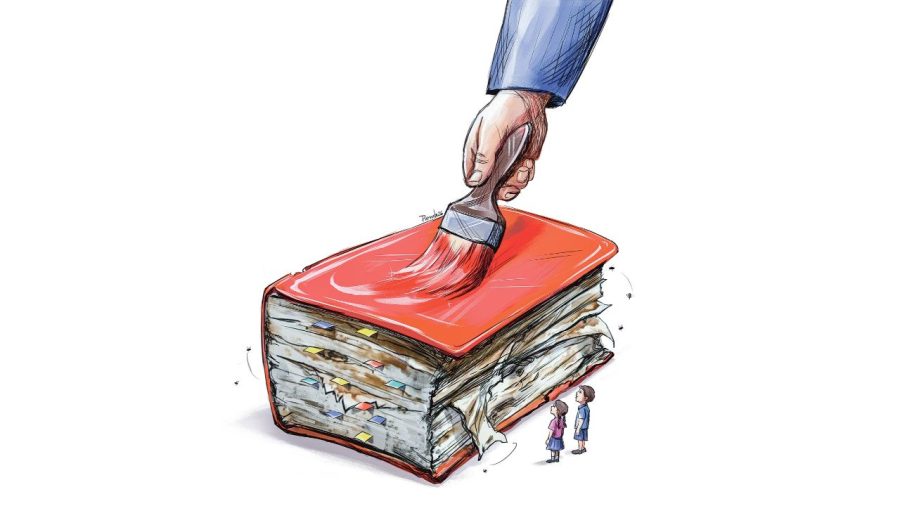



From primary schools to universities, the quality of education remains under scrutiny. Yet the measures taken by the current government, like those of its predecessors, have focused mainly on procurement and infrastructure development.
Educationists say urgent steps are needed to recruit subject-specific teachers, provide teacher training and modernise curricula.
They argue that many decisions on education are driven largely by political appeasement. Education, however, should not be treated as a political issue. Without a commission comprising professionals and experts to guide decisions, the country’s educational future will remain bleak.
Since the Covid-19 pandemic, pass rates at secondary and higher secondary levels have been declining amid six years of financial strain and various other factors. This has intensified discussions about the quality of education.
Reviews of poor examination results have revealed a severe shortage of teachers across the country, growing concerns about the quality of teachers recruited by private institutions, and inadequate opportunities for their training.
Employers have also repeatedly said that university graduates are failing to equip themselves with the skills needed to compete in the job market.
Yet it is difficult to see these problems reflected in the education-related decisions of the nine-month-old government. Continuing the old approach, it has again decided to spend Tk68,000 crore on constructing so-called model schools, Tk10,352 crore on distributing uniforms, bags and shoes, Tk5,500 crore a year on mid-day meals, and Tk1,183 crore on distributing tablets to teachers.
Educationist Manzoor Ahmed told TIMES that there was no overall plan for education. “Distributing tablets to teachers will lead to procurement, but it will do nothing to improve education. The previous government also spent a lot of money in the name of digital classrooms. But those devices no longer exist,” he said.
Kamrul Hassan Mamun, a physics professor at Dhaka University, said, “Has anyone ever asked for uniforms or food for students? Are these really necessary? If the government ignores what is actually needed and does only what earns applause, education will not improve.”

Delawar Hossain Azizi, president of the Bangladesh Madrasa Teachers and Employees Forum, told TIMES, “When hundreds of educational institutions are unable to attract the desired number of students, the plan to build another 600 model schools and colleges at a cost of Tk68,000 crore needs to be reconsidered.”
In Bangladesh, schools, colleges and even universities have not been established with any long-term plan in mind. The consequences are now becoming evident. Based on this year’s higher secondary examination results, 40% of seats in higher education institutions will remain vacant.
Like Manzoor, other educationists argue that investment in education is already inadequate, leaving no justification for such wasteful spending.
Advisory committee recommendations left deep in freezing
During the interim government’s tenure, two advisory committees were formed to improve the quality of primary and secondary education. They made more than a hundred recommendations aimed at the long-term development of the education sector. But the interim government did not examine them, and the BNP government is also not giving them importance.
Professor Manzoor said around Tk42,000 crore had been allocated for the Primary Education Development Programme (PEDP-5). More than Tk38,000 crore had been allocated under PEDP-4, but the quality of education had not improved. Instead, the condition of primary education had deteriorated, he said.
The educationist has called for a five-year plan to ensure quality schools in every locality. In his view, the processes for teacher recruitment and training must be improved, while education should also be decentralised. Educational institutions from primary to higher secondary levels should be established based on catchment areas.
Decline in education becomes evident
This year’s higher secondary examination results were the worst in 22 years. The pass rate in the Secondary School Certificate (SSC) examinations was the lowest in 19 years.
No student passed the Higher Secondary Certificate (HSC) examinations at 293 institutions. Just two years earlier, the number was fewer than 100. At 312 institutions, no student passed the SSC examinations, compared with 134 the previous year.
Bangladesh had reduced its school dropout rate for 14 consecutive years, but that progress came to a halt after 2024. The dropout rate has increased for two consecutive years, while statistics for 2026 are not yet available.
Every year, candidates perform worst in English and mathematics in the SSC examinations. At the HSC level, information technology, alongside English, has also contributed to poor results.
Educationists say blaming students alone is an attempt to conceal the weaknesses of the country’s education system. There is a shortage of teachers, while questions are also mounting over the competence of those currently teaching.
According to the Bangladesh Bureau of Educational Information and Statistics (BANBEIS), at least 14,000 of the 64,253 teachers who teach English at the secondary level do not have a bachelor’s degree in the subject. Of the 67,697 mathematics teachers, only 29,000 have a bachelor’s degree in mathematics.
Information technology was made a compulsory subject at the HSC level more than a decade ago. Yet half of government colleges do not have a teacher’s post for the subject, while several thousand private colleges have no teachers at all.
Around 300,000 teachers work at approximately 20,000 secondary schools across the country, both public and private. There are major gaps not only in their subject-specific qualifications but also in their professional training. Nearly 40% of teachers working at the secondary level have no professional qualifications such as a BEd, MEd or BPEd.
According to a Unesco report, nearly half of Bangladesh’s secondary-level teachers have not achieved the minimum competency standard. The proportion of competent teachers is 54.7% at the lower secondary level and 55% at the higher secondary level.
Bangladesh ranks at the bottom in South Asia in terms of teacher quality.
Professor Kamrul Hassan told TIMES, “Our main problem is not quantity but quality. We have enough educational institutions. To ensure quality education in these institutions, we need good teachers, proper training for them, good salaries and social respect. Otherwise, unplanned expansion of institutions will turn them into factories producing unemployed graduates.”
Public primary education in dire straits
Parents’ dissatisfaction with the quality of government primary schools is evident. Most students are now studying at private institutions instead of opting for free education.

Government reports show that only 4.5% of institutions have been able to demonstrate an acceptable level of reading proficiency.
The posts of headteacher are vacant at 34,000 of the country’s 65,569 government primary schools.
Riaz Parvez, president of the Bangladesh Government Primary School Head Teachers’ Association, told TIMES, “Practical training for teachers is now the most urgent need. Rather than simply increasing subject-specific skills, the training manuals need to be updated to focus on how lessons should be delivered in classrooms.”
Education commissions formed, recommendations never implemented
Since independence, Bangladesh has formed a total of seven education commissions. However, the recommendations made by the commissions established in 1972, 1983, 1987, 1997, 2001, 2003 and 2009 were never implemented.
The 1972 commission recommended free primary education up to Class VIII, a unified and technical education system, two years of training for primary school teachers and three years for secondary school teachers, special scholarships for women, increased opportunities for technical education, and allocating at least 4–5% of national income to education.
Educationists are still making the same recommendations.
Professor Kamrul said, “A permanent education commission is essential. It should decide where, when and how many schools and colleges should be established, as well as what types of teachers are needed at each institution. The quality of education cannot be improved through sudden, isolated decisions by government ministers or bureaucrats.”
According to the Bangladesh Bureau of Statistics’ (BBS) “Private Educational Institutions Survey 2024”, there are 92,392 private educational institutions in the country.
Of the 702 government secondary schools, 383 have vacant headteacher positions. There are also 2,842 vacancies against 15,293 teacher posts. The situation at private institutions is even worse.
Technical education important in name only
According to government data, Bangladesh now has 51 polytechnic institutes and 166 technical schools and colleges. Although these institutions have 17,000 teacher posts, fewer than 8,000 teachers are currently employed.
Although the number of government technical institutions has increased over the past decade, at least 60% of their seats remain vacant. Of more than 600 private institutions, at least 400 have closed because of a shortage of students.
An official of the Technical Education Board said, “Because of the teacher shortage, teachers cannot be sent for regular training. They are also unable to keep themselves updated because they do not receive training every year. As a result, students are no longer being taught about the introduction of modern equipment in laboratories and how to use it.”