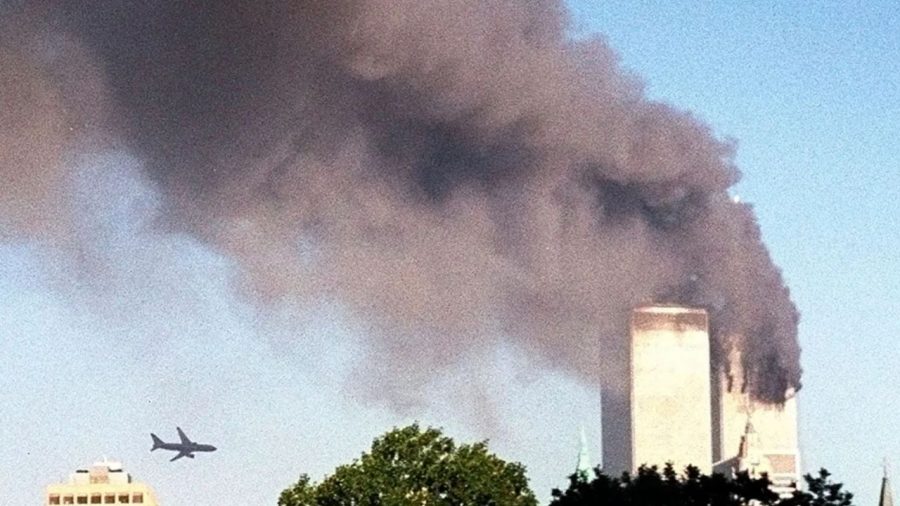

A quarter-century after the 11 September 2001 terrorist attacks that killed 2,977 people in the United States, foreign, security, and intelligence policies across Western nations continue to be shaped by the lessons and miscalculations of the post-9/11 era.
The 2001 attacks, in which al-Qaeda suicide pilots crashed hijacked airliners into the World Trade Centre, represented a colossal intelligence failure and a failure of imagination within the US security apparatus, reports BBC.
Although the Central Intelligence Agency (CIA) had monitored al-Qaeda and its exiled Saudi leader Osama Bin Laden for years prior to 2001, both the CIA and the Federal Bureau of Investigation (FBI) failed to properly assess and share vital information that could have disrupted the plot.
The subsequent 9/11 Commission Report blamed failures of imagination, policy, capabilities, and management on the US government.
Nine days after the tragedy, then US President George W Bush declared the “War on Terror”, initiating a transformative period for global security frameworks. In response to the initial intelligence breakdown, Western governments enacted extensive reorganisations to improve information sharing across agencies.
The US established a National Counter Terrorism Center and the post of Director of National Intelligence to oversee 18 separate intelligence bodies, alongside the Five Eyes alliance pooling data between the US, UK, Canada, Australia, and New Zealand.

In the United Kingdom, historical rivalries between the Security Service (MI5) and police counter-terrorism units dissolved, leading to regional fusion centres and the high-security Counter Terrorism Operations Centre in London.
At this London facility, MI5 intelligence officers sit alongside police officers, US federal agents from the FBI, and language specialists seconded from GCHQ.
However, major intelligence and strategic errors continued to occur in the years following 9/11. Prior to the 2003 US-led invasion of Iraq, political pressure from Washington led the Secret Intelligence Service (MI6) to allow raw intelligence (CX) to be politicised, supplying Prime Minister Tony Blair’s government with flawed claims regarding Weapons of Mass Destruction under Iraqi President Saddam Hussein.




The subsequent Butler Review concluded that British intelligence on Iraq’s alleged WMD programme was seriously flawed and heavily reliant on unverified sources. General Sir Richard Shirreff, who served in Iraq as a divisional commander, observed that the war was based on deeply flawed intelligence that pointed towards strategic failure.
Following the Iraq invasion, MI6 overhauled its evaluation process, establishing a strict separation between agent runners gathering field intelligence and reports teams assigned to verify and challenge incoming data.
Domestic counter-terrorism in the UK also experienced critical lapses amidst numerous foiled plots. MI5, which was headed by Lord Jonathan Evans from 2007 to 2013, faced the ongoing challenge of prioritising leads from a database of over 20,000 “Subjects of Interest”.
The service failed to prevent the 2005 London 7/7 suicide bombings that killed 52 people, where ringleader Mohammed Sidique Khan was known to MI5 but his plot went undetected, as well as the 2017 Manchester Arena bombing.
The post-9/11 era was further marked by severe human rights controversies committed by the US and its allies in the rush to prevent secondary attacks. Hundreds of suspects were detained without trial at Guantanamo Bay in Cuba, while scandals emerged regarding prisoner abuse in US custody in Iraq and Afghanistan.
The US has continued detention without trial at Guantanamo Bay, and in 2025 deported over 200 men to El Salvador’s Terrorism Confinement Centre.
In the UK, MI6 was complicit in the 2004 rendition of Libyan Islamist Abdelhakim Belhaj and his wife from Thailand to Libya, where he was tortured by Colonel Muammar Gaddafi’s regime, an action that resulted in an official apology to Parliament by the Attorney General in 2018.
In recent years, the primary focus of intelligence agencies has shifted from non-state terrorism to state-level threats. Lord Evans noted that while non-state terrorism remains a serious concern, state threats from Russia, Iran, their proxies, and China have become at least as severe a national security concern.
Former MI6 Chief Sir Alex Younger (2014–2020) stated that spending two decades focused on counter-terrorism caused Western intelligence to miss the rise of China as a military power and strategic challenge.
Sam Olsen, Chief Analyst at Sibylline, stated that the West misunderstood China’s rise by assuming economic integration would bring political convergence, noting that Chinese power extends beyond military assets into semiconductors, critical minerals, batteries, ports, telecommunications, and industrial capacity.
The adoption of biometric technologies such as facial, iris, and gait recognition has created substantial hurdles for intelligence officers operating across borders in “hard targets” including China, Russia, Iran, and North Korea.
Strategic miscalculations have also recurred globally, including Russia’s 2022 full-scale invasion of Ukraine, the Hamas-led raid on Israel on 7 October 2023, and US President Donald Trump’s decision to join Israel in attacking Iran.
Trump’s action against Iran, undertaken despite warnings from Gulf allies, resulted in Iran closing the Strait of Hormuz and disrupting global energy markets without an effective US counter-strategy.
As rapid technological advances in artificial intelligence and quantum computing continue to transform counter-terrorism, fundamental questions remain regarding major Western national decisions, including the invasion of Iraq and the 20-year involvement in Afghanistan ending in the return of the Taliban.