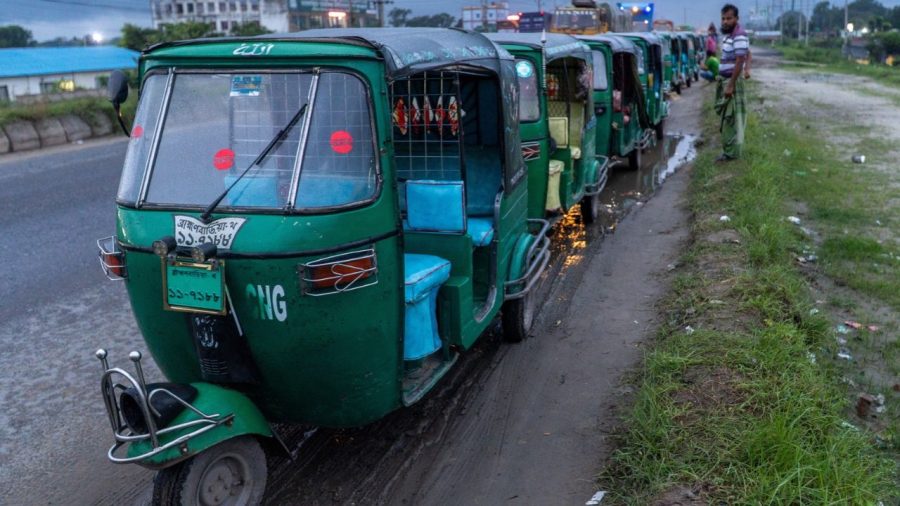



A 10-kilometre CNG auto-rickshaw ride from Farmgate to Banasree should cost Tk135 under the government-set meter rate. Even with 15 minutes of waiting time, the fare would come to Tk165. But when Sharmin Sultana tried to make the journey, drivers demanded Tk300, leaving her with little choice but to pay.
“Even when there is a meter, nobody follows it. Everyone charges whatever they want,” she told TIMES.
Her experience reflects a long-standing failure to regulate CNG-run auto-rickshaws in Dhaka, where passengers routinely pay two to three times the official fares, while drivers refuse to use meters or take passengers to their preferred destinations.
Over 22 years, seven governments have failed to enforce the rules governing the vehicles. Even attempts to penalise drivers for charging excess fares have been abandoned in the face of protests.
On 10 February 2025, the Bangladesh Road Transport Authority (BRTA), during the interim government’s tenure, instructed Dhaka police to fine drivers up to Tk50,000 or sentence them to six months in prison for charging above the metered rate. The directive was withdrawn just six days later following protests by drivers.
Soleman Uddin, who has been driving an auto-rickshaw for nearly 14 years, said police used to question drivers who refused to use the meter. Now, they do not even do that.
“We protested and got the meters switched off. There are no cases against us,” he said.
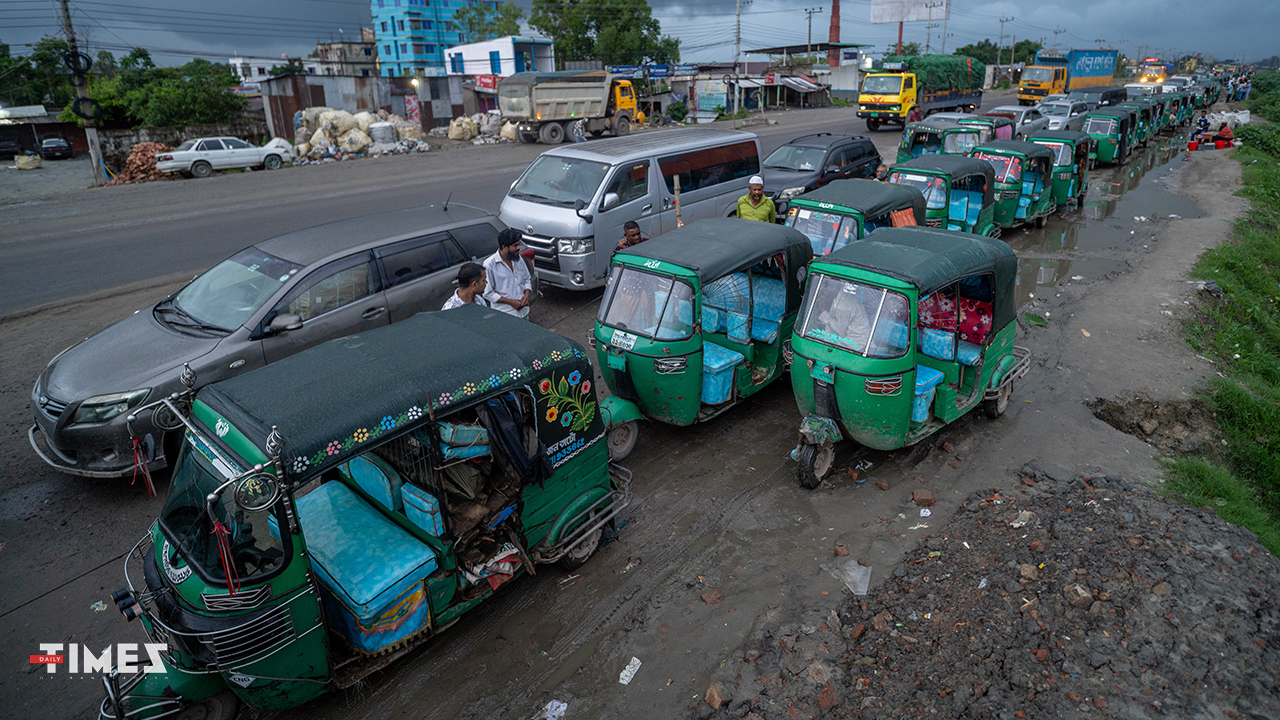
A report by the Passengers’ Welfare Association of Bangladesh found that almost 100% of CNG auto-rickshaws operate on negotiated fares, charging between 50% and 710% more than the metered rate. Nearly 87% of drivers also refuse to take passengers to their preferred destinations.

The vehicles were introduced in 2003 to help reduce air pollution in the capital. The following year, the government announced that they would take passengers to their destinations at their discretion and charge fares according to meters. However, the system has never been effectively enforced.
Initially, hotline numbers were displayed on the back of the vehicles for passengers to report violations. Those numbers have since disappeared, leaving commuters with little recourse against arbitrary fares.
Ownership costs and rental pressure
Drivers argue that the government-set fares are no longer enough to cover their operating costs, but the economics of the business remain clouded by the failure to enforce rental regulations and ensure transparency.
At Merul Badda, several drivers were negotiating fares with passengers. One of them, Ramzan Ali, said operating on metered fares was no longer financially viable.
“We don’t have any meter system. How can a meter from 2004 work today? Money had a different value back then. Prices have gone up, and it is no longer viable for us to operate on metered fares,” he said.



He claimed that a metered trip would not generate more than Tk1,000 a day, while he had to pay Tk1,200 to the owner as daily rental.
The BRTA has fixed the daily rental at Tk900, but owners continue to charge drivers more than the prescribed amount, a problem that has remained unresolved for years.
Ramzan said he spends Tk500 on gas, apart from food and other expenses. “After covering expenses of Tk1,800, whatever remains is our income,” he said.
The BRTA regularly revises auto-rickshaw fares following adjustments to gas prices, despite its failure to ensure that drivers follow the metered rates.
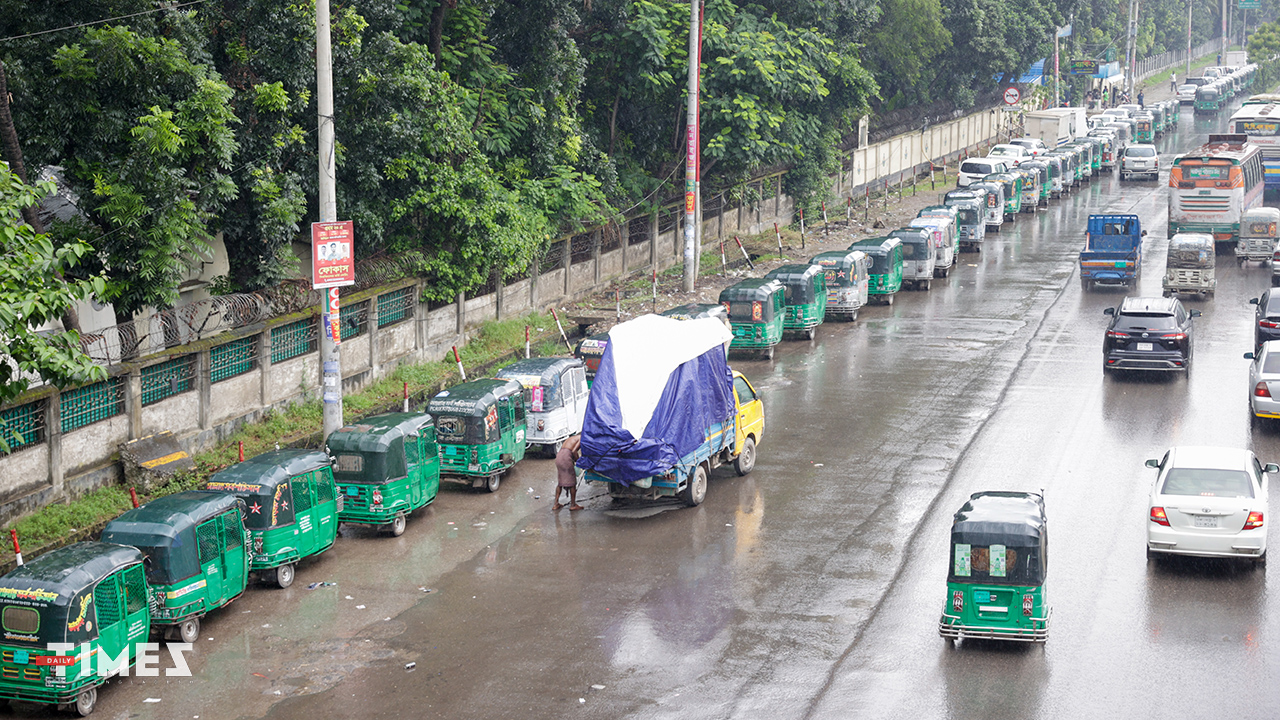
The current fare structure sets a minimum charge of Tk40 for the first two kilometres and Tk12 for every additional kilometre. A waiting charge of Tk2 per minute applies during traffic congestion, stops and at signals.
However, drivers say these rates do not cover their costs. Lutfur Islam, another driver waiting for passengers at Shahbagh intersection, said the fare would need to be raised to at least Tk21-22 per kilometre, with the waiting charge increased to Tk5 per minute, to make the business viable.
At such rates, passengers could hire an air-conditioned Uber car instead.
Kazi Md Saifun Newaz, assistant professor at the Accident Research Institute (ARI) of Bangladesh University of Engineering and Technology (BUET), said repeated directives since 2004 without effective enforcement reflected weaknesses in the country’s policy implementation mechanisms.
“Allegations have also surfaced at different times that police take bribes to allow CNG auto-rickshaws to operate without using meters, further complicating the situation,” he told TIMES.
The BRTA has registered 13,000 auto-rickshaws in Dhaka. Their economic life was initially set at nine years, but the permitted lifespan was extended three times following demands from owners, taking it to 15 years.

According to Saidur Rahman, executive director of the Road Safety Foundation, the problem stems from a wider failure in the management of the sector. “The ownership structure of CNG auto-rickshaws, their inflated prices, the financial pressure of daily rentals on drivers and flawed government policies have made operating on metered fares impractical,” he told TIMES.
He said an auto-rickshaw should cost Tk5-6 lakh, but prices in Dhaka had risen to as much as Tk28 lakh because new registrations had been suspended in the capital. The high prices have made it difficult for drivers to own the vehicles themselves. “If they could own the vehicles themselves, they would not have to pay Tk1,200 in daily rental,” he said.
Aslam Ali, president of Four Stroke CNG Auto Rickshaw and Three Wheeler Motorbike Owners’ Association of Bangladesh, called for a coordinated policy involving the government, owners, drivers, and traffic police to bring discipline to the sector.
The BRTA has stopped issuing new auto-rickshaw registrations in Dhaka, citing concerns that additional vehicles would worsen traffic congestion. However, the authority registers 23-25 cars in the capital every day.
Apps offer no clear fare benchmark
App-based services have offered passengers another way to book CNG auto-rickshaws, with fares displayed before a ride is confirmed. But these services have not necessarily brought greater transparency to the sector.
Uber launched its ‘Uber CNG’ service in Dhaka in June 2021. Pathao, O Bhai and other platforms later introduced similar services.
However, the companies do not publish a fixed per-kilometre fare chart, leaving passengers without a clear benchmark against the government’s prescribed rates.
Driver Emon Rahman said app-based services had made it easier to find passengers. “I no longer have to sit on the road waiting for passengers like before. I can earn a reasonable amount from rides,” he said.
Passenger Faria Mim Sultana said she was satisfied with the service. “For people who travel alone, this is a smart alternative to booking an entire car,” she said.
Mohammad Habibur Rahman, chairman of the BRTA, did not respond to repeated calls over several days seeking comments on the regulatory failures and the authority’s position on enforcing metered fares.