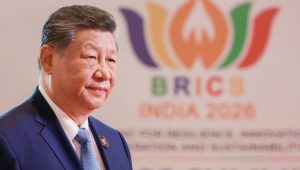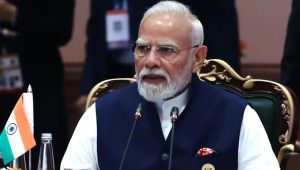

The US is not a member of Brics, yet President Donald Trump’s policies will dominate the backdrop of the group’s weekend summit in Delhi.
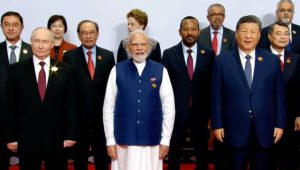
Leaders from 11 nations including host India, China, Russia, Brazil, South Africa, the UAE and Iran, with Saudi Arabia attending as an invited member will meet to discuss a broad agenda, BBC reports.
But few issues carry as much weight as the impact of Trump’s trade and foreign policy.
The war in Iran and the threat of sweeping White House tariffs have unsettled global energy markets and left the global economy uncertain. Against this backdrop, Brics leaders are unlikely to issue a consensus statement directly challenging Washington or outlining a coordinated counter‑strategy.

Divisions within the bloc make agreement difficult. “India cannot afford to have a joint statement that rails against Washington,” Michael Kugelman of the Atlantic Council told the BBC, predicting any criticism will be “vague and indirect.” Russia and Iran may press for sharper language, but India’s pursuit of a US trade deal and China’s caution about appearing to target Washington are likely to temper the outcome.
The UAE, meanwhile, has come under Iranian attack during Tehran’s retaliation against US and Israeli strikes. Hosting US military bases, it is unlikely to support language that strengthens Tehran’s position. Kugelman notes that Brics’ expansion has increased its significance but also made consensus harder: “You’ve added a number of members that don’t get along,” he said, describing India’s challenge as uniting countries with “a wide array of views and positions on the global order.”


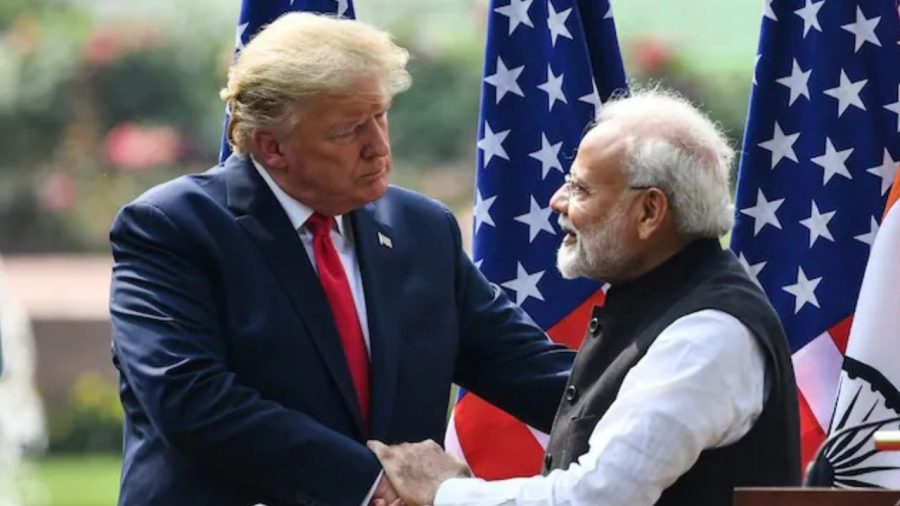
Trump has been vocal against Brics, particularly its push to reduce reliance on the US dollar. He has warned the bloc against creating an alternative currency, threatening in November 2024 that BRICS members would face “100% tariffs” if they backed efforts to replace the “mighty US dollar.”
Despite these tensions, Brics’ geopolitical and economic weight has grown. The group now accounts for 49% of the world’s population, 40% of global GDP and 26% of international trade, according to BBC Monitoring. Its most tangible achievement remains the New Development Bank, which has approved billions of dollars in infrastructure and development projects across the global south. It has also created a $100bn contingency reserve to support members in financial crises, though it has yet to be tested.
Leaders are expected to explore ways to ease cross‑border payments in local currencies, a priority for Moscow and Tehran under US sanctions. Brics is also likely to continue positioning itself as a voice for developing nations, pressing for reforms to institutions such as the UN, IMF and World Bank.
For India, the summit is an opportunity to reinforce its claim to leadership of the global south. Many of Delhi’s priorities — multilateralism, a multipolar world, greater representation for developing countries and freer trade — align with Brics’ wider agenda. Yet India must also navigate China’s stronger influence across much of the developing world.
The Modi government has emphasized its role as a “voice of the Global South,” though analysts say its success has been limited compared with China’s deeper inroads in Africa and Latin America. The expanded Bricsgrouping offers India a chance to strengthen ties with countries such as Ethiopia, Brazil and Indonesia, and build a broader profile across Africa and Latin America.
For Delhi, the test will be whether it can secure a consensus statement — often seen as a measure of a host’s diplomatic success. That will be difficult given sharp differences over the Iran war, relations with the US and the future of global trade. The challenge was evident in May, when Brics foreign ministers failed to agree on a joint statement, leaving India to issue a chair’s summary instead.
India will take confidence from its G20 presidency in 2023, when it managed to secure a joint declaration despite divisions over Russia’s war in Ukraine. But Delhi will also want substantive announcements and to highlight Brics’ achievements. On this, members are likely to agree: none will want the bloc dismissed as merely a “talk shop.”