Amid escalating concerns over political violence, attacks on media outlets, and the recent killing of activist Sharif Osman Hadi, speakers at a discussion on “Election and Citizen Security” emphasized that fair elections hinge on rebuilding public trust, ensuring voter safety, and upholding law and order.
The Citizens’ Coalition for Reforming the Democratic Structure of the State held the event at CIRDAP auditorium, urging government accountability, arms license revocations, and swift action against perpetrators, while warning against fascist remnants, regional interference, and misinformation.
Speakers urged collaboration among political parties, civil society, the Election Commission, and media to promote transparency, election monitoring, and non-violent rhetoric. They warned that without urgent reforms, the sacrifices made during the July-August uprising could lead to anarchy and further bloodshed.
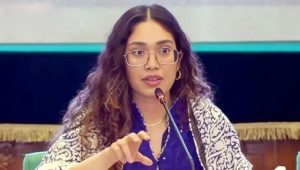
Irene Khan, the UN Human Rights Council’s independent expert on freedom of opinion and expression, stated that a fair election is impossible without public confidence. “Voters must feel safe and believe their votes count, otherwise they will avoid polling stations,” she said, referencing her June 2024 UN report which highlights that elections depend on trust beyond mere administrative measures.
Khan called for greater government accountability following Hadi’s killing and attacks on The Daily Star and Prothom Alo, stressing the need for impartial probes and prompt responses to complaints rather than relying solely on symbolic steps like installing CCTV cameras. She warned against conspiracy theories, advocated for transparent processes, and urged political parties to adopt responsible rhetoric, proposing a joint pledge for peaceful elections.

Expressing concern over arming politicians, Khan noted the risks of escalating violence and called for coordinated efforts against misinformation involving the Election Commission, civil society, and social media platforms. “A safe election is a shared responsibility,” she concluded.
Shahidul Alam, president of the Citizens’ Coalition, described the upcoming national election as the most critical in recent years, offering a rare chance for free voting after a history of flawed polls. He attributed this opportunity to the sacrifices of students and workers but stressed that without security for candidates and voters, the process would be meaningless.
Alam highlighted regional influences, lingering forces from past regimes, conflicting government statements, and unclear institutional roles as factors heightening public suspicion and electoral risks. He voiced alarm over attacks on The Daily Star, Prothom Alo, Chhayanat, and Hadi’s murder, saying such failures to protect politicians and cultural institutions leave citizens feeling unsafe. With Tarique Rahman’s anticipated return on December 25, he added, security concerns have intensified.




Alam urged the media to counter misinformation and reflect public aspirations, comparing Bangladesh’s fragile democracy to a young sapling that requires protection to thrive.
Shah Iftekhar Tarik, central organising secretary of the Islamic Movement Bangladesh, criticized the interim government as ineffective despite widespread political support post-August 5, 2024. He condemned its failure to protect Hadi and maintain law and order, warning that elections could be derailed by mafia and terrorist influences.
Tarik deemed the home minister’s comments on onion prices as irresponsible and called for decisive security measures or the government’s resignation. He emphasized the need to defend religious and cultural values, likening law enforcement to an impartial referee essential for restoring order.
Advocate Ehsanul Mahbub Zubayer, assistant secretary general of Bangladesh Jamaat-e-Islami, termed the 13th parliamentary election crucial yet unstable. He urged the revocation of arms licenses issued before August 5 and the recovery of nearly 9,000 looted weapons.
Zubayer criticized security forces’ inaction following attacks like Hadi’s killing and stressed that political parties must reject violence through concrete actions to ensure credible polls. Recalling the unity of August 5, he warned against further losses akin to those of Abu Sayed or Hadi, urging administrators to suppress terrorism. He also decried media attacks allegedly encouraged by the government, cautioning that unchecked actions could lead to bloodshed.
Zonayed Saki, chief coordinator of Gono Songhoti Andolon, paid tribute to Hadi’s martyrdom and his contributions to post-August transitions and election preparations. He blamed fallen fascist forces and their alleged Indian backers for orchestrating chaos to sabotage democracy, linking Hadi’s killing to broader election disruptions, including attacks and media burnings.
Saki pointed to nationwide anarchy, government failures in providing protection, and delayed responses, rejecting excuses such as funding shortages for CCTV. He demanded accountability, proposing a monitoring committee involving parties and the Election Commission, and warned that partisan failures could derail the transition. He urged successful polls to honor the martyrs of July.
Mahmuda Habiba, a member of the BNP media cell described Hadi’s death as a national tragedy, criticized a Facebook post by the chief adviser’s press secretary, and questioned the forces restraining the government.
Habiba highlighted intelligence failures in Hadi’s case and urged the Election Commission to rebuild trust beyond mere policing or CCTV installations. Noting the interim government’s shortcomings in administrative reforms, she stressed the importance of defending media freedom while combating misinformation.
Other speakers included Dr Shafik Rahman, joint convener of the Citizens’ Coalition; Hasibal Hasan, secretary general of State Reform; Akram Hossain, joint secretary general of the Citizens Party and Dhaka-13 candidate; Barrister Mili, AB Party’s Dhaka-10 candidate; Barrister Sunny of the AB Party; Ashraf Mehedi, a candidate from the Brahmanbaria-2 constituency; and Umama Fatima, a leader of the Anti-Discrimination Student Movement.