






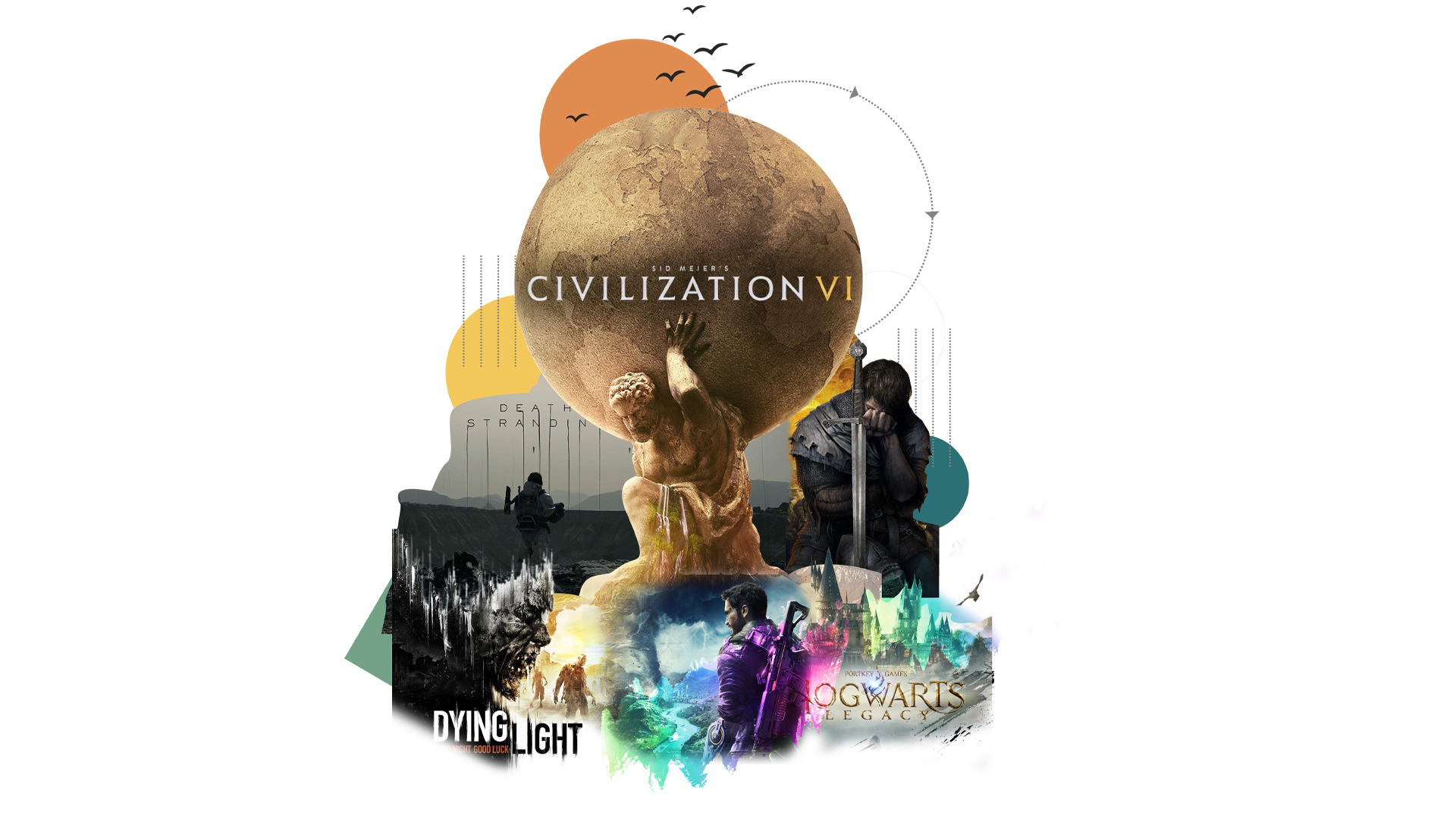
Since December 2018, the Epic Games Store has handed out hundreds of games for free. Some were modest indie titles. Others were blockbuster releases that had sold millions of copies. When Grand Theft Auto V became free in May 2020, demand was so overwhelming that Epic’s servers temporarily crashed. Since then, games such as Civilization VI, Control, Death Stranding, Just Cause 4, Kingdom Come Deliverance, Hogwarts Legacy, Dying Light, Subnautica and Borderlands: The Handsome Collection have all appeared with a price tag of exactly zero.
To many players, it feels like an extraordinary act of generosity. To Epic Games, it is something else entirely: a calculated investment.

Epic is not in the business of giving things away for the sake of goodwill. It is in the business of competing for one of the most lucrative positions in gaming: owning the storefront where players buy their games.

That is a difficult challenge because the market already has a dominant incumbent. For PC gamers, Steam is less a platform than an institution. After two decades of operation, it has become the default destination for purchasing, managing and launching games. Most players already have extensive libraries, established friend networks and years of purchase history tied to their Steam accounts.
Convincing users to abandon that ecosystem is extraordinarily difficult. Installing a competing launcher is not a major technical hurdle, but changing habits is. Traditional advertising can raise awareness, yet it rarely persuades people to switch platforms.
Epic pays developers and publishers upfront fees to feature games in its giveaway programme. Developers receive guaranteed revenue regardless of sales performance. Epic receives something potentially more valuable: millions of new users creating accounts, downloading the launcher and returning every week to see what is available next.
Viewed from the outside, the programme resembles a gift. Viewed from the inside, it resembles customer acquisition spending. The strategy continues to attract users. It is also designed to keep them.
Each free title becomes another asset attached to an Epic account. Over time, users accumulate libraries containing dozens or even hundreds of games. Many may never be played, but they still create a sense of ownership. The larger the collection grows, the less likely a user is to uninstall the launcher or abandon the platform altogether.
The psychology is simple. A player with 150 games in an Epic library may not use the store every day, but they are unlikely to walk away from it completely.
Epic’s ambitions also extend beyond existing PC gamers. The company understands that younger players often have fewer platform loyalties. Many first encountered Epic through Fortnite, one of the most successful games ever created. For these users, Steam is not necessarily the default option, it is for older generations.
The objective is not merely to lure established Steam users away. It is to capture the next generation of players before long-term habits are formed. In technology markets, becoming someone’s default platform can be more valuable than any individual feature.
Crucially, Epic can afford this strategy. The company’s financial engine is Fortnite. The battle royale phenomenon has generated billions of dollars in revenue through cosmetic purchases and seasonal content. Alongside this sits Unreal Engine, Epic’s game-development platform used by studios across the industry. Together, these businesses provide the resources needed to subsidise years of free game giveaways.
In effect, Epic is using profits from one part of its empire to fund growth in another.
The reasoning is straightforward. Digital storefronts are exceptionally attractive businesses once they achieve scale. There are no physical shelves, warehouses or shipping networks. After the infrastructure is built, the cost of selling one additional digital copy of a game is minimal. The challenge is not distribution. It is attracting users.
Epic’s giveaways are therefore best understood as infrastructure spending. The company is investing in audience growth today in the hope of generating platform revenue tomorrow.
Has it worked? That depends on the benchmark. The Epic Games Store has not dethroned Steam, nor does it appear close to doing so. Valve’s platform remains the dominant force in PC gaming. Yet Epic achieved something many observers considered unlikely when the store launched in 2018: it has become a credible competitor.
The platform now serves hundreds of millions of accounts, hosts major releases and maintains a regular presence in the gaming ecosystem. For a challenger entering a market defined by entrenched habits and network effects, that alone is a significant achievement.
Every week, another free game appears. Millions of users claim it with a single click and add it to libraries they may never fully explore.
Most of them are not thinking about market share, platform economics or customer acquisition strategies. That is precisely the point.


