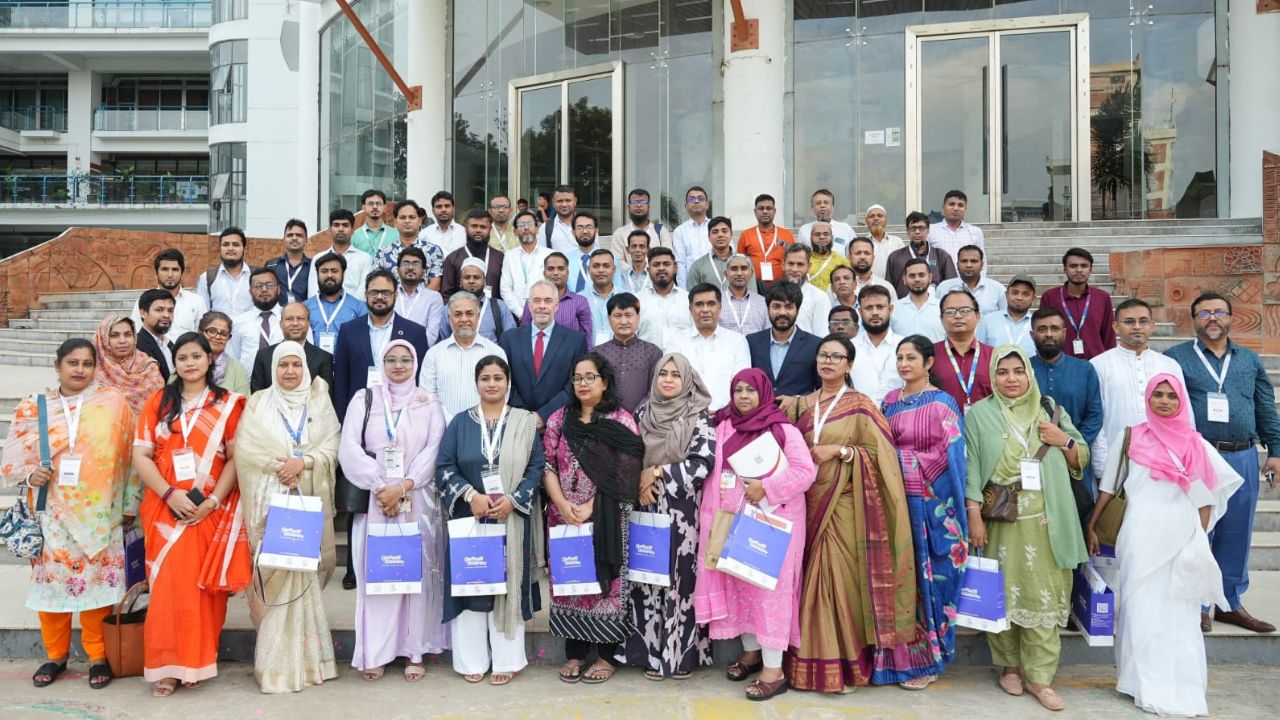

The National School Science Teachers Conference 2026 brought together 175 secondary school science teachers from all 64 districts at Daffodil International University’s International Conference Hall in Daffodil Smart City, Savar, on 17 July to strengthen science education through professional development, collaboration and technology-led teaching.
Bangladesh Freedom Foundation and Daffodil International Professional Training Institute jointly organised the day-long conference, with DIPTI serving as lead implementation partner and promoter, in association with the Human Resources Development Institute and Daffodil International University, the organisers said in a press release.
The conference focused on inquiry-based learning, critical thinking, innovative teaching methods, classroom technology, artificial intelligence and learner-centred science education.
Daffodil International University Board of Trustees Chairman and Daffodil Family Chairman Dr Md Sabur Khan delivered the keynote address, titled “Transformative Teaching for Future-Ready Science Education”.

Khan said education’s future depended on engaging learners through creativity, innovation and experiential learning rather than relying on traditional teaching methods. He urged teachers to become facilitators who inspire students to explore, question, innovate and solve real-world problems as technology and artificial intelligence reshape education.
Directorate of Secondary and Higher Education Director General Professor Dr Khan Moinuddin Al Mahmud Sohel attended as chief guest, while British Council Bangladesh Country Director Stephen Forbes joined as special guest.



Other guests included Daffodil Family Group Chief Executive Officer Dr Mohammad Nuruzzaman, Bangladesh Freedom Foundation Executive Director Sazzadur Rahman Chowdhury, and Daffodil International University and Oxfam Bangladesh International Adviser Azizur Rahman.
DIPTI Executive Director Dr K M Hasan Ripon convened the conference.
Sohel urged teachers to move beyond conventional classroom practices and equip younger generations with the knowledge, skills and mindset required for the future. He said science education should build curiosity, critical thinking and problem-solving abilities among students.


Forbes congratulated the organising institutions on the initiative and praised their continued efforts to improve science education in Bangladesh.
The conference ended with a certificate and recognition ceremony for all participating teachers. Speakers said teachers’ continuous professional development was essential to developing a scientifically literate, innovative and future-ready generation.
The organisers said the conference marked the beginning of a long-term national professional development programme for science teachers.
Follow-up learning sessions are scheduled for September and October 2026, focusing on practical teaching strategies, emerging technologies and innovative classroom practices.
The initiative is expected to strengthen science teaching nationwide, encourage collaboration among educators and help build a culture of innovation and scientific excellence.