

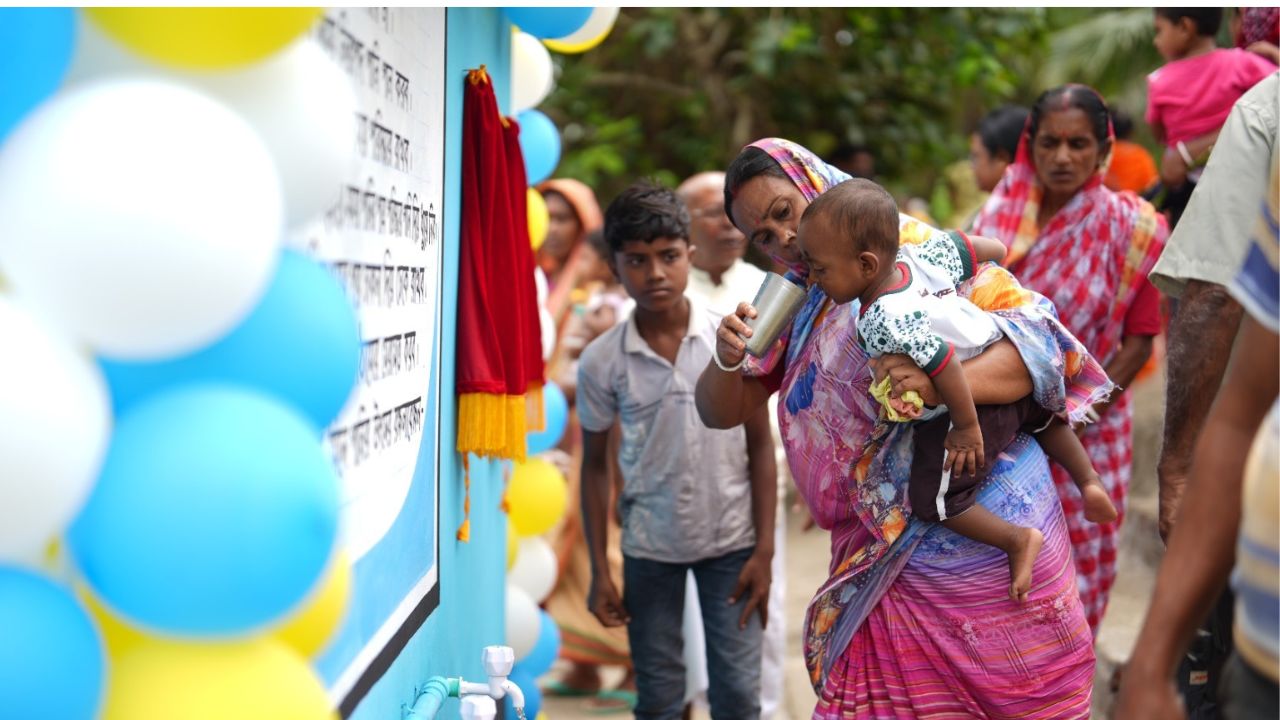





The true, enduring test of governance lies in a fundamental metric: the degree to which the state safeguards the inherent dignity, basic rights, and bodily integrity of its most vulnerable citizens. For far too long, our administrative culture has been shadowed by a feudal relic. This pervasive mindset treats public services, clean water, and basic sanitation not as inviolable rights, but as benevolent dispensations handed down by a paternalistic authority.
In the lexicon of modern political science, this patron-client paradigm is profoundly antithetical to the democratic ideal. The relationship between the state and its populace is not that of a benefactor and a mendicant, nor a donor and a recipient; it is a solemn, legally binding constitutional covenant. Within this framework, citizens are the original repositories of all sovereign power and the legitimate claimants of rights. At the same time, the state apparatus functions strictly as a duty-bearer, constitutionally obligated to deliver.
The Constitution of the People’s Republic of Bangladesh stands as the ultimate bulwark of this egalitarian contract. Article 7 forcefully proclaims a foundational truth: all power in the Republic belongs to the people. To ensure that this power is not rendered nominal, Article 11 mandates that the state shall be a democracy in which fundamental human rights, freedoms, and respect for human dignity are guaranteed. Furthermore, Articles 15 and 16 impose an explicit obligation upon the state to eradicate structural disparities between urban and rural life, ensuring that necessities reach the furthest margins of the republic. Articles 18 and 18A elevate public health, nutritional standards, and environmental protection to primary duties of the state, directing the government to preserve natural resources, wetlands, and rivers for present and future generations. Articles 27 and 31 guarantee equality before the law and equal protection under it, establishing that no action detrimental to life, liberty, or body shall be taken arbitrarily.

Bangladesh’s international legal obligations heavily reinforce this internal mandate. Having ratified the International Covenant on Economic, Social and Cultural Rights in 1998, the state is bound by Articles 11 and 12 to guarantee an adequate standard of living and the highest attainable standard of physical and mental health. Additionally, Article 14 of the Convention on the Elimination of All Forms of Discrimination Against Women obligates the state to ensure rural women’s access to sanitation and water, a principle echoed by Article 24 of the Convention on the Rights of the Child and Article 28 of the Convention on the Rights of Persons with Disabilities. These international frameworks, combined with commitments to Sustainable Development Goal 6 for clean water and sanitation and Goal 16 for transparent, accountable institutions, mean that municipal service delivery is not a discretionary favour, but an internationally monitored legal duty.
Despite an impressive array of policy documents – including the National WASH Policy, the National WASH Strategy, and the Sector Development Plan – a grim chasm persists between progressive paper promises and the lived realities of millions. The policy documents articulate noble commitments, promising public hearings, community scorecards, and open national data repositories. Yet, when looking at the field reality, a bitter conflict emerges between policy text and everyday life.
Meanwhile, a striking contradiction plays out in our megacities. Wealthy, affluent neighbourhoods enjoy heavily subsidised, uninterrupted municipal water supplies and functional waste management systems. In stark contrast, hard-working informal settlement dwellers in urban slums are forced to pay inflated prices to informal cartels for unsafe water, effectively paying far more than the privileged for a basic necessity. Unmanaged faecal sludge continues to poison our rivers and underground aquifers, creating an urgent public health hazard.
Global experience demonstrates that such stagnation is overcome only when citizens are empowered to demand accountability. In India, under the Mahatma Gandhi National Rural Employment Guarantee Act, social audits were codified into administrative law, allowing residents to directly audit public work quality, budget allocations, and project execution, significantly curbing institutional corruption. In Kenya, following its 2013 constitutional decentralisation and Water Act, water was declared a fundamental right, imposing statutory accountability on county governments and directly integrating Water User Associations into policy formulation and oversight. Similarly, in Indonesia and Vietnam, the widespread implementation of Citizen Report Cards and Community-Based Monitoring broke bureaucratic rigidities, incorporating grassroots voices directly into public decisions.
Studies published by the Kennedy School of Government at Harvard University reveal that top-down policy enforcement rarely improves public service quality on its own. Instead, service efficacy increases exponentially when a problem-solving collaboration is established between citizens and service providers. Harvard researchers demonstrated that when citizens utilise information rights to scrutinise project budgets and technical specifications, the risk of financial misappropriation drops precipitously. Field experiments conducted by researchers at Yale University’s Economic Growth Center across South Asia revealed that systematic social audits and open data access significantly reduce provider absenteeism and corrupt practices. Further research from Columbia and Princeton Universities confirms that rights-based frameworks coupled with citizen-driven oversight force state bureaucracies to confront public needs directly, driving medium-term poverty reduction and social equity.
Armed with this empirical evidence and our constitutional guarantees, Bangladesh must transition its citizens from passive observers into active custodians of public welfare. Asking hard, precise questions of authority is not an act of hostility, emotional protest, or political subversion; it is an act of democratic fidelity protected under Article 39’s guarantee of freedom of thought, conscience, and speech. Citizens possess powerful, actionable legal instruments to demand accountability. The Right to Information Act of 2009 empowers any conscious citizen to officially demand procurement records, contractor agreements, budgetary allocations, and quality assurance metrics for local water, sanitation, or environmental projects.
Furthermore, communities have the institutional scope to organise public hearings and utilise Community Scorecards to evaluate public service providers directly. When administrative indifference leads to severe public harms – such as the unmitigated pollution of rivers, illegal encroachment on water bodies, or the destruction of drinking water sources – citizens can approach the High Court Division under Article 102 to seek immediate public interest litigation and legal remedies against state agencies.
For these legal frameworks to yield transformative results, the state must undergo a structural mindset shift. Bureaucrats and policymakers must discard the antiquated view that civic questioning represents an intrusion into state business or an anti-state activity. Public scrutiny is not an impediment; it is the most reliable feedback loop available for correcting administrative flaws and improving governance quality.
The government must actively foster a culture of transparency by establishing open data repositories for public utilities and making operation and maintenance details accessible to all, fulfilling the promises embedded in national policies. When the state moves away from a culture of secrecy and embraces transparency, public trust is earned, and maximum efficiency of state expenditure is secured. When a citizen steps into a municipal office to demand a clean water connection, when a rural community audits a flawed drainage budget, or when an activist invokes Article 102 to protect a dying river, they are not asking for charity. They are asserting rights etched into the highest law of our land and backed by international treaties.
When those who hold public power stop viewing themselves as rulers and embrace their legal role as trustees, and when citizens shed their fear to demand institutional transparency, the republic lives up to its true constitutional promise. It is time to cultivate a culture of rigorous, data-driven questioning, because a single bold, well-informed question has the power to steer the state back onto its righteous course.
The views expressed in this article are solely those of the author
The writer is an Advocate and Development Professional


