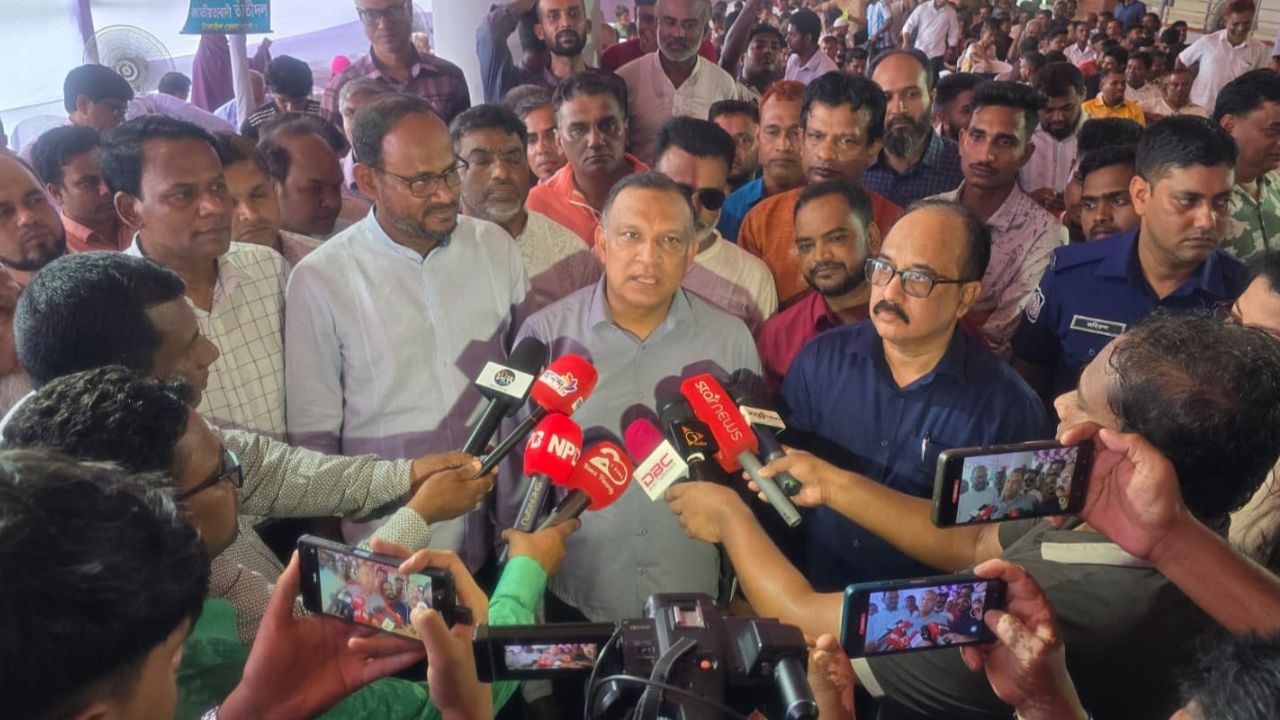



The government has inaugurated a weaving training centre and basic centre in Tangail as part of efforts to modernise the country’s handloom industry, develop skilled workers and expand domestic and export markets for traditional woven products.
The centre will provide training in modern weaving technologies, product design, quality improvement, market analysis and digital marketing while supporting the development of new entrepreneurs, according to a press release issued by the Ministry of Textiles and Jute.
Textiles and Jute State Minister Md Shariful Alam inaugurated the facility in Tangail on Saturday and said the initiative is intended to revive the country’s traditional handloom industry through skills development, easier access to finance and wider market opportunities.
He said the centre would serve not only as a training facility but also as a platform to produce skilled weavers, artisans and entrepreneurs capable of adapting to changing consumer preferences and international market demands.

The state minister said trainees would not be left with certificates alone.
The government plans to facilitate internships and employment opportunities for successful participants in textile, ready-made garment, knitwear and spinning industries, while prospective entrepreneurs will receive financial and technical support to establish their own businesses.
Md Shariful Alam described Tangail sarees as a symbol of Bangladesh’s heritage and said preserving the industry’s competitiveness would require improvements in design, quality, branding and marketing alongside the protection of traditional craftsmanship.




He said the government is pursuing the concept of “One Village, One Product” to revive traditional weaving products across different regions, including Tangail sarees, Jamdani, Benarasi and silk products.
To expand exports, the government plans to strengthen weavers’ capacity to use digital platforms and e-commerce while promoting handloom, textile, jute and geographically indicated (GI) products at international airports and Bangladesh missions abroad.
The state minister said the government would work with relevant ministries and agencies to address constraints affecting handloom exports through land ports. He also said measures would be taken to ensure genuine weavers, rather than intermediaries, can directly access imported dyes, yarn and other raw materials.
The government will also continue efforts to improve weavers’ access to affordable credit, training, employment opportunities and markets, he added.
Md Shariful Alam said the government is seeking private investment to revive the long-idle Tangail Cotton Mill, once a major source of employment and economic activity in the region.
He said domestic and foreign investors have already visited the facility and efforts are under way to resume operations through private-sector investment.
Speaking at the event, Fisheries and Livestock State Minister Sultan Salauddin Tuku said the handloom industry remains closely linked to the livelihoods, culture and economy of Tangail.
He said modern training, easier credit, improved access to raw materials, technology adoption and better marketing would help strengthen the sector.
Textiles and Jute Secretary Sharaf Uddin Ahmed Chowdhury, Bangladesh Handloom Board Chairman Abu Ahmed Siddique and top officials of Tangail administration were also present at the inauguration.