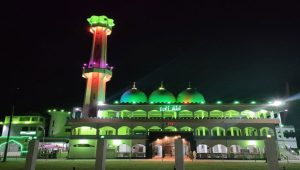
Ramadan has arrived, bringing with it the divine promise of forgiveness and salvation. Within this holy month, specific “opportune moments” have been identified when Allah does not reject His servants’ Dua.
Dua is regarded as a distinct form of worship. According to the sources, Allah becomes displeased if His servants do not seek His assistance through prayer. The holy Quran reinforces this in Surah Mu’min (60), stating, “Call upon Me; I will respond to you”.
Pre-dawn hour (Sehri)
The pre-dawn period, or the time of Sehri, is a vital time for every Muslim as they wake to begin their fast. It is during the final third of the night that Allah descends to the first heaven to accept the appeals of His believers.

As narrated by Hazrat Abu Hurayrah (RA), Prophet Muhammad (PBUH) said “Our Lord descends every night to the lowest heaven when one-third of the night remains. He says ‘Who will call upon Me, that I may respond to him? Who will ask of Me, that I may give him? Who will seek My forgiveness, that I may forgive him?'” (Sahih al-Bukhari: 1145).
Before Iftar
Waiting for the Azan with the Iftar spread before oneself is described as a “great test” for the fasting person.




During this critical moment, it is believed that Allah accepts at least one prayer from His servant. Hazrat Abdullah Ibn Amr Ibn al-Aas (RA) reported that Prophet Muhammad (PBUH) stated the prayer of a fasting person at the time of Iftar is never rejected.
A prayer traditionally recited by the Sahaba at this time is “O Allah, I ask You by Your all-encompassing mercy that You forgive me” (Sunan Ibn Majah: 1753).
Completion of the Holy Quran
Since Ramadan is the month the Quran was revealed, frequent recitation is highly encouraged. Prayers offered following the completion of the Quran (Khatm) are also accepted.
According to a Hadith narrated by Hazrat Irbad ibn Sariyah (RA), “The Prophet (PBUH) said ‘Whoever performs an obligatory prayer, his Dua is accepted. And whoever completes the Quran, his Dua is also accepted'” (Al-Mu’jamul Kabir: 647). Consequently, believers are urged to pray with sincerity following Taraweeh and their individual completions of the holy Quran.