A US-Iran agreement extending the ceasefire between the two countries has been signed and is now in effect, a White House official confirmed to the BBC.
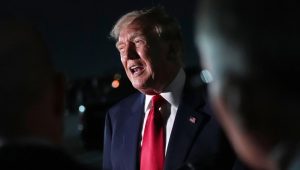
US President Donald Trump formally signed the agreement, which is set to reopen the strategically vital Strait of Hormuz, while attending the G7 summit in Evian-les-Bains, France, reports BBC.
The 14-point Memorandum of Understanding (MoU) states that Iran will never acquire a nuclear weapon and establishes a $300 billion fund for the country’s “reconstruction and economic development”, although the United States is not obliged to contribute financially. The agreement comes four months after conflict involving the US, Iran and Israel erupted.
The Trump administration has described the deal as “performance-based”, meaning Iran will receive benefits only if it fulfils its commitments.
Although several details remain unresolved, the agreement outlines a framework for ending hostilities, addressing Iran’s nuclear programme and restoring economic ties.
Point 1: End of conflict ‘on all fronts’
The first section of the agreement states that the US, Iran and their allies will declare an “immediate and permanent” end to military operations on “all fronts”, including Lebanon.
Trump has reportedly become increasingly concerned that Israeli military action against Hezbollah could jeopardise the agreement with Iran. Tehran has repeatedly insisted that Lebanon be included in any ceasefire arrangement.
An Iranian Foreign Ministry spokesperson said on Wednesday that any continued Israeli military action in Lebanon would constitute a “violation of the understanding” and that “necessary measures will be taken”.
The agreement states that “from now on” neither side will initiate military operations or threaten the other, while both will respect “the territorial integrity and sovereignty” of Lebanon. It adds that the final agreement will permanently “terminate” the conflict.
Israel’s response to this provision remains unclear.
Point 2: Respect for ‘internal affairs’
The document states that the US and Iran will “respect each other’s sovereignty and territorial integrity” and avoid interference in one another’s internal affairs.

This provision is likely to draw criticism from Iranian opposition groups. Earlier this year, Trump told anti-government protesters in Iran that “help is on the way” during demonstrations across the country.
Point 3: An extendable 60-day timeline
Under the third point, both countries commit to negotiating and reaching a final agreement within a “maximum” of 60 days, although they may extend the deadline by mutual consent.
The countdown began once the leaders formally signed the MoU.
According to the White House, Trump signed the document during a post-G7 dinner at the Palace of Versailles on Wednesday night.
Iranian President Masoud Pezeshkian has also signed the agreement.
Both sides had previously suggested they would hold a formal signing ceremony in Geneva later this week, although it remains unclear whether that event will proceed.
Point 4: US to end blockade
Following the signing of the MoU, the US will begin lifting its naval blockade and remove “any disturbances or impediments” affecting Iranian ports.
The agreement and Iran’s Foreign Ministry state that the blockade will end completely within 30 days. During that period, the number of vessels permitted through Iranian ports will correspond to the level of traffic restored by Iran through the Strait of Hormuz.



The agreement also commits the US to withdrawing forces from the “proximity of Iran” within 30 days of a final deal.
In practical terms, Washington will return its military posture to the level that existed before hostilities began on 28 February.
Point 5: Strait of Hormuz
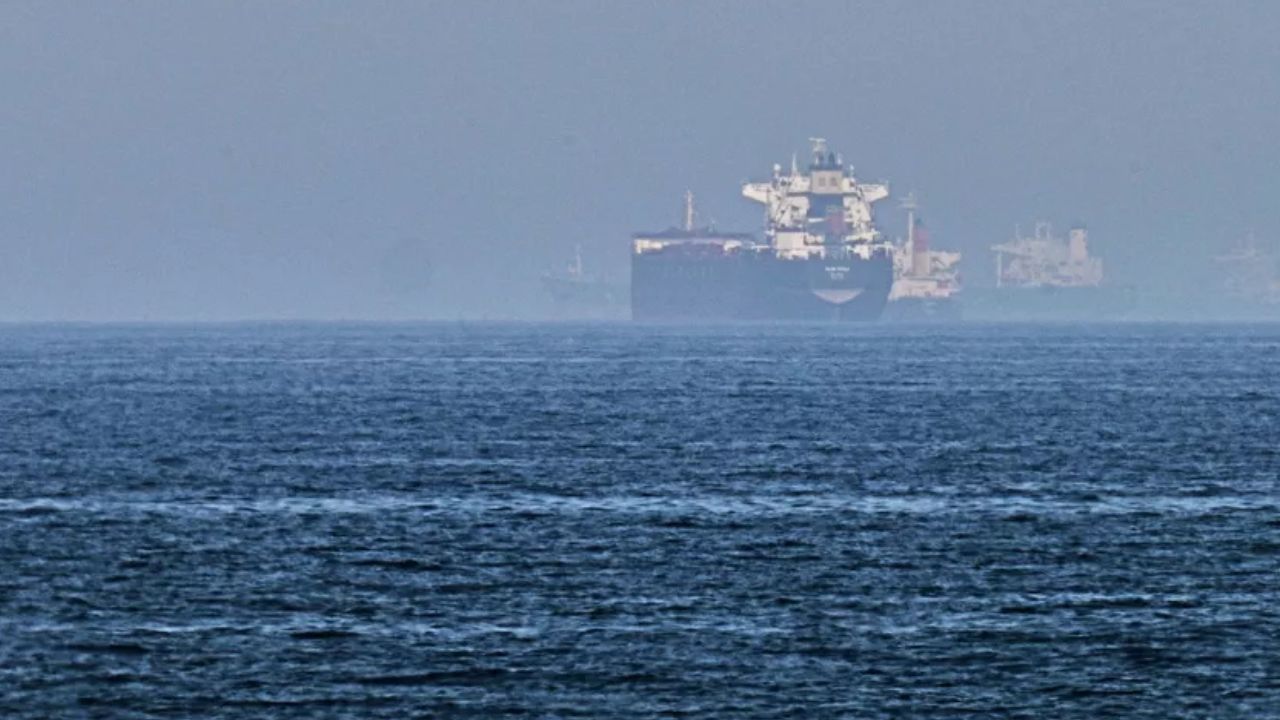
The agreement states that Iran will “make arrangements using its best efforts” to allow commercial vessels to pass safely through the Strait of Hormuz without charge once the MoU takes effect.
The reopening of the waterway has been a major US objective since Iran’s closure of the strait drove global oil prices higher.
The document says maritime traffic will resume “immediately”, subject to the removal of military and technical obstacles and the completion of de-mining operations.
US officials stressed during a briefing that ships would not face transit charges.
In the longer term, Iran will work with Oman and other Gulf states to develop a broader framework for managing the Strait of Hormuz.
A US official said Washington expects Iran to assert its rights “aggressively”, but believes Gulf states would “never” accept any future toll system.
Point 6: Money for Iran reconstruction
The sixth point commits the US and regional partners to creating a “definitive, mutually agreed plan” worth at least $300 billion for Iran’s reconstruction and economic development.
The parties will determine the mechanism within 60 days of a final agreement, and the US will provide all necessary licences, waivers and permissions.
However, officials stressed that the US is not required to finance the fund.
One official said the US would not pay “a cent of money” to Iran. As an example, the official suggested that if Iran “behaves”, authorities in the United Arab Emirates could build a power plant in Iran with US approval.
Trump administration officials have repeatedly highlighted that the arrangement differs from the 2015 nuclear agreement reached under former President Barack Obama.
Point 7: Sanctions to end
The US has agreed to remove all economic sanctions imposed on Iran, including those linked to UN Security Council resolutions and unilateral American measures.
However, the agreement does not specify a timetable.
The document states that both sides will determine the schedule during negotiations and acknowledges their intention to “immediately” address the issue.
Iran’s economy has suffered heavily under sanctions, while Washington’s Operation Economic Fury sought to isolate Tehran from the global financial system.
Point 8: No nuclear weapons
Iran has agreed not to procure or acquire a nuclear weapon.
Both countries have also agreed to address Iran’s existing stockpile of enriched uranium, although the exact method remains undecided.
The agreement states that the mechanism “will be mutually agreed upon” during future talks. At a minimum, the uranium will be “downblended” under the supervision of the International Atomic Energy Agency (IAEA).
A senior US official described this requirement as a “minimum standard” and a “major win” for the United States.
Trump previously said preventing Iran from obtaining a nuclear weapon accounted for “99 per cent” of his motivation for launching Operation Epic Fury earlier this year.
Because the agreement is “performance-based”, sanctions relief under Point 7 depends on Iran complying with Point 8.
Points 9 and 10: Maintaining a ‘status quo’
The next two sections establish a temporary “status quo” regarding Iran’s nuclear programme until the enriched uranium issue is resolved.
During this period, the US will not impose new sanctions. It will also grant waivers for exports of oil, petroleum products and related services, including banking transactions and transportation.
Point 11: Frozen funds
Iran has long demanded access to its frozen assets, making the issue one of the most difficult areas of negotiation.
The agreement states that the US “undertakes to make fully available frozen or restricted funds” after the MoU takes effect. The procedures will be finalised during subsequent talks.
A US official said some assets would be released during post-MoU negotiations as a reward for compliance, including steps taken to address Iran’s highly enriched uranium stockpile.
Points 12-14: Monitoring and final negotiations
The final sections outline how the agreement will be implemented.
The US and Iran will establish a “mechanism” to monitor implementation of the MoU and ensure compliance with any future agreement, although the exact structure remains unclear.
Once implementation begins, both sides will start negotiating a final settlement.
The MoU concludes by stating that the final agreement will be endorsed through a binding UN Security Council resolution.