


Voting is under way to elect 23rd president of Bangladesh. The election is largely a formality because the ruling BNP holds a two-third majority in current Parliament.
Given the numbers, the victory of BNP candidate Mirza Fakhrul Islam Alamgir, is virtually assured. The voting is scheduled to take place inside Parliament chamber from 2pm to 5pm, with 349 Members of Parliament (MPs), including reserved women members, forming the electoral college.
Currently, the parliamentary seat of BNP’s Aslam Chowdhury remains vacant following a court order that cancelled his membership.
Parliament divided over candidate choice
The ruling BNP holds 247 seats in Parliament, making the path to Bangabhaban highly secure for Fakhrul, who is the party’s recently former secretary general.
He is contested by Oli Ahmad, chairman of Liberal Democratic Party (LDP), who is representing 11-party alliance led by Jamaat-e-Islami.
This opposition alliance commands 90 seats in Parliament, with key partners including National Citizen Party (NCP) and Bangladesh Khelafat Majlish.

The remaining seats in the house are held by independent lawmakers, BNP coalition partners, and members of Islami Andolan.
A unique dynamic in today’s vote is that Fakhrul, as a sitting lawmaker, is eligible to cast his vote, whereas his opponent Oli is not a lawmaker and is therefore barred from entering the parliamentary chamber or voting in the election.
Balance of constitutional powers
The president occupies the highest constitutional office in the state, ranked above all other individuals, with all formal state activities conducted under his name.
However, under Bangladesh’s parliamentary system, the president acts as the head of state rather than the head of government, making the role highly prestigious and formally significant but with limited executive authority.
The president’s independent constitutional power is limited strictly to the appointment of prime minister and chief justice. For virtually all other responsibilities, the president must act on the advice of the prime minister.
Eligibility criteria and term lengths
Under constitutional rules, a presidential candidate must be at least 35 years old, qualified to be elected as a lawmaker, and must not have been previously removed from office through impeachment.
While being a sitting lawmaker is not mandatory to run for the presidency, a successful candidate cannot retain their parliamentary membership once they assume office.
If Fakhrul is elected, his parliamentary seat will fall vacant on the day he takes charge, and a subsequent by-election will be held for his constituency.
The president is elected for a five-year term and is restricted to a maximum of two terms. In the country’s history,
Abdul Hamid is the only president to have completed two consecutive full terms. The president remains in office after their term expires until a successor formally takes charge.
Remuneration, allowances, post-retirement benefits
While the executive power is limited, the financial and institutional privileges of the office are extensive, as defined under the President’s (Remuneration and Privileges) (Amendment) Act.
The president receives a tax-free monthly salary of Tk1,20,000, which was raised in 2016 from Tk61,200. By comparison, the prime minister’s monthly salary is Tk1,15,000.
Unlike a former prime minister who ceases to receive state benefits upon leaving office, a president continues to enjoy state-funded post-retirement benefits following retirement or resignation.
Official residence, discretionary funding
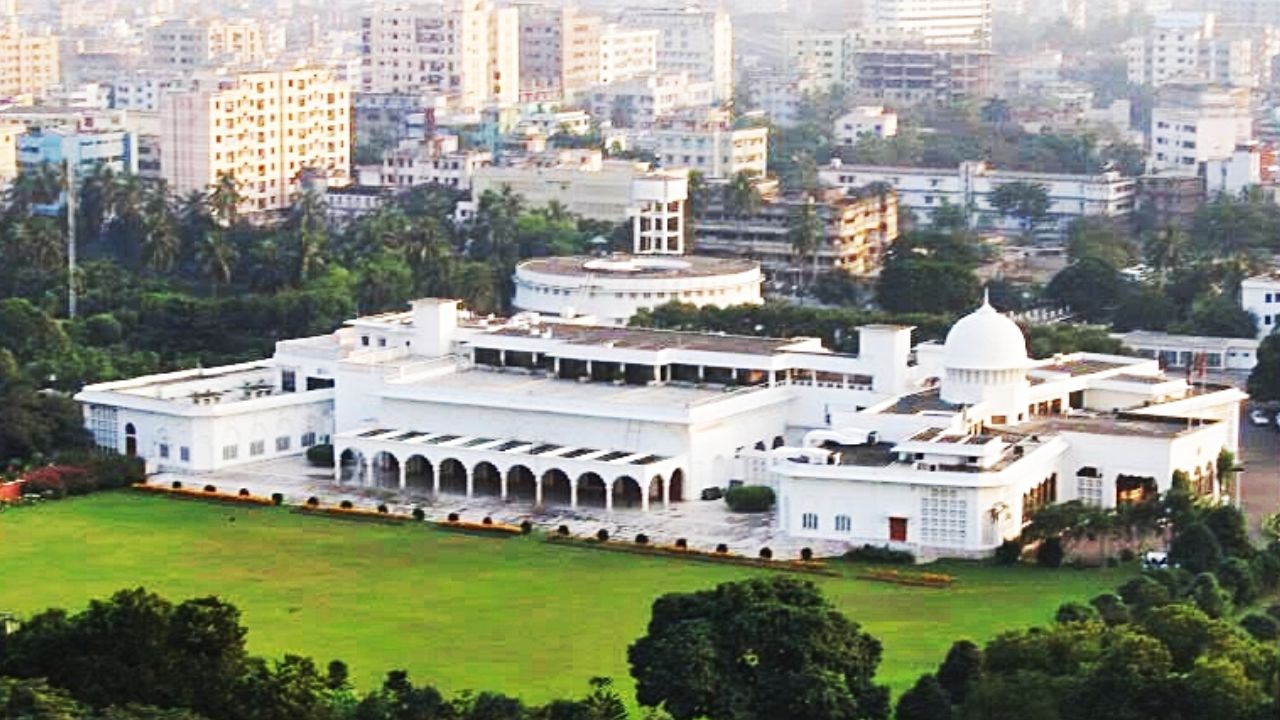
The state provides the president with the official residence of Bangabhaban, with all decoration, maintenance, and operational expenses covered by the state treasury.
The state also provides dedicated vehicles and transport facilities for the president’s official use, alongside travel allowances for official visits abroad.
The president is also granted an annual entertainment allowance that is completely exempt from auditing. The president is allocated an annual discretionary fund of Tk2 crore to assist individuals or organisations at his personal discretion.
Healthcare protections, travel insurance
Comprehensive healthcare and travel insurance are also guaranteed by the state for the president and their family members.
They receive entirely free medical treatment at any hospital in the country, and the state bears the full cost of overseas treatment if recommended by medical practitioners.
Additionally, the president is provided with an annual air travel insurance cover of Tk27 lakh, which was increased in 2016 from Tk15 lakh, ensuring complete coverage during official travels.