The United States’ official withdrawal from World Health Organization (WHO), alongside the suspension of its funding, has triggered concern within Bangladesh’s healthcare sector, with experts warning of reduced technical support and urging the government to accelerate moves towards financial self-reliance.
According to the Trump administration, the World Health Organization has drifted away from its core mandate and failed to meet expected standards of reform, accountability and transparency, prompting Washington to move swiftly to withdraw following Donald Trump’s inauguration as president a year ago.
Washington’s decision to withdraw has created a substantial funding gap, with the United States having previously contributed around 18% of the WHO’s overall budget as its largest donor.
The loss of funding has already forced deep cost-cutting at the WHO’s headquarters in Geneva, including a halving of its management structure and a 25% reduction in staff, according to Reuters.
For developing countries such as Bangladesh, health policy specialists warn that the consequences are likely to be felt through weakened research capacity, reduced policy support, and constraints on disease surveillance and control programmes.
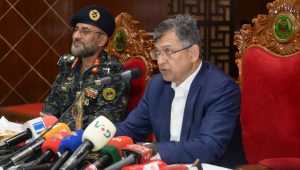
Muhammad Zakir Hossain, a former member of the Health Sector Reform Commission, said the scale of the shortfall should not be underestimated.

“The US contribution accounts for nearly 20% of the WHO’s global budget,” he said. “If this funding is reduced, operations in Bangladesh will inevitably be affected.”
Unlike agencies such as Unicef, he noted, WHO does not routinely engage in rapid fundraising to compensate for sudden losses. “If member state contributions fall, a funding deficit of almost 20% could emerge,” he warned.
According to Hossain, the most immediate impact in Bangladesh would be a decline in the WHO’s technical assistance. This includes funding for training programmes, research initiatives, workshops, and the development of policy frameworks and standard treatment guidelines.
However, other experts suggest the disruption may be contained.

KM Nafiz Ifteakhar Tulon, an associate professor at the Institute of Health Economics of University of Dhaka, said WHO had anticipated the possibility of a US withdrawal and had spent several years preparing for such a scenario.
“WHO understood long ago that this kind of funding crisis could arise,” he said. Over the past three to four years, the organisation has diversified its revenue sources, increasing assessed contributions from nearly 1,600 member institutions and securing alternative funding from other countries.
“As a result, dependence on US has decreased significantly,” he said. “There will be some impact — particularly for projects directly funded by US — which may be temporarily delayed until replacement funding is found. But it is unlikely that WHO operations on the ground will shut down completely.”
Despite these assurances, officials and advisers in Dhaka say the effects are already being felt.
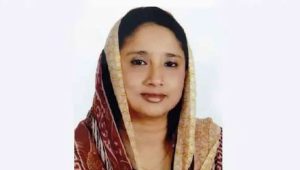
Mohammad Mushtuq Husain, an adviser to Institute of Epidemiology, Disease Control and Research (IEDCR), said budget reductions had led to a contraction in field-level activities.
He added that Bangladesh would see a decline in the technical support and policy guidance it had previously relied on from the WHO.
Although the US Departments of Health and State have indicated they will continue limited engagement with WHO during the withdrawal process, experts in Bangladesh argue that the country can no longer depend on external institutions as a financial safety net.
Instead, the current crisis is being seen as a catalyst for long-delayed reforms in health sector financing.
Zakir Hossain proposed the immediate formation of a technical advisory committee within the Ministry of Health, comprising experts with both academic and practical experience, to ensure the cost-effective implementation of health programmes.
He also called for a significant increase in government spending on health.
“Less than 1% of the national budget is currently allocated to the health sector,” he said. “This forces citizens to pay between 67% and 72% of healthcare costs out of their own pockets. Health spending should be increased gradually to 5% of GDP.”
To address the short-term funding gap, experts have suggested mobilising alternative domestic resources, including directing corporate social responsibility (CSR) funds into healthcare and introducing higher taxes on tobacco products and sugary or unhealthy beverages.
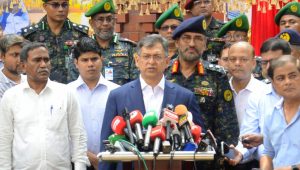
Mushtuq Husain described the US exit from the WHO as a critical turning point for Bangladesh’s health system.
“Future health sector activities must be built on the capacity for self-financing,” he said, urging the government to revive stalled plans for internal resource mobilisation.
“We must assume that WHO will not shoulder all responsibilities as it did before. If Bangladesh is to sustain its health sector in the years ahead, there is no alternative to strengthening our ability to collect and manage resources domestically.”
As the WHO’s Executive Board prepares to meet in February to assess the consequences of the US withdrawal, Bangladesh faces a strategic choice: absorb the shock of declining international assistance or use the moment to build a more resilient, self-sustaining national health system.