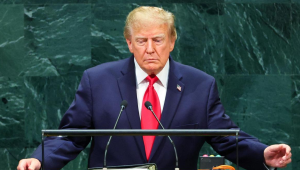
The US Senate on Friday approved a $70 billion funding package to support President Donald Trump’s immigration enforcement agenda, handing him a major legislative victory on one of his signature policy issues.
The bill will fund Immigration and Customs Enforcement (ICE) and the Border Patrol for the remainder of Trump’s term. It now moves to the House of Representatives, where Republican leaders hope to secure approval early next week before sending it to the president for signing.
The vote followed months of political wrangling over immigration policy and came after a record partial shutdown of the Department of Homeland Security (DHS) earlier this year. Democrats had refused to support additional funding for immigration enforcement without restrictions on practices such as raids in sensitive locations and the use of masks by officers.
Republicans rejected those conditions and instead used the budget reconciliation process to advance the funding package. The procedure allows them to bypass Democratic opposition if they maintain unity within their own ranks.
The Senate approved the measure after an hours-long amendment session known in Washington as a “vote-a-rama”, during which lawmakers forced votes on a range of politically sensitive issues before final passage.

The process revived debate over several controversial proposals linked to Trump’s agenda. These included a proposed “anti-weaponisation” compensation fund for individuals who claim they were unfairly targeted by the government and a plan that had earmarked $1 billion for security around a proposed White House ballroom.
Although the immigration bill no longer includes funding for the ballroom project, both issues fuelled concerns among some Republicans as they prepare for midterm elections expected to focus heavily on the cost of living.
The legislation had faced weeks of delay after several Republican senators objected to the Justice Department’s proposed $1.8 billion anti-weaponisation compensation programme. Critics described the proposal as a potential “slush fund” that could allow people convicted over the 2021 attack on the US Capitol to receive taxpayer-funded payments.




Acting Attorney General Todd Blanche told lawmakers this week that the administration would not proceed with the compensation programme. However, Trump continued to praise the proposal and suggested its future remained uncertain.
That uncertainty prompted some Republican lawmakers to push for legislative language formally ending the programme.
North Carolina Senator Thom Tillis told reporters that the fund was politically difficult to defend and argued that removing it was the only effective response to public criticism.
While the amendment process failed to derail the immigration package, it exposed divisions within Republican ranks. Several Republicans broke with party leadership on measures related to the anti-weaponisation fund, future ballroom funding and Trump’s decision to appoint a loyalist housing official to a senior intelligence role.
Democrats also used the debate to argue that Republicans were prioritising Trump’s deportation agenda over affordability concerns. They sought to redirect some immigration enforcement funding towards housing and other cost-of-living programmes.
In a separate development, several Republicans joined Democrats in backing an effort to bypass House leadership and hold a vote on imposing additional sanctions on Russia over its invasion of Ukraine. The proposal also included $8 billion in military financing loans for Kyiv.
Republicans defended the immigration package, arguing that it was necessary to restore funding left unresolved after the earlier DHS shutdown.
The temporary funding measure approved earlier this year financed much of the Department of Homeland Security through 30 September, including the Federal Emergency Management Agency, the Coast Guard, the Transportation Security Administration and the Secret Service.
However, it excluded ICE and the Border Patrol, setting the stage for the separate funding battle that concluded with Friday’s Senate vote.
The outcome delivers a significant policy win for Trump on immigration. At the same time, it highlights a recurring challenge for Republican leaders, who continue to face internal resistance over some of the political controversies attached to the president’s priorities.