


The United States has repatriated approximately 2,300 Mexican citizens to Guatemala, drawing sharp protests from Mexican government as President Donald Trump accelerates expulsions.
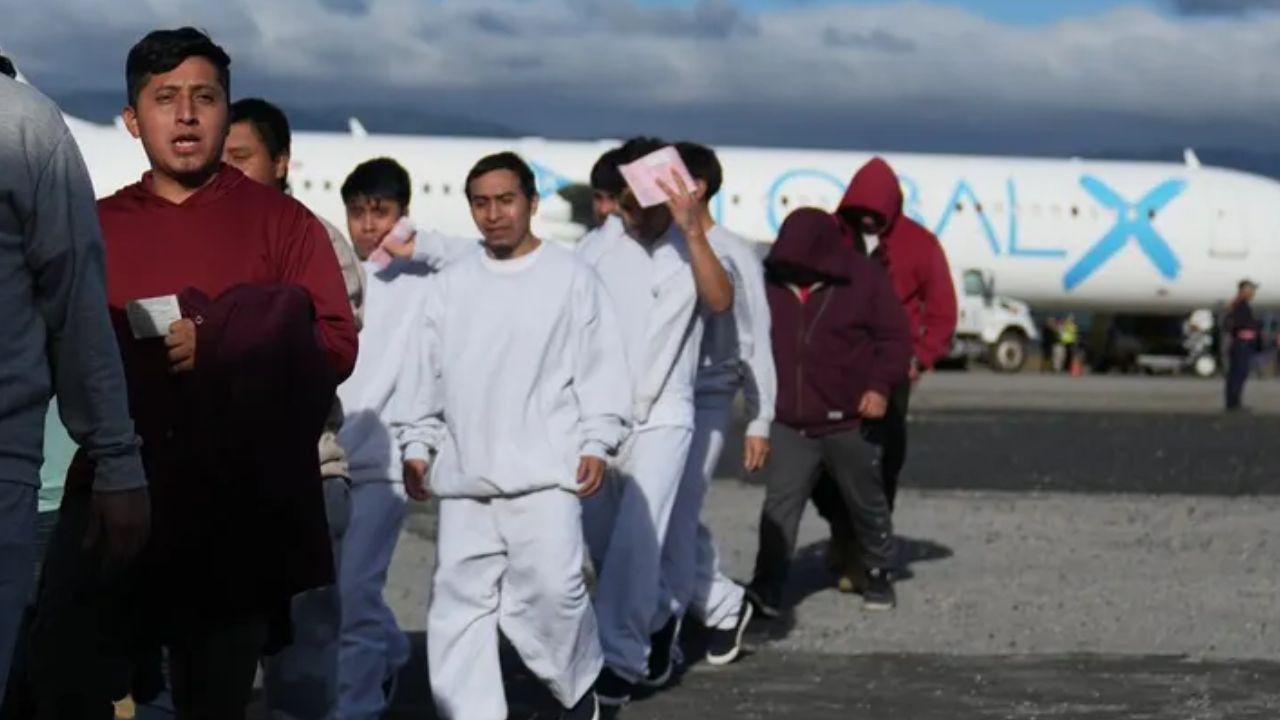
Guatemala’s President Bernardo Arevalo confirmed on Wednesday that his nation has taken in roughly 2,284 Mexican deportees during the year, reports Al Jazeera. These individuals are arriving on flights alongside Guatemalan nationals being returned home.
“In coordination with the Mexican government, what we have done is bring them through in transit so that we can return them to Mexican territory within 24 hours of their arrival in the country,” Arevalo explained during a press briefing. The financial burden of these swift repatriations is borne by either Washington or Mexico City.
Such expulsions reflect a broader pattern of third-country deportations under the Trump administration, which has seen migrants sent to nations where they often have no personal ties.
The US administration has defended these measures by arguing that the deportees cannot go back to their native countries. However, this rationale does not apply to Mexico, which has regularly agreed to accept its own deported citizens from the US.

Advocates and critics have condemned these third-country transfers as punitive actions that leave vulnerable migrants and asylum seekers stranded in foreign lands.
The practice has provoked deep disapproval in Mexico City. In a public message issued on Thursday, Mexico’s Ministry of Foreign Affairs declared its opposition to the policy, stressing that every Mexican national possesses an inherent right to return to their home country.
Following a bilateral discussion on Tuesday, the ministry remarked that Mexico and Guatemala share mutual values centred on collective security and “human mobility with dignity”.




Guatemala is not the sole destination for these externalised deportations, as reports indicate some Mexican citizens have been flown to Honduras.
One deportee, Arturo Trejo, told broadcaster Telemundo that immigration officers provided no explanation and simply ordered them onto the plane.
According to the Associated Press, Mexico’s National Migration Institute (INM) stated that US officials have justified the strategy as a deterrent. “The reason is that the United States wants to prevent them from crossing back into its territory,” the INM noted.
Meanwhile, the US Department of Homeland Security (DHS) defended its actions, asserting that it is employing every lawful avenue to execute the largest deportation campaign in US history, in line with Trump’s campaign pledges.
Human rights organisations have voiced alarm over these third-country deportations.
Ana Maria Mendez, WOLA’s director for Central America, told Reuters that the policy fits into a harsher US immigration agenda designed to spread panic and fear among migrants.
This migration dispute unfolds against the backdrop of a major economic partnership between the neighbouring countries, which recorded bilateral trade worth nearly $964.1 billion in 2025.
Since Trump re-entered the White House last year, the Mexican administration has walked a tightrope, attempting to collaborate on border security while simultaneously shielding its citizens from mistreatment.
Activists have pointed to allegations of excessive force by US border authorities during raids, alongside a rise in fatalities within Immigration and Customs Enforcement (ICE) facilities. Since Trump’s return to the presidency, at least 15 Mexican citizens have died whilst in ICE custody, and an additional three lost their lives during active enforcement actions.
Consequently, Mexico has lodged formal legal complaints with US state prosecutors, labelled conditions inside ICE detention facilities as “incompatible with human rights standards” and demanded consistent visits from consular representatives.