How many voluntary organizations in Bangladesh do you know that are led by youth and have existed with pride for the last 25 years? By voluntary organizations, I mean organizations led by youth and for youth, which are neither NGOs nor business entities.
Over the past decades, we have observed a steady replacement or transformation of voluntary organizations into NGOs.
The reasons behind this transformation are twofold: either it became a survival necessity for voluntary organizations, or founding leaders developed the perception that youth are incapable of running organizations once the founders leave.
As a result, many organizations that were born when their founders were young tried to keep the founders “young” indefinitely, transforming their initiatives into NGOs or business ventures.
This allowed leadership to remain intact depriving the new generation of leaders to grow, even though those leaders no longer belonged to that so-called “magical age” of youth.
This is where the UN Youth and Students Association of Bangladesh (UNYSAB) is different. Over the last 25 years, UNYSAB has continuously produced leaders who led the organization during their own ‘magical age’ of youth.
Today, these former leaders are spread across the world, contributing to fields ranging from academia to business and entrepreneurship.
All former Presidents of UNYSAB have advanced to distinguished careers across academia, global finance, and international development, underscoring the organization’s lasting contribution to leadership formation, including myself, Dr. Toufique Joardar (Associate Professor, National University of Singapore), Nafiz Imtiaz Nipun (Vice President, Internal Audit, Citibank Canada), Mohammad Mamun Mia (Project Management Specialist, World Bank, South Asia), and Shammy Wadud (Yoga and Wellness Expert), each exemplifying UNYSAB’s legacy of excellence and influence.

So, what is the secret behind the organization’s ability to survive and thrive for 25 years? First, when UNYSAB was founded 25 years ago by a group of youth at the University of Dhaka, the founding committee members made a clear and conscious commitment to create new leadership and to pass on leadership to the next generation.
Their vision was not to hold on to power, but to grow individually while enabling others to lead. Successive leaders honored this commitment.
When the time came, the sitting President chose the next President in consultation with the previous presidents, and a new committee was formed. Once a term ended, a new leader and a new team took charge, fully aware that they too would need to hand over leadership after two years.
However, the norm was that President could serve maximum two consecutive terms. Second, every new leader respected the leaders who came before them and gave them the recognition and dignity they deserved.
This practice created a continuous chain of empathetic leadership, keeping generations connected rather than divided.




Third, the leadership selection process was always free from bias—there were no preferences based on educational institutions, regions, or any other forms of discrimination. Of course, at times UNYSAB had to choose one leader among equally capable candidates, but those decisions were generally accepted, albeit with minor nuances.
Perhaps UNYSAB is one of the most significant examples in Bangladesh of how to preserve institutional memory while ensuring intergenerational bridging—an issue that is increasingly becoming a major challenge in the country.
The organization carries and consolidates the contributions of at least five generations, from Baby Boomers to Generation Z.
When UNYSAB was first established in 2000, we were trained by a group of seasoned foreign service officials from the Ministry of Foreign Affairs, Government of Bangladesh.
The first President belonged to Generation X, leading a committee largely composed of Generation Y, one of whom later became the next President. Generation Y led the organization for most of its journey, while the current President belongs to Generation Z, working closely with both Gen Z and Gen Y members.
What made such effective intergenerational bridging possible? The first key was approaching the Baby Boomers with humility. As representatives of Generation X, we approached them in a way they appreciated—an approach we learned from our families.
While some declined, others welcomed us enthusiastically. One such supporter was Mr. Kazi Ali Reza, former Officer-in-Charge of the UN Information Centre, who connected us with officials from the Foreign Ministry and the United Nations.
Their guidance helped consolidate the organization and enabled us to organize the first-ever Model United Nations (MUN) conference in Bangladesh. We were extensively trained by foreign service officials, some of whom later became Foreign Secretaries.
The United Nations Association of Bangladesh (UNAB) and Professor Sayed Ahmed Sahed, President of UNAB also extended crucial support during the organization’s formative years.
Every generation must understand that neither the previous generation is less intelligent, nor the current generation superior.
Each generation has its own way of being smart. While younger generations bring energy and innovation, older generations contribute wisdom and experience. UNYSAB consistently tried to harness the strengths of both.
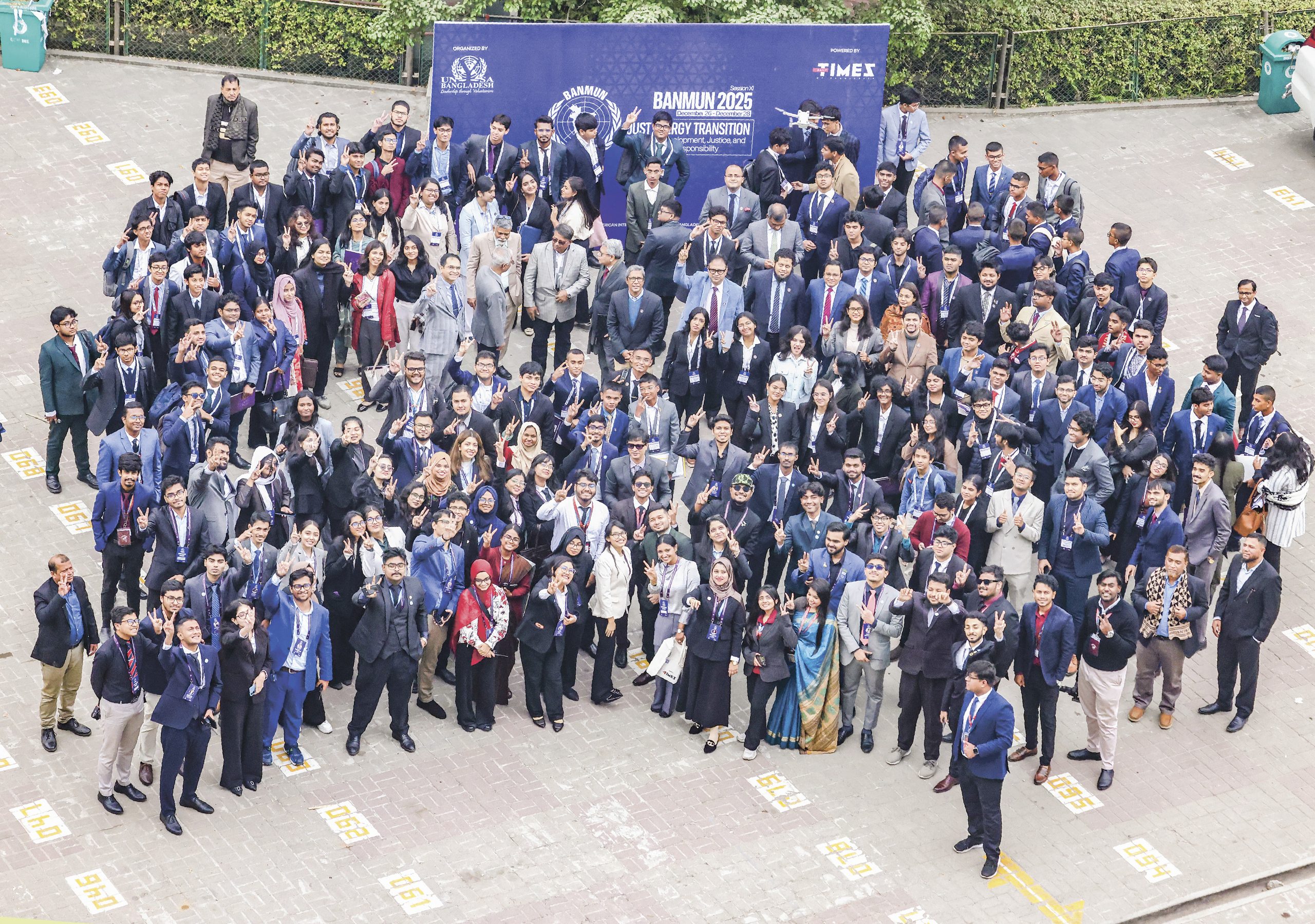
Twenty-five years ago, when UNYSAB initiated the first MUN, not a single institution in the country held MUNs regularly.
In fact, there wasn’t any MUN organized at the National level. Today, almost every educational institution in Dhaka organizes MUN conferences. This transformation reflects the change UNYSAB envisioned at its inception.
However, significant challenges still remain in the MUN culture of Bangladesh. First, intellectual practice and substance should be at the core of all MUN activities. While this exists, it requires strong reinforcement and refinement.
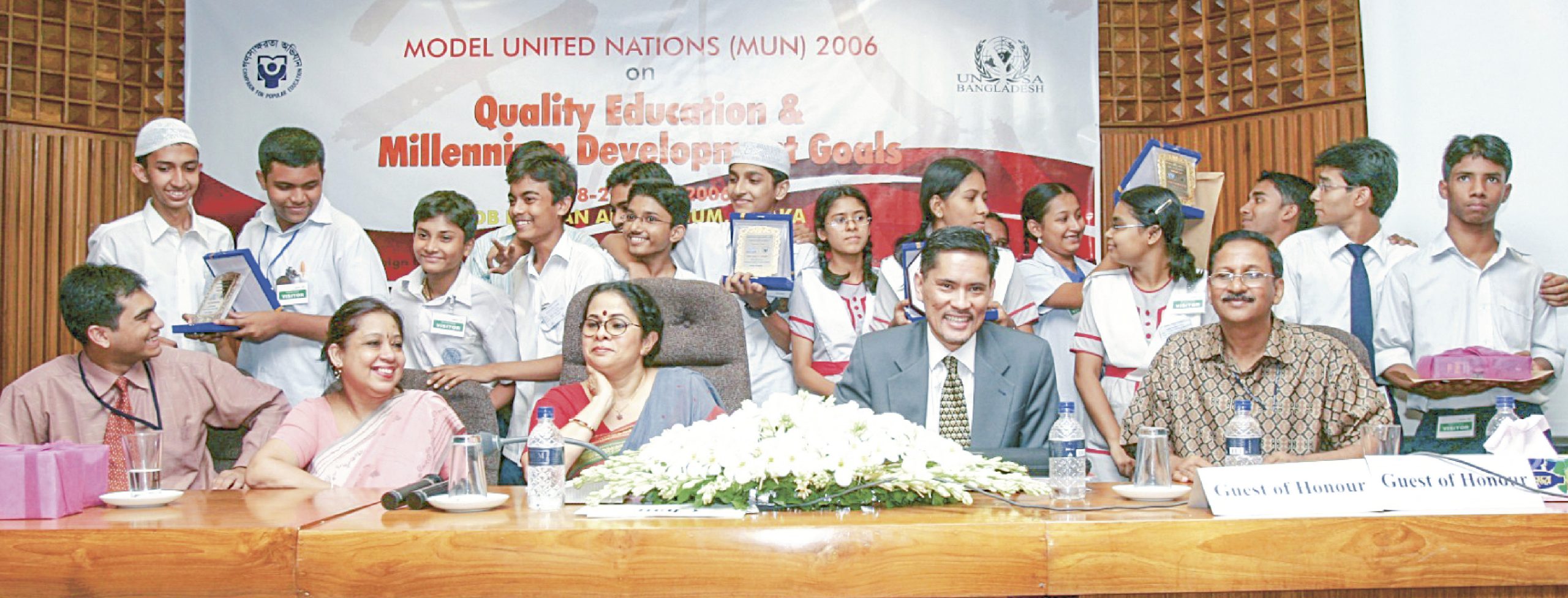
Second, MUN culture remains largely Dhaka-centric, with only a few exceptions elsewhere. Third, there is no national-level initiative to systematically educate and guide MUN participants. Fourth, we lack institutional platforms for regular intellectual exchange among MUN participants and for connecting them with broader communities.
Most importantly, MUN culture has largely failed to instill a strong sense of community service through voluntarism. We must remember that true leadership grows only through voluntarism.
After 25 years of our journey, we are pleased to have finally found the partnership we had long been seeking. We extend our sincere gratitude to Times of Bangladesh—an exceptionally outstanding news service—for accepting our proposal to join us in spreading MUN culture and leadership through voluntarism across the country.
This partnership begins with the regular publication of “Y Times”, which will gradually be expanded through online and offline content, as well as face-to-face activities involving youth from across Bangladesh.
We are now in the process of forming a 25 years actions plan which will be designed to address the needs of the present while anticipating the future, so that when UNYSAB turns 50—25 years from now—Generation Beta and the generations that follow can evaluate our legacy and give us full marks for contributing to a safe, inclusive, and prosperous Bangladesh for all!
The author is a Professor at University of Dhaka & Chair, Trustee Board, UNYSAB.