Mujtoba Ahmed Murshed
A long time ago, I came across a line in a poem that has stayed with me ever since – “Oh Lord, get me eyes of light, I am a tourist in deep dark.” That line shaped the way I see learning and the journey of acquiring knowledge. With that understanding, I often try to explore the path of Bangladesh’s education system. If the foundation is weak, the entire structure will one day crumble.
Why does this issue stir my heart to speak? The recent HSC results have shattered thousands of young dreams, not just through failure but through the silent pain and unanswered questions they leave behind. To grasp this heartbreak, we must look beyond numbers and search the soul of the system to find the truth.
The blame cannot rest on students alone, for teachers are trapped in a broken system. Primary educators, among the lowest paid in the nation, bear the burden of shaping its future while struggling with financial insecurity. When survival becomes the priority, true teaching fades. Many lack proper training or chances for growth, while recruitment remains clouded by irregularities and political interference.
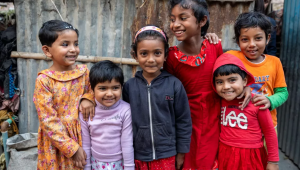
I was reminded of this harsh reality during a recent visit to my grandfather’s village in Dinajpur. My cousin, who runs a small primary school in an underprivileged rural block nearby, told me that due to pressure from higher authorities, they were forced to ensure a one-hundred percent pass rate for all primary level students. “In my Class One,” he said, “there are eighteen children, but only two or three can even recognise the alphabet. Still, we had to promote every one of them to Class Two; that is how the system works.”

When I asked him what caused such weakness among the children, his answer was simple yet painful: malnutrition. He said, “When their bodies are weak and their minds undernourished, how can they learn properly?” Instead of forcing families to send five-year-olds to school, the government should first ensure they are physically and mentally ready to learn.” His words struck me deeply. Given this reality, education policy should be guided by proper regulation that considers regional differences in health, environment, and cognitive development across urban and rural areas.
When I think about the mindset of today’s students, my heart feels heavy. I recall a conversation with my nephew, an Assistant Professor at Rangpur Cantonment Public School and College. He told me that an entire batch skipped their pretests, forcing the institution to let them sit for the final exams without any real preparation. This has been the common practice over the past few years.




To grasp this crisis more clearly, one may recall a story shared by a college teacher from Bandarban Hill District. In his class of seventy-eight students, seventy-three did not even recognise him as their teacher. “How will they ever pass their exams?” he asked in despair. Most of them skip classes only to hang out with friends. This is not an isolated incident but a reflection of a deeper decay spreading across colleges. When exam time arrives, they resort to mob pressure instead of preparation. A generation often labelled Gen Z is growing with smartphones in their hands, but without playgrounds to shape their minds or discipline their hearts.
Indeed, the roots of Bangladesh’s education crisis run deep, beginning at the very first rung of the learning ladder. Each year, thousands of children are admitted to Class One through a lottery system that involves no assessment or screening. This randomness, combined with limited parental awareness and weak institutional support, weakens the foundation of learning before it even begins. All these issues have left a lasting scar on our education system, creating fragile bubbles of illusion, and the results are now painfully visible in this year’s HSC outcome. It has exposed the fragility of Bangladesh’s entire education structure.
With a pass rate of only 58.83 percent, the lowest in twenty-one years, the nation stands in shock. More than half a million young dreams have been shattered. The numbers that once brought comfort now inspire fear, revealing a system that confused certification with real learning. The Madrasa Education Board, with a 75.61 percent pass rate, and the Technical Education Board, with 62.67 percent, have outperformed the general stream, a reversal that challenges long-held beliefs about academic strength and institutional integrity.
For two decades, Bangladesh lived under the illusion of progress. Rising pass rates, endless GPA 5s, and official celebrations painted a false picture of success while the foundation quietly rotted. Inflated grades and generous evaluations turned mediocrity into glory. Automatic promotions after the pandemic pushed results to near perfection, even as classrooms fell silent. The illusion is finally broken. What remains is the truth, a painful reminder that numbers can rise even as learning falls.
“This year’s results are an eye-opener,” said Education Adviser CR Abrar. “We have long focused on pass rates and GPA 5s, masking the decay beneath. It is time to value real learning over numbers.”
Many guardians partly blame the trauma of last year’s July unrest, which disrupted academic focus. Others note that this was only the second full syllabus exam since the pandemic. “In previous years, evaluation was not up to the mark,” I heard from one academic. “This year’s result is more dependable. Yet the urban-rural gap remains clear and demands firm political commitment.”
Like everyone who truly cares about this nation, I feel an urgent need to rethink the direction of our education system and to build a nurturing socio-political environment where children can genuinely grow and learn. Bangladesh has expanded access impressively, but it must now pause and ask what that access has truly delivered. The quality of public education remains alarmingly low, particularly in rural areas and even in many urban institutions, and this crisis can no longer be ignored.
A weak beginning in rural primary schools cripples learning all the way to university. In public school classrooms across the country, children spend hours in lessons yet fail to absorb knowledge because teachers are undertrained, teaching methods are outdated, and curricula remain disconnected from real life. The outcome is a generation that memorizes without understanding and struggles to think, reason, or solve problems independently.
These shortcomings follow students into higher education, where many still stumble over basic mathematics, science, and language. Their weakness is not their fault; it is inherited from a foundation that was never properly built. The time for half measures has passed. Bangladesh must rebuild its education system from the ground up, anchored in evidence, accountability, and vision. Policies must focus on early childhood readiness, modern teacher training, practical and skill based learning, and a better standard of living for educators. Examinations should test comprehension, not memorization. Only by empowering the hands that hold the chalk can Bangladesh rebuild the foundation on which the dreams of its next generation will truly stand.
The writer is a poet, political analyst, and litterateur