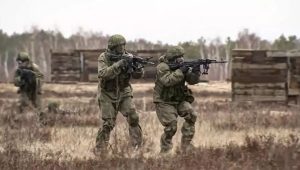
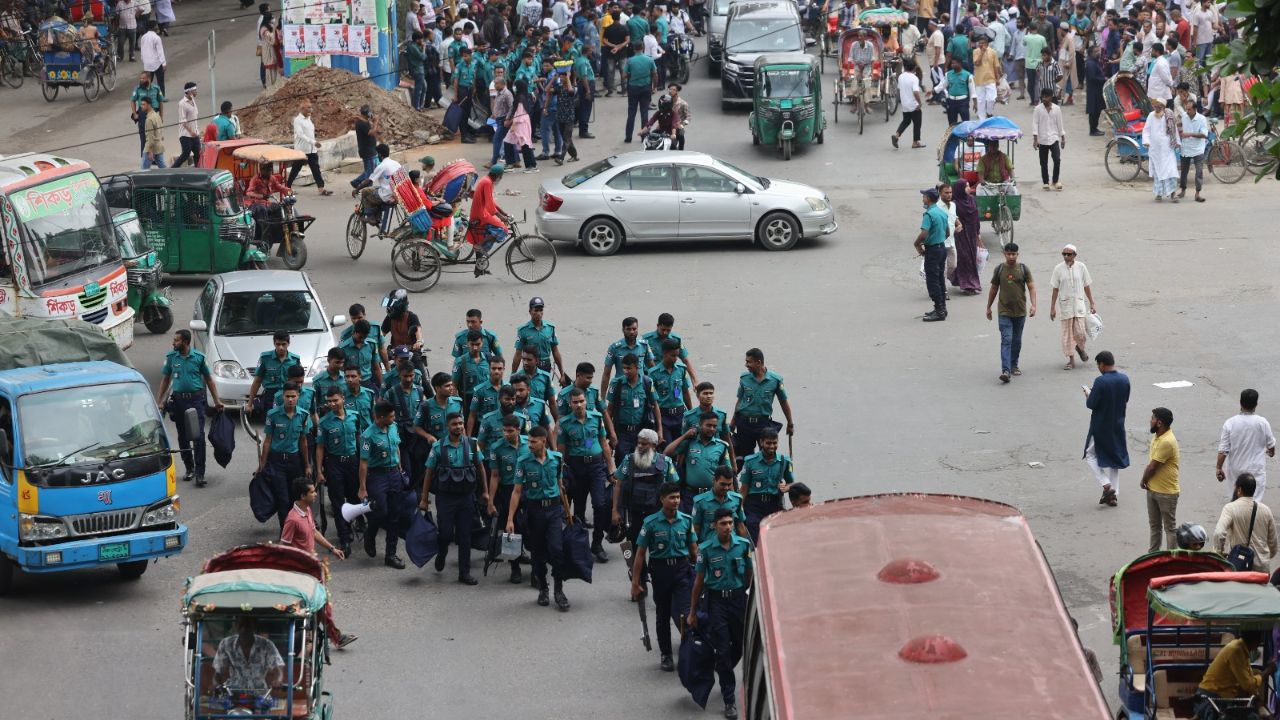



As the city stirs awake, they are already at their posts. Having just completed an overnight shift, they find themselves back on the streets as the morning sun rises. On every major festival, be it Eid, Puja, or Pahela Baishakh, police personnel are a constant fixture, standing guard with rifles slung over their shoulders.
Even in times of personal tragedy, such as the death of a family member, they are granted only a day or two of leave, which is then deducted from their annual accrued balance.
Cramped barracks, irregular meals, and gruelling 12-to-16-hour shifts define their reality. Compounded by the harsh temperament of senior officers and a promotion system often dictated by political considerations, a vast section of the Bangladesh Police has been carrying immense mental stress for years.
The issue is no longer just about their efficiency or conduct; it is a question of accountability: who will ensure the mental well-being of those tasked with ensuring the safety of the citizens?
Former inspector general of police Abdul Qayyum also told TIMES of Bangladesh, “Long hours of duty and separation from family are making many members depressed.” According to him, every unit commander should keep track of the mental state of the members and arrange regular counselling.
This question has become more acute in recent incidents. On 19 June last year, the hanging body of female constable Trisha Biswas was recovered from the Patuakhali police barracks.
The police found a doctor’s note from the room of the member, who had joined the service just two years ago. It mentioned suicidal tendencies. The doctor also advised her to be admitted to the hospital. But she did not get admitted, nor did she tell anyone about her mental condition.
A few days later, Khulna Railway Police constable Samrat Biswas committed suicide by shooting herself. The police said that she was suffering from depression due to various family reasons.
According to the police headquarters, four police personnel have committed suicide so far this year. The previous year, 13 personnel had committed suicide, and in 2024, the number was three.

Although each incident has a different story, there is one thing in common: mental unrest, family distance, long working hours, stress, and loneliness.
According to the police headquarters, the force has about 250,000 members, of which about 175,000 are constables. There is only one hospital, the Central Police Hospital in Dhaka’s Rajarbagh, for this huge force.
Although there is a mental health department there, there is no permanent psychiatrist. A psychiatrist is temporarily provided through outsourcing. Despite primary care facilities being available to police in 59 districts nationwide, none of these hospitals have a mental health specialist on staff.
An official of the rank of deputy inspector general (DIG) at the police headquarters, who did not wish to be named, told TIMES, “The Bangladesh Police does not have any system for managing the mental stress of its members.
There is also no system for mental counselling. Anyone can get traumatised while controlling crime. If they do not get mental protection at that time, it is not possible for them to provide the desired service.”
The question is, how did such a big crisis arise?



Talking to police members, a picture of long deprivation emerges. Most members, from constables to inspectors, have to perform duties for at least 10 to 12 hours a day, sometimes even 16 to 18 hours. There is practically no such thing as a weekly holiday.
According to the Police Act of 1861, police members are considered “always on duty”. As a result, the legal framework also did not ensure their right to rest.
Across the globe, police members face regular counselling after any risky operations, but there is no such system in Bangladesh.
These problems were also raised in a study conducted by the Police Headquarters in 2020.
It highlighted the need for healthy food and accommodation, fixed working hours, overtime allowance, regular leave, entertainment, sports, modern medicine, mental health care, and counselling. It was also recommended to introduce eight-hour duty in three shifts in 24 hours.
But even after four years, there has been no visible change at the field level.
Rather, in the fragile law and order situation after the mass uprising of students and the public in 2024, many members had to perform their duties without leave for six consecutive months. They could not even spend Eid with their families.
A policeman working at the Gendaria police station of the DMP has been in service for 18 years. In this one and a half decades, he has never been able to be at work with his family. In his words, “Police duty has a beginning, it has no end.”
Another member of the Ramna Model Police Station said, “I have not received a weekly leave in 13 years. If I apply once or twice a year, I get a leave, but I never get one.”
Police Association President Kamrul Hasan Talukder told TIMES, “People work to provide for their families. But can we do that? When we need a leave, the leave is closed.”
Field-level members say that BCS cadre officers always come to the fore regarding the demands of the force. However, the main stress of violence, conflict, natural disasters or risky operations is borne by constables and Sub-Inspectors.
They live in unhygienic conditions in barracks, eat low-quality food, do extra duty, but do not get the facilities and benefits in proportion to that.
Several police personnel said that misbehaviour by senior officers also plays a big role in their mental stress.
A constable who did not want to be named told TIMES, “Small job, low salary; but family demands are high. That pressure has to be handled too.”
Another commented, “Our job is about people. When one party’s problem is solved, the other party gets angry. All in all, you have to be under mental stress all the time.”
Sardar Nurul Amin, director of Rajarbagh Central Police Hospital, said, “Police members are suffering from respiratory problems, ILD, diabetes, kidney problems, and even cancer due to mental stress.”
Dr Sultana Algin, a professor of psychiatry at Bangladesh Medical University, notes that the nature of police work often leads to mental vulnerability. She recommends that all police personnel undergo mental health screenings every six months to ensure precautionary measures can be taken.
“In professions that mandate round-the-clock duty, depression is a common feature,” she said. “Beyond workload and environment, moral stressors often trigger mental health issues that can lead to fatal decisions.”
Mekhla Sarkar, an associate professor at the National Institute of Mental Health, said, “The decision to take one’s own life is the final stage of a prolonged struggle. Many symptoms appear before that point; that is when support is most critical.”
Touhidul Haque, associate professor at the Institute of Social Welfare and Research at Dhaka University, said, “In developed countries, regular counselling is done after risky operations. There is no such system in Bangladesh.”
At the Prime Minister’s special welfare meeting during the ongoing Police Week, Home Minister Salahuddin Ahmed raised the issue of allowance for extra working hours, honorary promotions during retirement, modernisation of police hospitals and solving the housing crisis.
He said that the issue of overtime allowance for members from constables to inspectors is under consideration.
The Home Minister said there that the government is also giving importance to protecting the physical and mental health of police members due to long working hours and increased pressure. Initiatives will be taken to modernise central and divisional police hospitals and build advanced hospitals where necessary.
“Successive governments have made such promises, but they have not been implemented,” an SI from the police’s cyber wing told TIMES. “Now, only time will tell how much of this will actually be put into practice.”