To Lam, a 68-year-old political strategist, has rapidly centralised authority in Vietnam through an aggressive reform drive and a sweeping anti-corruption campaign.
Having taken the helm as General Secretary in August 2024 following his predecessor’s passing, he has utilised investigations to remove political opponents, leaving him as the nation’s most dominant figure in decades.
Analysts suggest he may be paving the way to hold both the presidency and party chief positions simultaneously, mirroring the leadership structure of Xi Jinping in China.
The path to dominance
Before his ascension, Lam spent four decades within the secretive public security ministry, rising from a 1979 police academy graduate to the head of the department.
Expert Zachary Abuza noted that Lam used investigations to “systematically take down rivals in the politburo who were eligible to become general secretary”.

Vietnam expert Carl Thayer observed that Lam has “streamlined everything” and remains “absolutely dominant” regardless of whether he retains the presidency.
Thayer further characterised him as “a leader who is trying to consolidate power to make swift and quick decisions,” even drawing a comparison by stating, “I don’t want to call him the Trump of Vietnam”.



Radical administrative shifts
On the domestic front, Lam has initiated radical administrative reforms to boost the economy, reducing the number of government ministries from 30 down to 22.
His efforts have also nearly halved provincial and city administrations, shrinking them from 63 to 34, which has resulted in around 1,47,000 redundancies or early retirements so far.
Nguyen Khac Giang of the ISEAS-Yusof Ishak Institute described Lam as “decisive, impatient with drift,” noting that his leadership style has “sped up decision-making”.
While Lam has empowered the private sector and pushed for ambitious infrastructure in energy and transport, he has simultaneously tightened media restrictions and suppressed dissent.
International diplomacy and US relations
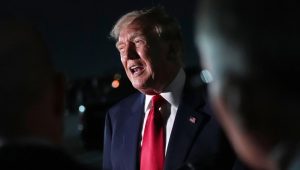
Lam’s swift decision-making extended to international relations, particularly regarding the US. Following a threat of 46 percent tariffs from Donald Trump in April, Vietnam rapidly approved a $1.5 billion golf course project for the Trump Organisation.
Consequently, the tariff rate was negotiated down to 20 percent for the majority of goods. Reflecting on the deal in July, Trump stated on his Truth Social platform: “Dealing with General Secretary To Lam, which I did personally, was an absolute pleasure”.
Controversy and human rights
Despite his reformist agenda, Lam’s tenure is marked by a history of controversy. As public security minister, he was accused of involvement in the 2017 kidnapping of a Vietnamese executive in Germany, an incident that damaged relations with Berlin for years.
Vietnam currently sits at 158th out of 193 countries in the “Freedom in the World” report, categorised as “not free”.
Furthermore, Lam faced a social media backlash in 2021 after a video showed him consuming a gold-leaf-covered steak at a London restaurant, a meal costing over $1,000 – well above the median monthly income in Vietnam.
Notably, a local noodle seller who parodied the video was subsequently jailed.