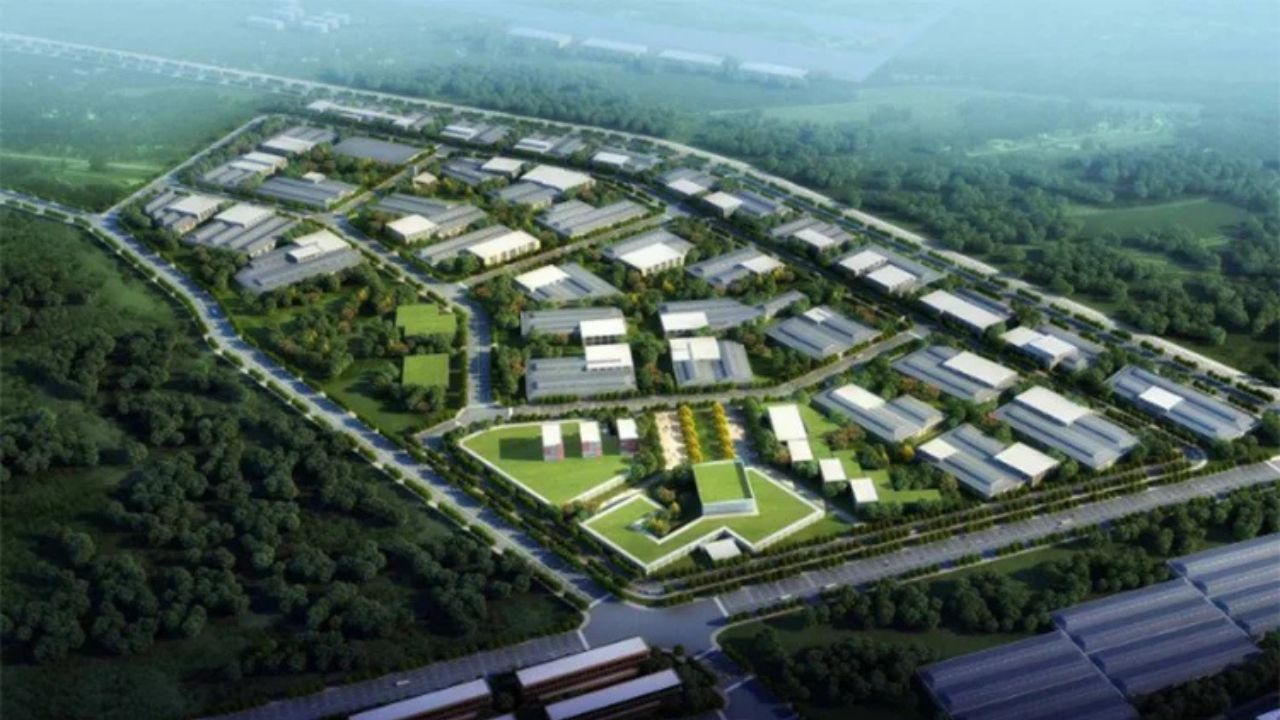



Bangladesh is nearing a crucial test for its Tk4,189 crore China Economic and Industrial Zone (CEIZ) project in Anwara, Chattogram: whether a fully prepared industrial platform can attract the factories needed to generate jobs, exports and economic returns.
The government has already committed major resources to prepare the zone, including around Tk420 crore for land acquisition and another Tk4,189 crore for roads, power, water, gas, drainage, waste management and other supporting infrastructure.
The investment is designed to remove one of the biggest barriers for industrial investors—ready infrastructure. But the next challenge is converting that physical foundation into actual manufacturing activity.
Of the Tk4,189 crore infrastructure cost, Tk1,722 crore will come from Bangladesh’s own resources, while Tk2,467 crore will come through Chinese project financing.
The financing structure underlines the central challenge facing CEIZ.
Infrastructure can create the conditions for investment, but factories, production and exports will determine whether the project delivers the returns expected from such a large public commitment.
From infrastructure to industrial activity
The CEIZ was conceived as a flagship Bangladesh-China industrial partnership during Chinese President Xi Jinping’s visit to Bangladesh in 2016.
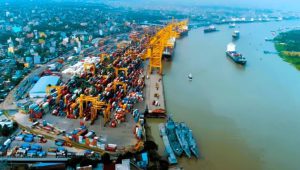
Its location near the Karnaphuli Tunnel and Chattogram Port gives it a strategic advantage, offering potential access to export logistics and global supply chains.

To develop the zone, Bangladesh and China formed Bangladesh CEIZ Company Limited (BCCL). China Road and Bridge Corporation (CRBC), a Chinese state-owned company, holds a 70 per cent stake, while Bangladesh Economic Zones Authority (Beza) owns the remaining 30 per cent.
The project has two separate parts. The first is off-site infrastructure, being developed through the Tk4,189 crore government project. The second is on-site development inside the industrial zone, which is expected to be financed by BCCL.
Imtiaz Hassan, a government-nominated director of BCCL, told TIMES of Bangladesh that Bangladesh secured its 30 per cent stake through its land contribution.
However, he could not provide details of the total equity investment that the Chinese side would ultimately bring into the joint venture.
Bangladesh’s land contribution is valued at $42 million, while the Chinese side is expected to initially invest $100 million. The final scale of Chinese investment remains uncertain.
“They will spend as much as necessary, whenever required,” Hassan said.




The distinction is important because the Tk2,467 crore financing from China Exim Bank is a loan for infrastructure development, not direct Chinese equity investment.
The loan will have to be repaid by Bangladesh.
The factory gap
The biggest question facing CEIZ is no longer whether infrastructure can be built, but whether companies will commit capital and begin production.
According to Beza sources, more than 100 Chinese companies initially expressed interest in investing and sought land. Many later withdrew due to concerns over utility and other operational challenges.
BCCL is now in discussions with around 30 companies, with agreements expected with several firms.
But interest and investment commitments are different.
A successful economic zone requires companies to build factories, employ workers, produce goods and generate exports. Without those activities, infrastructure alone cannot deliver the expected economic returns.
Utilities remain the biggest hurdle
The availability of gas and water could determine how quickly CEIZ attracts manufacturers.
BEZA sources said the zone may require 30 million to 50 million cubic feet of gas per day once industrial operations expand.
That demand is emerging when Bangladesh is already facing a severe gas shortage. National demand is estimated at around 3.8 billion cubic feet per day, against supply of roughly 2.6 billion cubic feet.
Bangladesh has increasingly turned to imported liquefied natural gas (LNG) to bridge the gap, leaving industries vulnerable to supply disruptions.
The challenge for CEIZ is not only building gas infrastructure but ensuring reliable supply for new factories while existing industries continue to face shortages.
Beza sources said authorities are prioritising industries that can operate using electricity or furnace oil as alternatives to gas.
The approach reflects the broader challenge: attracting industrial investment requires not just infrastructure but dependable operating conditions.
Amirul Haque, president of the Chattogram Chamber of Commerce and Industry, said CEIZ has strong potential for light engineering industries because of its proximity to Chattogram Port.
Return depends on factories, not projections
The long-term potential of CEIZ has been estimated at around $1.5 billion in investment and more than 2,00,000 jobs.
The current infrastructure phase is based on expectations of at least $500 million in foreign direct investment and 1,00,000 jobs.
But projected investment does not generate economic returns.
Factories, production, exports, employment and tax revenue do.
The risk for Bangladesh is not that it is investing in infrastructure before factories arrive—this is common practice for industrial zones worldwide. The risk is whether the pace and scale of factory investment will match the infrastructure commitment.
A fully developed industrial zone with limited occupancy would leave Bangladesh with underused assets and a debt obligation without the economic activity needed to justify the spending.
CEIZ’s success will ultimately be measured not by completed roads, power lines or utilities, but by whether those facilities become the foundation for a functioning manufacturing hub.